HVAC Maintenance: You Don’t Need to Be a Refrigerant Expert
One of the biggest misconceptions about HVAC is that every technician spends their days connecting gauges, recovering refrigerant, and charging air conditioners.
The truth is, many HVAC maintenance technicians build long, successful careers while spending most of their time diagnosing equipment, performing preventive maintenance, and replacing common electrical and mechanical components.
If you’ve been intimidated by the EPA 608 certification, don’t assume that means HVAC isn’t for you.
The certification is important for technicians who handle refrigerants, but the day-to-day work of many maintenance professionals revolves around keeping equipment running, not opening sealed refrigeration systems.
The Goal of Maintenance
Maintenance isn’t simply changing filters.
The goal is to identify problems before they become expensive failures.
A good maintenance technician helps equipment:
- Last longer
- Operate more efficiently
- Consume less energy
- Reduce emergency breakdowns
- Improve occupant comfort
- Lower repair costs
That requires observation, troubleshooting, and understanding how an HVAC system should operate.
What Maintenance Technicians Actually Do
Depending on the facility, a maintenance technician may spend most of the day:
- Replacing air filters
- Cleaning condenser coils
- Cleaning evaporator coils
- Inspecting belts
- Lubricating bearings
- Tightening electrical connections
- Measuring voltage and amperage
- Testing capacitors
- Replacing contactors
- Checking blower motors
- Replacing fan motors
- Verifying thermostat operation
- Inspecting safety switches
- Cleaning drain lines
- Replacing clogged condensate pumps
- Checking airflow
- Looking for vibration
- Listening for unusual noises
Notice something?
Very few of these tasks require recovering or charging refrigerant.
The Most Common Repairs
Ask experienced service technicians what they replace most often, and you’ll hear many of the same answers.
Routine replacement items include:
Capacitors
Capacitors wear out over time and are among the most common causes of equipment that won’t start.
Symptoms often include:
- Humming compressors
- Slow-starting fan motors
- Motors that fail to start
- Weak motor performance
Contactors
Every time an air conditioner starts, the contactor closes.
After thousands of cycles, the contacts become worn, pitted, or burned.
Replacing a worn contactor is one of the most common HVAC repairs.
Air Filters
Dirty filters restrict airflow.
Restricted airflow can lead to:
- Frozen evaporator coils
- Poor comfort
- High utility bills
- Premature equipment failure
Something as simple as replacing a neglected filter can prevent major service calls.
Belts
On many commercial systems, belts stretch and wear over time.
Routine inspection prevents airflow problems and unexpected breakdowns.
Motors
Blower motors and condenser fan motors eventually fail.
Knowing how to diagnose a motor problem often has nothing to do with refrigerant.
It comes down to electrical testing and understanding motor operation.
Troubleshooting Is the Real Skill
The best maintenance technicians aren’t the ones who memorize parts.
They’re the ones who ask good questions.
Why isn’t the compressor running?
Why is the blower shutting off?
Why is the breaker tripping?
Why is the unit short cycling?
Why is the thermostat calling but nothing happens?
Those answers come from understanding:
- Electrical circuits
- Mechanical systems
- Airflow
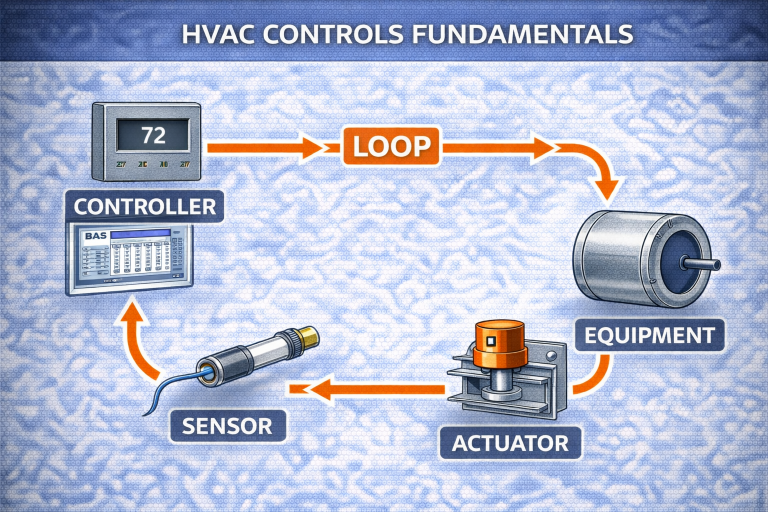
- Controls
Not simply from attaching gauges.
Refrigerant Is Only One Piece of HVAC
Refrigerant is certainly important.
Every technician who opens a refrigeration circuit must understand how to recover, evacuate, and charge a system correctly while following EPA regulations.
But refrigerant is only one part of what makes an HVAC system work.
The majority of system operation depends on:
- Motors turning
- Fans moving air
- Electrical circuits functioning correctly
- Controls communicating properly
- Mechanical components operating as designed
Without those systems working together, refrigerant alone can’t keep a building comfortable.
Don’t Let the EPA Test Discourage You
Many people entering the trade become nervous because they hear about the EPA 608 exam before they ever touch a piece of equipment.
Remember what that certification is designed to measure.
It tests your understanding of refrigerant handling laws, environmental regulations, and proper service procedures.
It does not measure your ability to:
- Diagnose electrical faults
- Read wiring diagrams
- Replace a capacitor
- Test a contactor
- Find airflow restrictions
- Interpret control sequences
- Perform preventive maintenance
Those skills are developed through study, practice, and hands-on experience.
Every Technician Starts Somewhere
No one begins their HVAC career knowing how to troubleshoot every system.
Every experienced technician once stood in front of a unit wondering where to begin.
The difference between a beginner and an expert isn’t natural talent, it’s repetition, curiosity, and a willingness to learn from every service call.
If maintenance is where you start, embrace it.
Every capacitor you test, every contactor you replace, every filter you change, and every blower motor you diagnose builds the foundation for becoming a stronger technician.
Final Thoughts
A successful HVAC career isn’t defined by how often you connect refrigerant gauges. It’s defined by your ability to understand how systems work, recognize problems before they become failures, and diagnose issues methodically and safely.
EPA certification is an important credential for technicians who handle refrigerants, but it shouldn’t discourage anyone from entering the trade. Strong maintenance skills, electrical troubleshooting, airflow knowledge, and an understanding of controls are valuable in every facility, from schools and hospitals to office buildings and manufacturing plants.
Master the fundamentals, stay curious, and build your troubleshooting confidence. Those skills will serve you throughout your career, regardless of how often you work with refrigerants.
Want to take the free practice test to see where you stand?
Or if looking to go further join our quiz hub premium membership and enjoy a variety of quizzes, cancel anytime.
- $9.99 monthly
- $79.99 annually (Best Value)