HVAC Airflow Fundamentals: Static Pressure, Filters, Ductwork & Blower Basics
Test Your Knowledge:
Before you jump into the article, take a quick free test and see where you stand.
Want more of a challenge? Step into our full quizzes—untimed for learning, or timed to experience the pressure of real certification exams.

This quiz is automatically created to help you get started. It will be created only once.

Step Into the Real Challenge
The free test gives you a taste—these are where it counts.
Each quiz pushes your HVAC knowledge further with timed challenges, deeper questions, and real performance breakdowns. You’ll get full explanations on every answer so you can actually improve—not just guess your way through.
HVAC Airflow Fundamentals
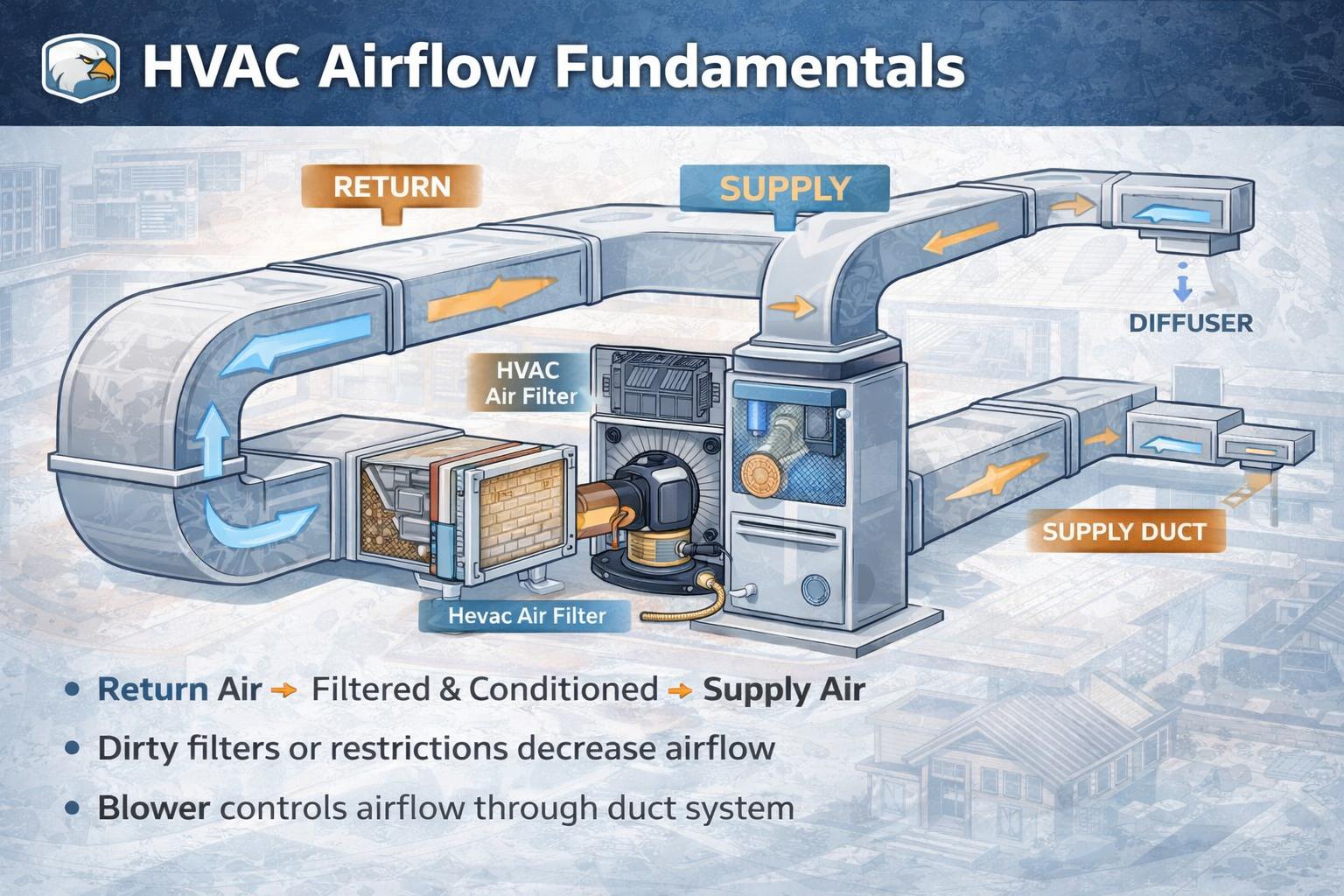
Understanding HVAC airflow fundamentals is one of the most important parts of learning how heating and cooling systems actually perform. A system can have refrigerant, power, and working components, but if airflow is poor, the equipment still will not operate the way it should.
Many HVAC beginners focus heavily on refrigeration and electrical topics first, but airflow is just as important. Air filters, blower motors, duct design, return air, static pressure, and airflow balance all affect comfort, efficiency, and equipment life. If airflow is ignored, problems such as weak heating, uneven cooling, frozen coils, noise, and high energy use can follow.
This guide explains the basics in a simple way so someone taking a short free quiz or a longer paid test can build a real foundation before moving into deeper diagnostics.
Why Airflow Matters in HVAC
In a forced-air HVAC system, the equipment must move the right amount of air through the duct system and across the coil. When that airflow is restricted, the system has to work harder to do the same job.
Good airflow helps:
- Deliver conditioned air where it is needed
- Protect equipment from unnecessary stress
- Support proper heating and cooling performance
- Reduce hot and cold spots
- Improve efficiency
- Prevent issues such as coil freeze or excessive static pressure
Airflow problems are common in the field because they are often caused by simple things like dirty filters, blocked returns, undersized ducts, dirty blower wheels, or poor duct layout.
The Purpose of an HVAC Air Filter
The primary purpose of an HVAC air filter is to protect equipment and improve air quality.
A filter is not there to cool the air. It is there to trap dust, dirt, and particles before they build up inside the system. This helps keep the blower, coil, and duct system cleaner while also reducing the amount of debris circulating through the building.
A clean filter helps support healthy airflow. A neglected filter creates resistance.
What a Dirty Air Filter Does
A dirty air filter will most likely cause reduced airflow and possible coil freeze.
This happens because the filter begins to restrict the air moving through the system. When less air passes across the evaporator coil, the coil temperature can drop too low, leading to frost or ice.
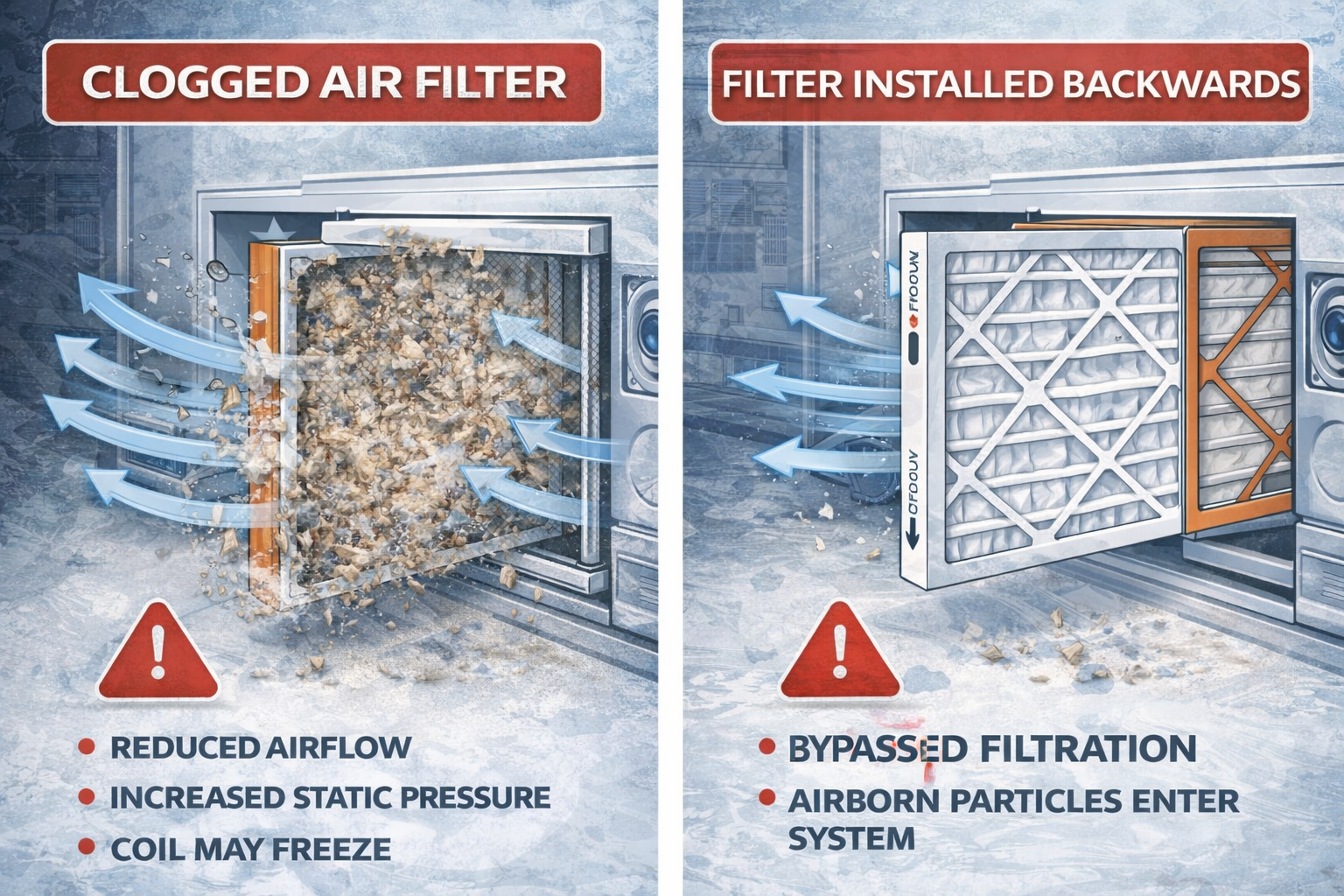
A dirty filter can also contribute to:
- Reduced comfort
- Longer run times
- Higher static pressure
- Increased strain on the blower
- Lower overall efficiency
This is why filter condition is one of the first things checked during basic troubleshooting.
Low Airflow Across the Evaporator Coil
When airflow across an evaporator coil is too low, the coil may freeze.
The evaporator depends on warm return air moving across it. If not enough air flows over the coil, the refrigerant inside can absorb heat too slowly, causing the coil temperature to drop below freezing.
That can lead to:
- Ice buildup on the coil
- Reduced system performance
- Poor cooling
- Water issues after thawing
- Possible long-term damage if ignored
Low airflow is one of the most common reasons an evaporator coil freezes.
What Static Pressure Means
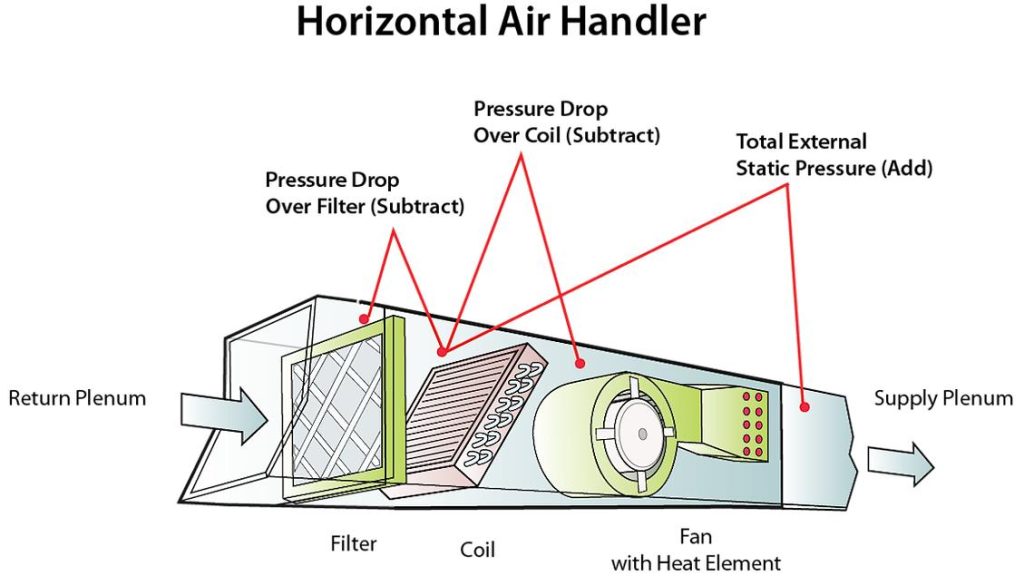
Static pressure in an HVAC system is the resistance to airflow in the ductwork and system components.
It is not refrigerant pressure. It is not electrical resistance. It is the force the blower must work against to move air through the system.
Think of static pressure like opposition to airflow. The more restrictions the system has, the harder it becomes to move the proper volume of air.
High static pressure is often linked to:
- Dirty filters
- Closed dampers
- Dirty coils
- Undersized ductwork
- Crushed or restricted ducts
- Dirty blower wheels
Understanding static pressure is critical because many airflow problems can be traced back to excessive resistance in the air side of the system.
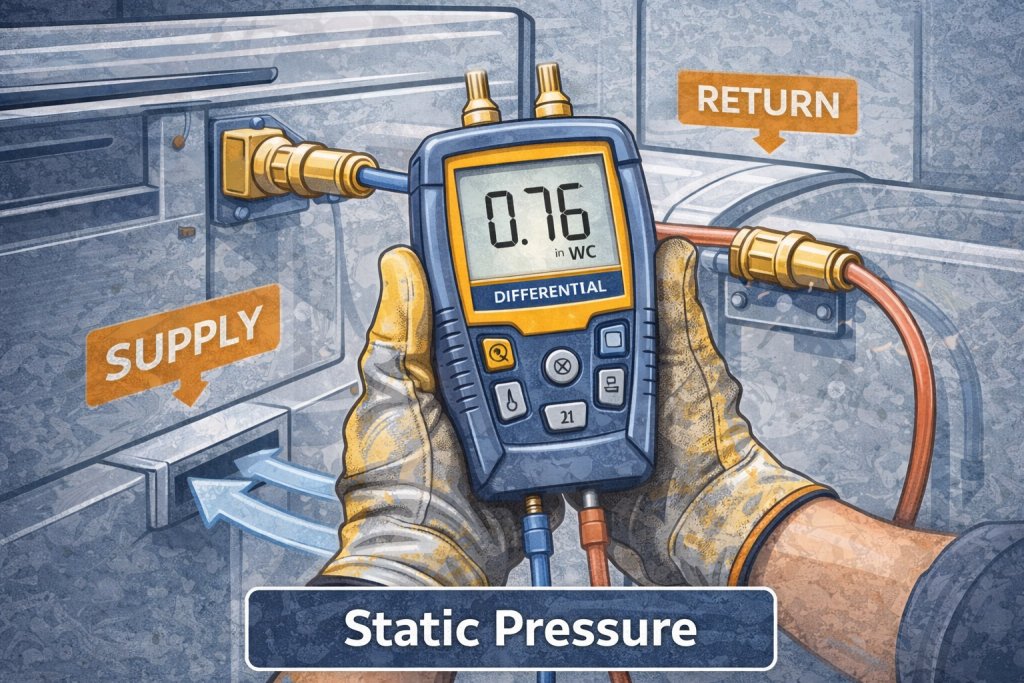
What Tool Measures Static Pressure?
The tool used to measure static pressure is a manometer.
A manometer helps technicians measure pressure differences in the duct system and across components such as filters and coils. Those readings can show whether a system has a serious airflow restriction or whether the blower is operating against too much resistance.
Without measuring, people often guess. A manometer turns airflow troubleshooting into something more precise.
The Purpose of the Blower Motor
The blower motor’s job is to move air through the system.
It does not compress refrigerant or remove moisture. Its purpose is to circulate air through the return, across the indoor components, and back out through the supply ducts into the occupied space.
When the blower is weak, dirty, slipping, or restricted, airflow suffers. That affects both comfort and system performance.
Blower-Related Problems
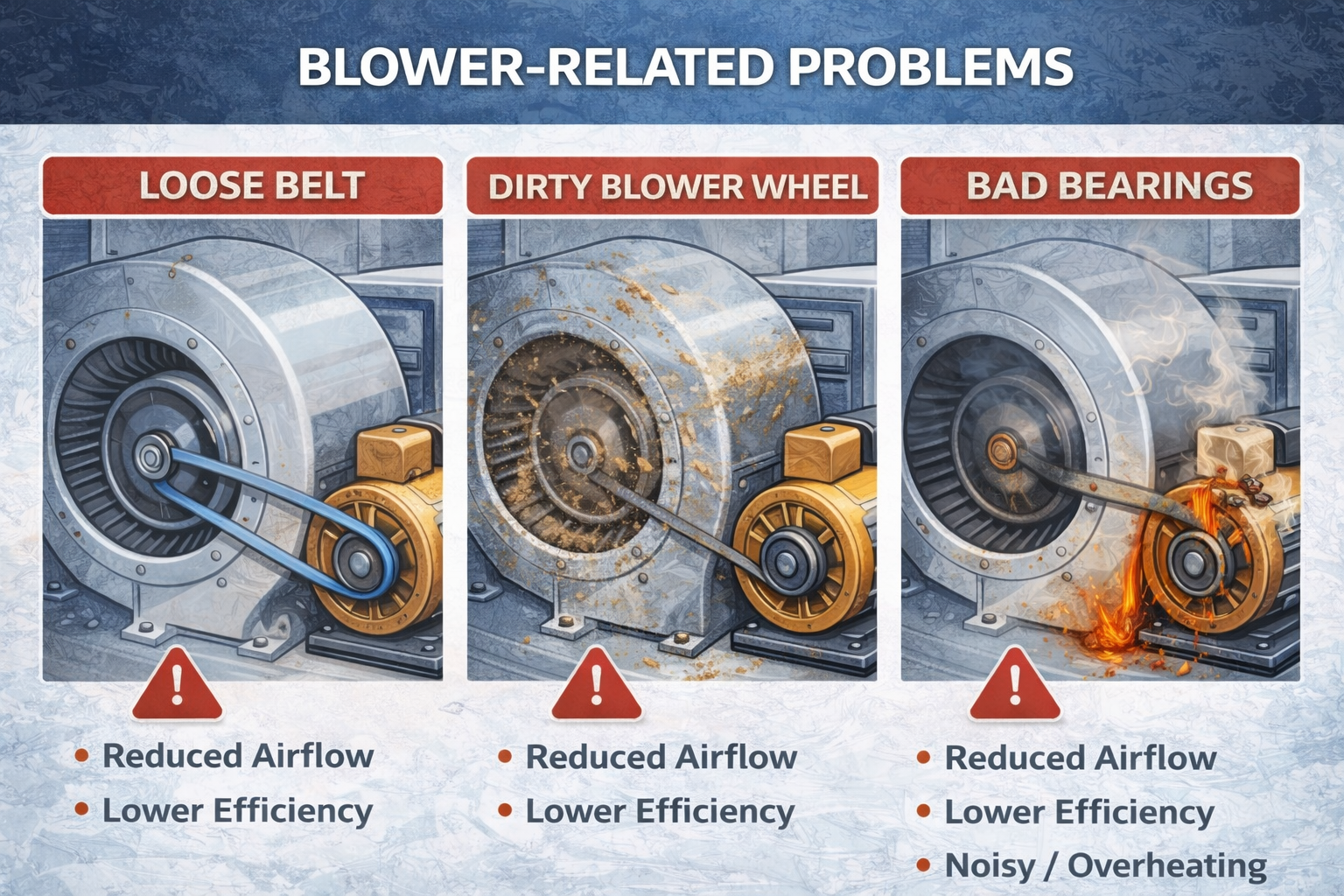
Loose Blower Belt
A loose blower belt will cause reduced airflow.
If the belt slips, the blower cannot maintain the intended speed, which means less air is delivered through the system.
Dirty Blower Wheel
A dirty blower wheel also causes reduced airflow and reduced efficiency.
Dust buildup on the blades changes how the wheel moves air and lowers blower performance.
Common Residential Blower Type
The most common blower in residential systems is a centrifugal blower, often called a squirrel cage.
This design is used because it can move a solid volume of air through duct systems better than simpler fan types.
What Happens When Ductwork Is Undersized?
Undersized ductwork causes high static pressure and poor airflow.
If the ducts are too small for the volume of air the system needs to move, resistance increases. That makes it harder for the blower to do its job.
Symptoms of undersized ductwork may include:
- Weak airflow at registers
- Noise in the duct system
- Uneven temperatures
- Higher blower strain
- Reduced comfort
- Poor system efficiency
Duct sizing matters because even a good unit cannot perform properly through a bad duct system.
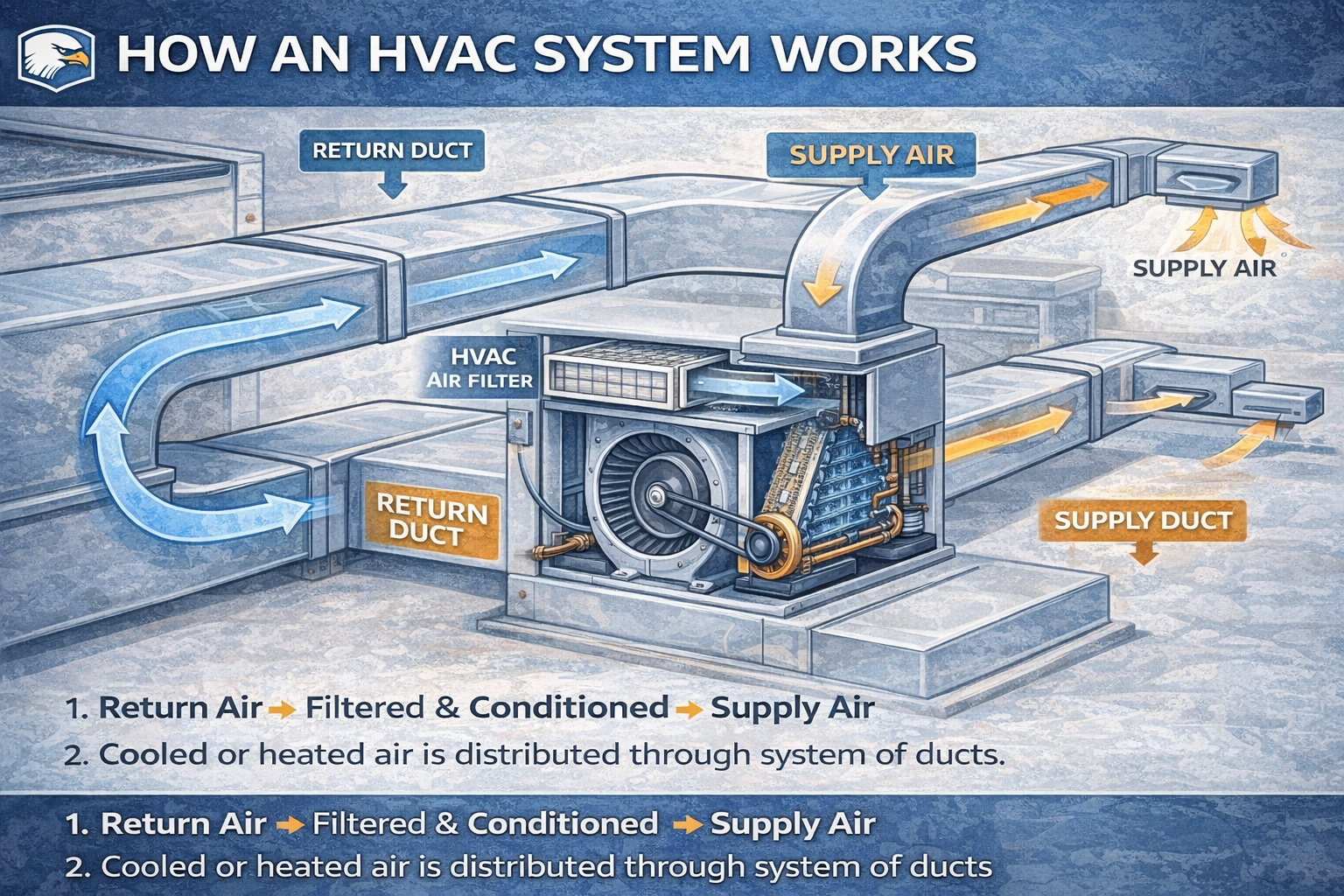
The Purpose of Return Air
The purpose of return air is to bring air back to the system to be reconditioned.
In other words, the system pulls indoor air back through the return side so it can be filtered, heated or cooled again, and supplied back into the space.
Return air is a major part of the circulation loop. If the return side is restricted, the system struggles to breathe.
What Happens If Return Air Is Restricted?
Restricted return air causes reduced airflow and possible system damage.
A return restriction can make the blower work harder and reduce the amount of air crossing the coil or heat exchanger. This leads to performance issues and can shorten equipment life if ignored.
What Is CFM?
CFM stands for Cubic Feet per Minute.
This is a common airflow measurement used in HVAC. It tells you how much air is moving through the system over time.
CFM matters because HVAC systems are designed to operate within certain airflow ranges. Too little airflow and the equipment suffers. Too much airflow can create other issues, depending on the application.
Duct Design and Air Distribution
Uneven Cooling
A common cause of uneven cooling in a building is poor duct design or airflow imbalance.
When some areas get too much air and others do not get enough, comfort suffers. This is often caused by bad branch layout, poor balancing, long duct runs, restrictions, or leakage.
Supply Duct Leaks
If supply ducts leak, the result is loss of conditioned air.
That means the system is producing cooled or heated air, but part of it never reaches the intended room. This lowers performance and wastes energy.
Main Function of a Plenum
The main function of a plenum is to distribute or collect air.
The supply plenum helps direct air into branch ducts. The return plenum helps collect air returning to the system. It is a key part of organizing airflow within the duct system.
Purpose of Balancing Dampers
Balancing dampers are used to control and balance airflow in ducts.
They help adjust how much air goes to different branches so rooms can receive more even airflow. They are important in systems where some areas naturally get too much or too little conditioned air.
Purpose of Duct Insulation
Duct insulation helps prevent energy loss and condensation.
Without insulation, ducts can gain or lose heat unnecessarily. In some cases, warm humid air contacting a cool duct surface can also lead to condensation problems.
Filtration and Airflow Resistance
Not all filters affect airflow the same way. The type of filter installed changes how much resistance is added to the system.
Which Filter Has the Highest Resistance?
A HEPA filter has the highest resistance to airflow among the options in your quiz.
That does not mean HEPA filtration is bad, but it does mean the system must be designed to handle that added restriction. A highly restrictive filter in a system not designed for it can cause airflow problems and high static pressure.
In general, stronger filtration often means greater airflow resistance. That is why filter selection should consider both air quality goals and system performance.
Most Common Cause of High Static Pressure
The most common cause of high static pressure is dirty filters or restrictions.
This is one of the most practical field concepts in HVAC airflow. High static pressure is often not caused by something complicated. It is usually caused by airflow being choked somewhere in the system.
Common restrictions include:
- Dirty filters
- Blocked return grilles
- Dirty evaporator coils
- Closed dampers
- Undersized ductwork
- Dirty blower assemblies
That is why simple inspections matter before deeper diagnosis begins.
Quick Review of HVAC Airflow Fundamentals
Here is a simple summary of the major points:
- The air filter protects equipment and improves air quality
- A dirty filter reduces airflow and may contribute to coil freeze
- Low airflow across the evaporator can cause the coil to freeze
- Static pressure is resistance to airflow in the system
- A manometer is used to measure static pressure
- The blower motor moves air through the system
- A loose belt or dirty blower wheel can reduce airflow
- Residential systems commonly use centrifugal blowers
- Undersized ductwork raises static pressure and hurts airflow
- Return air brings indoor air back to be reconditioned
- Restricted return air lowers airflow and can damage the system
- CFM means Cubic Feet per Minute
- Supply duct leaks waste conditioned air
- Duct insulation helps prevent energy loss and condensation
- HEPA filters create high airflow resistance
- Plenums distribute or collect air
- Balancing dampers help control airflow to different areas
- Dirty filters and restrictions are a leading cause of high static pressure
HVAC Quiz Preparation: What to Focus On
If you are preparing for a free quiz or a longer paid HVAC airflow test, focus on the relationships between the parts instead of trying to memorize isolated definitions.
Make sure you understand:
- Why dirty filters affect more than just cleanliness
- Why restricted return air hurts system performance
- Why static pressure matters to blower performance
- Why undersized ducts create resistance
- Why balancing airflow matters for comfort
- Why leaks in supply ducts waste conditioned air
Once those ideas connect, the quiz becomes much easier because the answers start to make practical sense.
Final Thoughts
Airflow is one of the most overlooked fundamentals in HVAC, but it affects nearly everything a forced-air system does. Even if the refrigerant charge is correct and the electrical components are working, bad airflow can still cause poor comfort, high utility costs, frozen coils, and unnecessary equipment strain.
That is why technicians who understand airflow, static pressure, filtration, duct design, and blower operation are far more effective at diagnosing real-world problems.
If you can understand the basics on this page, you will have a much stronger foundation for both entry-level HVAC quizzes and deeper system troubleshooting later on.
FAQ Section
What is the purpose of an HVAC air filter?
An HVAC air filter protects equipment and helps improve indoor air quality by trapping dust and debris before they enter the system.
What is static pressure in HVAC?
Static pressure is the resistance to airflow within the duct system and air-moving components.
What tool measures static pressure?
A manometer is used to measure static pressure in HVAC systems.
What causes high static pressure?
Dirty filters, airflow restrictions, closed dampers, dirty coils, and undersized ductwork are common causes.
What does CFM stand for?
CFM stands for Cubic Feet per Minute, which measures airflow volume.
What happens if airflow is too low across an evaporator coil?
The evaporator coil may freeze because it is not receiving enough warm air to absorb heat properly.
What is the purpose of balancing dampers?
Balancing dampers help control and balance airflow through branch ducts.
Want to take the free practice test to see where you stand?
Or if looking to go further join our quiz hub premium membership and enjoy a variety of quizzes, cancel anytime.
- $9.99 monthly
- $79.99 annually (Best Value)