Fuel the World: Understanding The Expanding Role in Energy
Fuel Source
Have you ever wondered why the gas that fuels your car is completely different from the gas that heats your home?
The answer begins deep beneath the Earth’s surface with crude oil and natural gas. Crude oil is a thick, dark mixture of hydrocarbons that cannot be used in its raw form. Instead, it must be extracted from underground reservoirs and refined into the fuels and products we rely on every day.
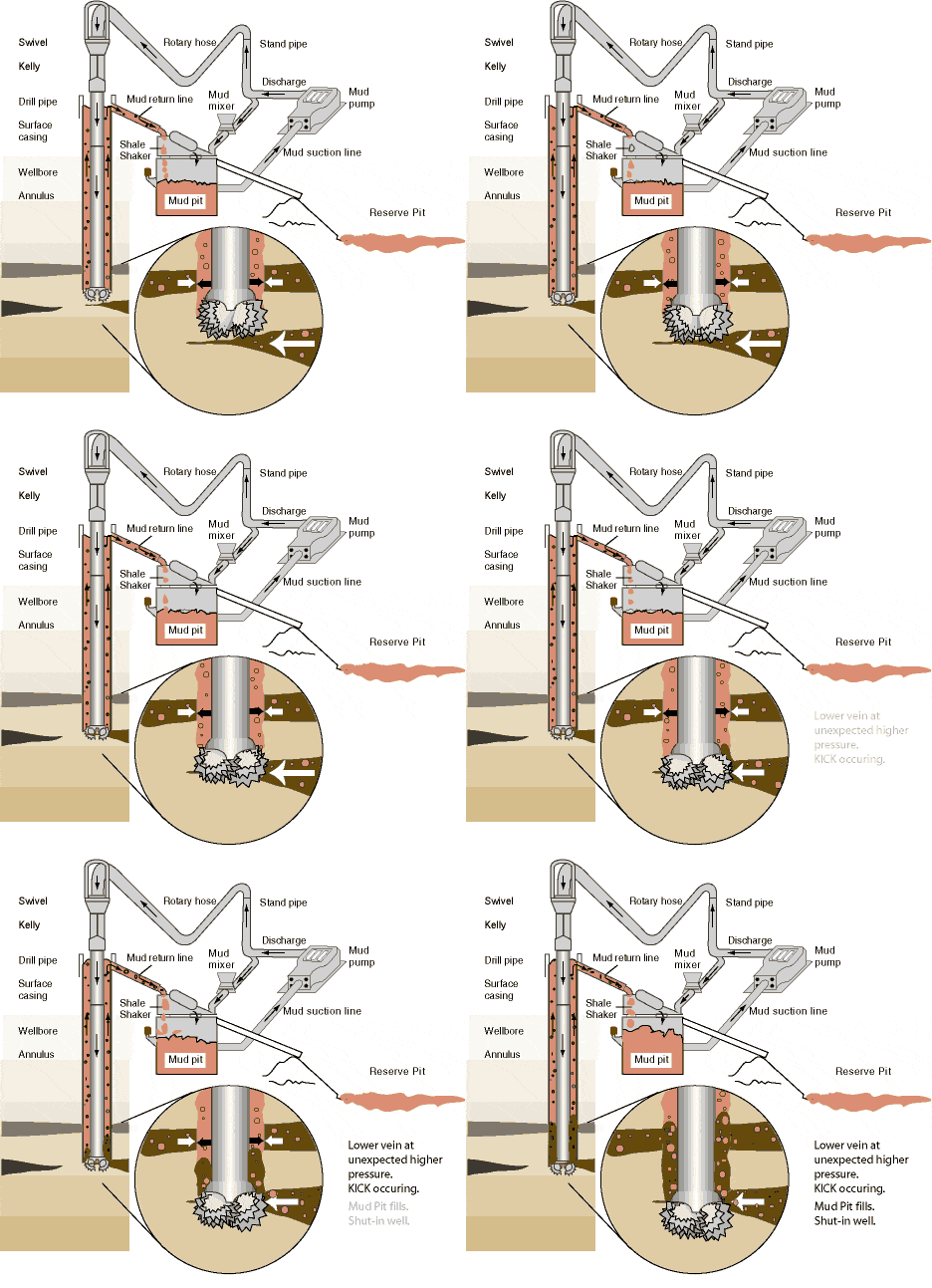
To access these resources, companies drill wells thousands of feet into the Earth, where crude oil and natural gas are trapped within porous rock formations. Once the reservoir is reached, the oil and gas are brought to the surface for processing, refining, and distribution, beginning a journey that ultimately powers our vehicles, heats our homes, and supports countless industries around the world.
Once crude oil is extracted and transported to a refinery, it undergoes a process known as fractional distillation. The crude oil is first heated to temperatures of approximately 350–400°C (662–752°F), causing most of the hydrocarbons to vaporize. The vapors then enter a tall distillation column, where they cool as they rise.
Because each hydrocarbon has a different boiling point, they condense at different levels within the column. Lighter products, such as refinery gases and gasoline, condense near the top, while heavier products like diesel fuel, lubricating oils, fuel oil, and asphalt condense lower in the tower.
These refined products are used throughout modern society, including:
- Gasoline for passenger vehicles
- Jet fuel (kerosene) for aircraft
- Diesel fuel for trucks, heavy equipment, and generators
- Lubricating oils for engines and machinery
- Liquefied petroleum gases (LPG) such as propane and butane
- Petrochemicals used to manufacture plastics, synthetic fibers, solvents, and countless consumer products
- Asphalt (bitumen) for paving roads and roofing materials
Virtually every industry relies on products refined from crude oil, making petroleum one of the world’s most versatile and valuable natural resources.

Natural gas is often found in the same underground geological formations as crude oil, thousands of feet beneath the Earth’s surface. Like crude oil, natural gas is a fossil fuel formed over millions of years from the remains of ancient plants, algae, and marine organisms. As layers of sediment buried this organic material deeper underground, increasing heat and pressure gradually transformed it into the hydrocarbons we extract today.
Although natural gas and crude oil share a common origin, they differ in their composition and many of their applications. Natural gas is used primarily for heating, electricity generation, and industrial processes, while crude oil is refined into fuels such as gasoline, diesel, and jet fuel, along with countless everyday products including plastics, lubricants, and asphalt.
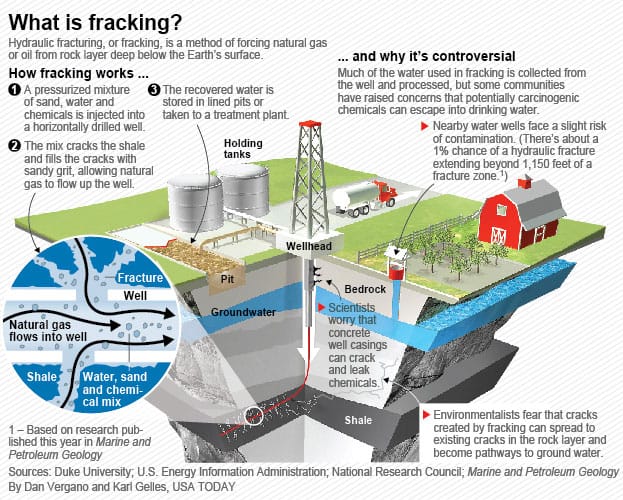
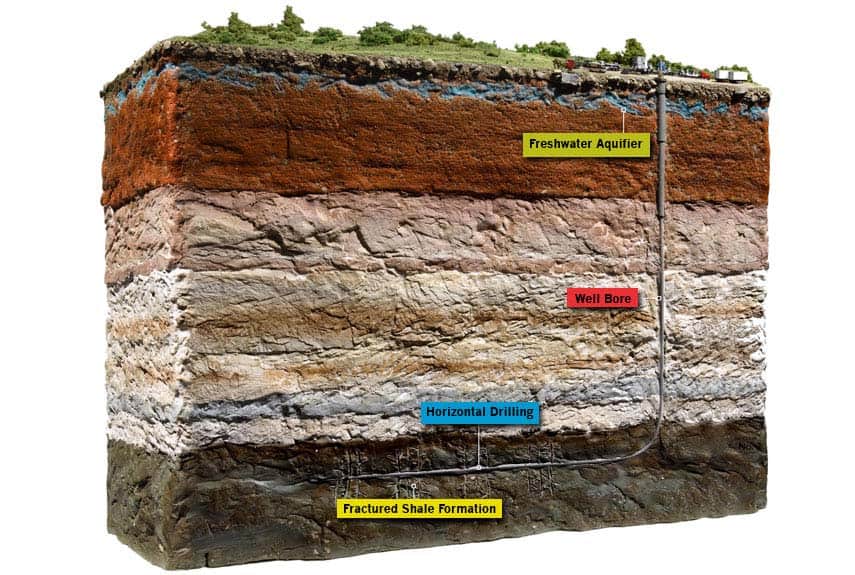
Depending on the geology of the reservoir, both oil and natural gas may be produced using conventional drilling methods or enhanced extraction techniques such as hydraulic fracturing (fracking). Fracking is commonly used in shale formations to create small fractures in the rock, allowing trapped oil and natural gas to flow more freely into production wells.
Although both crude oil and natural gas are made of hydrocarbons, they behave very differently because of the size of their molecules. Natural gas is composed mostly of small, lightweight methane molecules, allowing it to remain a gas under normal conditions. Crude oil contains a wide range of much larger hydrocarbon molecules, causing it to remain a liquid. As crude oil is refined, the lightest hydrocarbons are separated into gases, while the heavier components become products such as gasoline, diesel, lubricants, and asphalt. Since methane is lighter than the surrounding air, natural gas typically rises and disperses in open environments, unlike heavier petroleum liquids that remain on the ground.
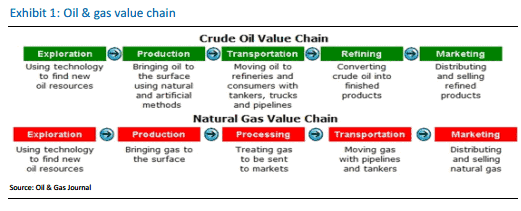
Natural gas and crude oil are two of the most important energy resources in the modern world. They provide fuel for homes and businesses, generate electricity, power transportation, and supply the raw materials used to manufacture thousands of everyday products. Together, they remain essential to global energy production and industrial development.
While renewable energy continues to grow, oil and natural gas still play a critical role in meeting worldwide energy demand. Understanding how these resources are formed, extracted, refined, and used provides valuable insight into the infrastructure that powers modern civilization.
Natural Gas: Cleaner but Complex
Natural gas is primarily composed of methane (CH₄) and is often considered the cleanest-burning fossil fuel. Compared to coal and crude oil, it produces fewer carbon emissions and significantly lower amounts of sulfur dioxide, particulate matter, and other pollutants when burned.
Natural gas is commonly used for:
- Residential and commercial heating
- Electricity generation
- Industrial manufacturing
- Cooking
- Water heating
- Chemical production
Because it burns efficiently, natural gas has become a preferred fuel for many power plants. It also serves as an important backup energy source that can quickly respond to changes in electricity demand when renewable sources like solar and wind are unavailable.
Beyond energy production, natural gas is a vital feedstock for manufacturing fertilizers, plastics, pharmaceuticals, synthetic fibers, and numerous industrial chemicals.
Hydraulic Fracturing
Much of today’s natural gas production comes from shale formations through hydraulic fracturing, commonly known as fracking. This process injects water, sand, and small amounts of specialized chemicals into deep underground rock formations at high pressure, creating tiny fractures that allow trapped natural gas to flow into production wells.
Advances in drilling technology have dramatically increased domestic natural gas production over the past two decades, making it one of the world’s most abundant energy resources.
Crude Oil: The World’s Most Versatile Fuel
Crude oil is an unrefined mixture of hydrocarbons formed over millions of years from ancient marine organisms buried beneath layers of sediment. After extraction, crude oil is transported to refineries where it is separated into a wide range of valuable products.
Common petroleum products include:
- Gasoline
- Diesel fuel
- Jet fuel
- Heating oil
- Lubricants
- Asphalt
- Propane
- Petrochemical feedstocks
The petroleum industry extends far beyond transportation. Crude oil is also used to manufacture countless products we rely on every day, including plastics, synthetic rubber, detergents, cosmetics, medical supplies, clothing fibers, paints, and packaging materials.
Few natural resources have had a greater impact on global commerce, transportation, and industrial growth than crude oil.
Environmental Considerations
Although natural gas and crude oil have helped drive economic growth and technological advancement, their use also presents environmental challenges.
These include:
- Greenhouse gas emissions
- Air pollution
- Methane leaks
- Habitat disruption
- Water management concerns
- Pipeline and transportation risks
As a result, governments, researchers, and energy companies continue investing in cleaner technologies, improved efficiency, emissions reduction, carbon capture, and renewable energy systems.
Natural gas is often viewed as a transitional fuel because it produces fewer emissions than coal while providing reliable, dispatchable electricity when renewable energy sources cannot meet demand.
The Future of Energy
Natural gas and crude oil will continue to play an important role in the global energy mix for the foreseeable future. At the same time, renewable technologies such as solar, wind, hydroelectric power, battery storage, and hydrogen are expanding rapidly as countries seek to diversify their energy portfolios and reduce emissions.
Rather than replacing one another overnight, these energy sources are increasingly working together to create a more reliable, resilient, and sustainable energy system.
Conclusion
Natural gas and crude oil have fueled modern civilization for more than a century, powering industries, supporting transportation, generating electricity, and supplying the raw materials used in thousands of essential products. While the global energy landscape continues to evolve, these resources remain fundamental to everyday life.
Understanding both their benefits and their challenges provides a broader perspective on the complex energy systems that keep our world running today—and the innovations shaping the future of energy tomorrow.
Explore other sections of Energy and Utilities