Data Centers and the Hidden Cost of the Cloud
The Good, the Bad, and the Ugly of Digital Infrastructure
Most people think of the cloud as something weightless.
A photo uploaded from a phone. A movie streamed online. A bank transaction. An AI prompt. A work file saved to a shared drive.
It feels invisible.
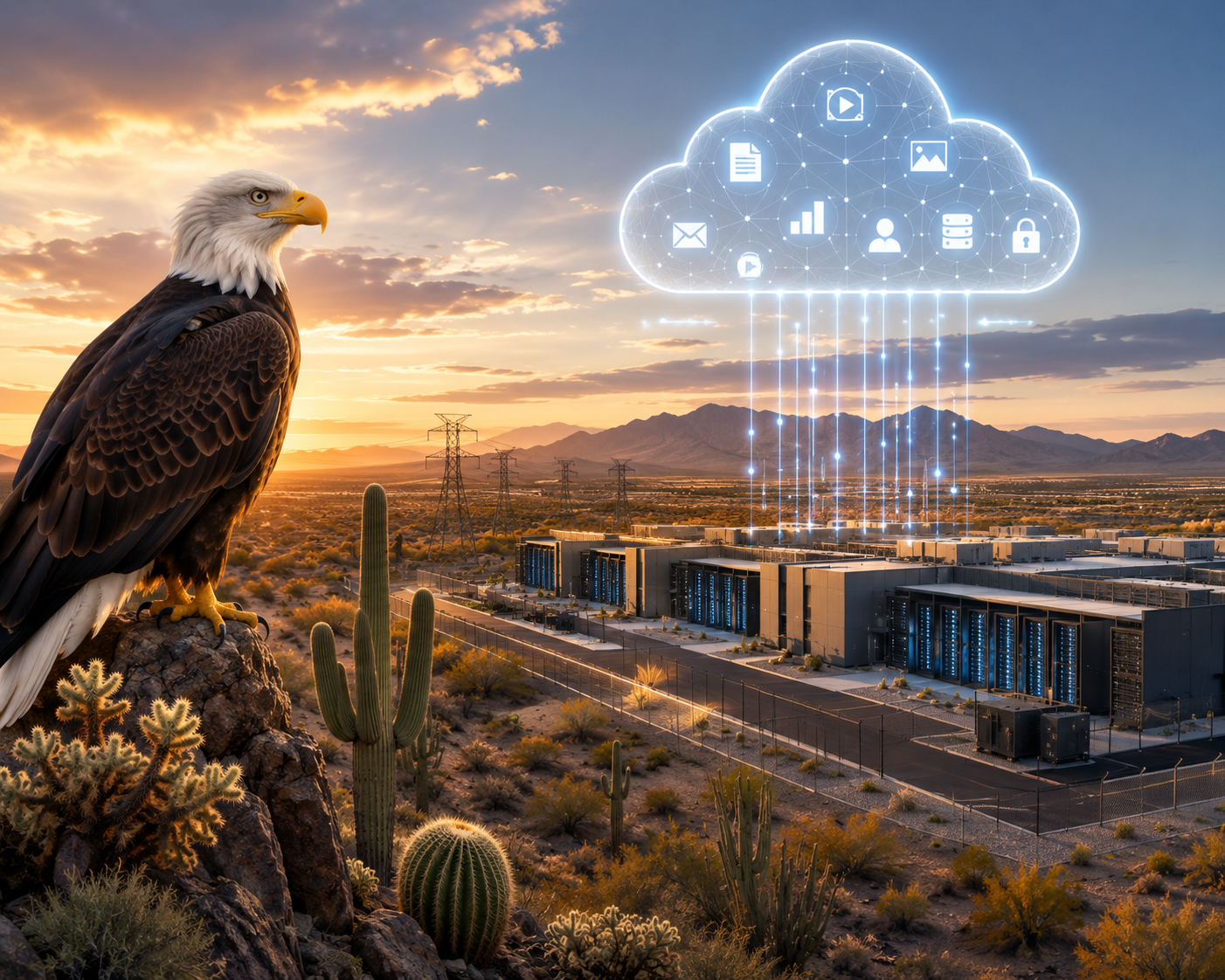
But the cloud is not floating in the sky.
It lives inside buildings filled with servers, transformers, batteries, generators, cooling systems, fiber networks, and enough electrical equipment to power entire communities.
Those buildings are called data centers, and as society moves further into automation, artificial intelligence, remote work, cloud computing, and digital services, they are becoming one of the most important pieces of infrastructure in the modern world.
From a facility operations standpoint, data centers are neither heroes nor villains.
They are systems.
And like every system, they come with benefits, costs, and consequences.
The Good: The Digital World Needs a Physical Home
Every website, online business, streaming service, medical record, financial transaction, and AI model needs somewhere to live.
Data centers provide that foundation.
Without them, much of modern society would simply stop functioning.
They also create opportunities.
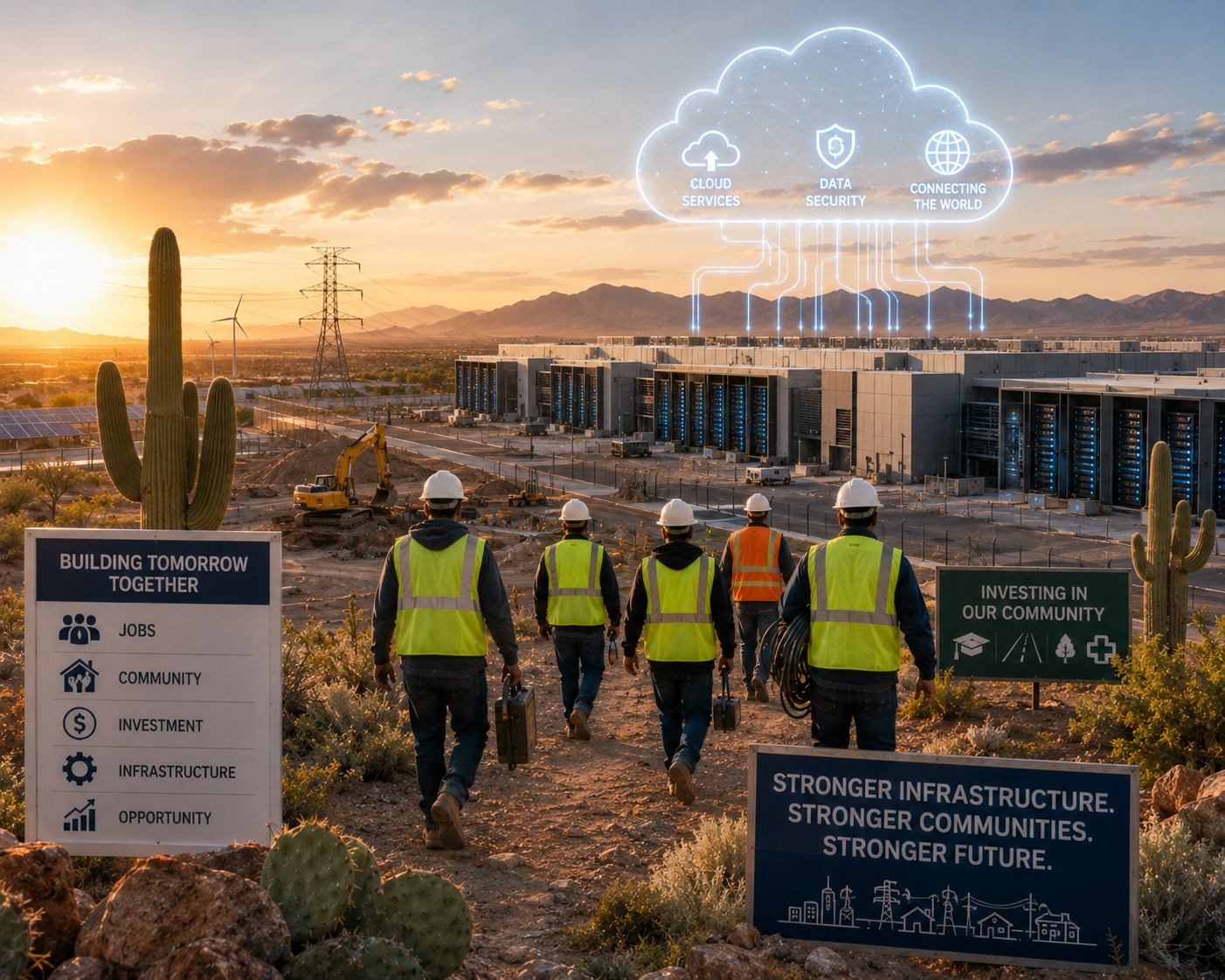
Building and operating data centers requires electricians, HVAC technicians, controls specialists, facility operators, engineers, project managers, security personnel, and construction workers.
In many ways, data centers are the central plants of the digital age.
Just as a hospital relies on boilers, chillers, emergency generators, and electrical systems to keep patients safe, the internet relies on data centers to keep information moving.
As technology advances, more digital infrastructure will be needed.
That part is unavoidable.
The Bad: The Cloud Has a Utility Bill
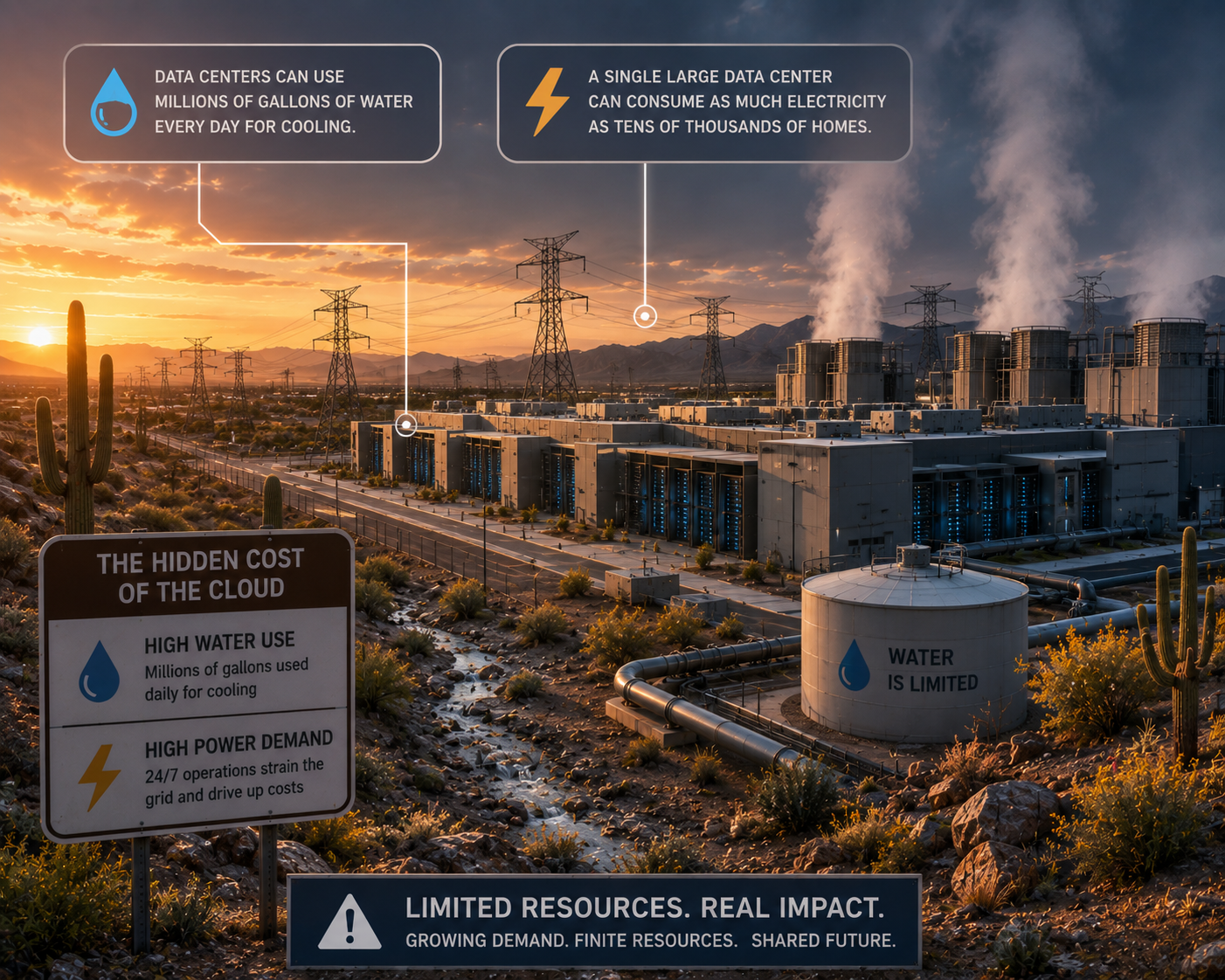
The problem is that data centers consume enormous amounts of resources.
Servers generate heat.
Heat must be removed.
Removing heat requires power, water, or both.
Unlike an office building that slows down at night, many data centers operate at nearly full capacity twenty-four hours a day, seven days a week.
That creates a continuous demand on utility systems.
In states like Arizona, the concern becomes even more apparent.
Electricity demand continues to rise while water remains one of the state’s most valuable resources.
The challenge is that there is no perfect cooling solution.
Air-cooled systems use less water but require more electricity.
Evaporative cooling can reduce electrical consumption but increases water usage.
Liquid cooling can improve efficiency but adds complexity and infrastructure requirements.
Every solution solves one problem while creating another.
From a facility operations perspective, the question is not whether data centers consume resources.
The question is whether those resources are being managed responsibly.
The Ugly: When Growth Outpaces Accountability
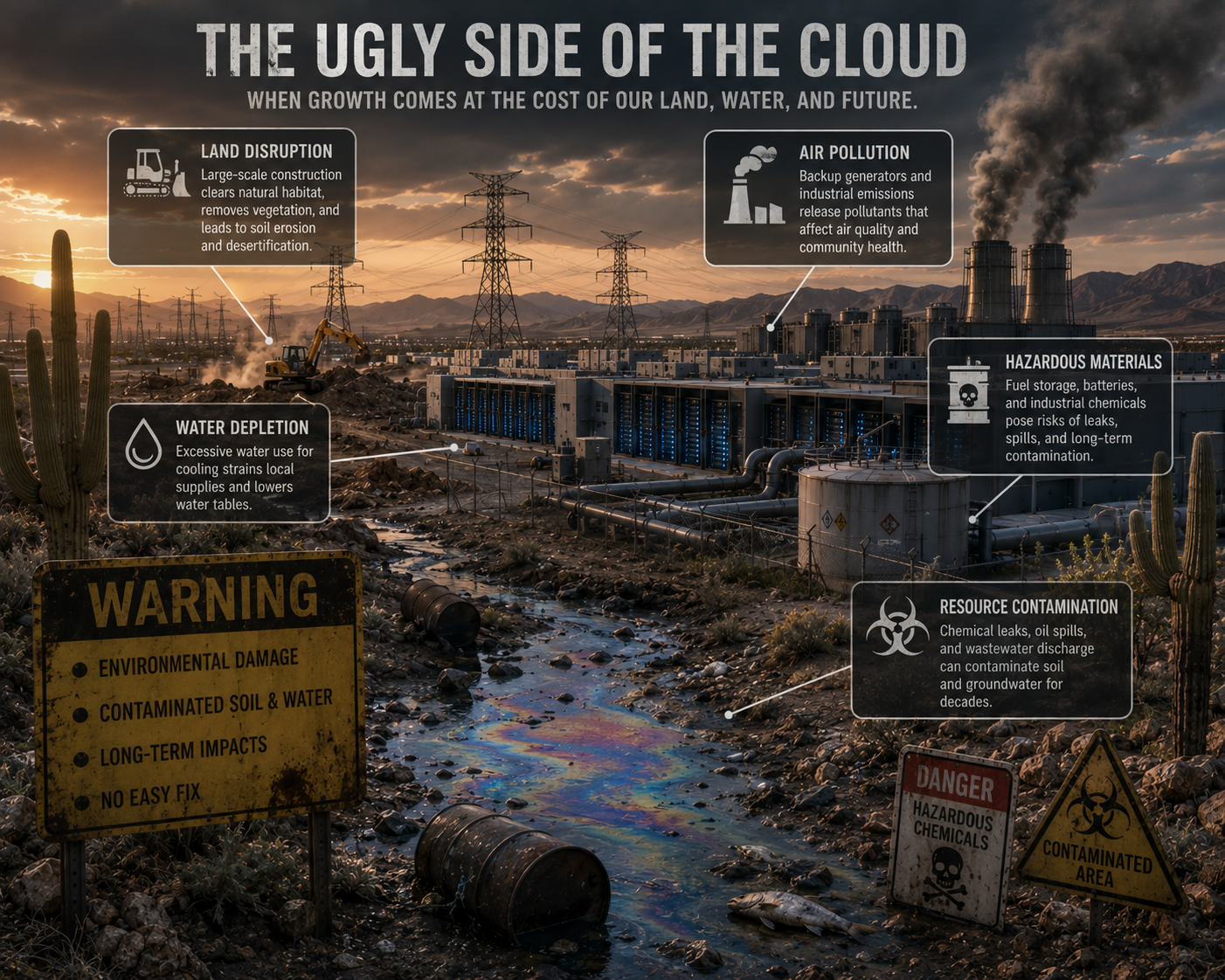
The most concerning issue is not that data centers exist.
It is what happens when growth moves faster than planning.
A new facility may bring investment and construction jobs, but it also places additional demand on power grids, water systems, transportation networks, and surrounding infrastructure.
Communities are often told about economic benefits.
They are less frequently told about long-term utility impacts, infrastructure upgrades, resource consumption, or environmental risks.
The same principle applies to every facility system.
You cannot add load without consequences.
A transformer has limits.
A water system has limits.
A power grid has limits.
A community has limits.
The question should never be whether a project can be built.
The question should be whether it can be supported responsibly for decades.
The Conservation of Consequences
One of the most interesting lessons facility operations teaches is that problems are rarely eliminated.
They are usually transferred.
Reduce water usage and electrical demand may increase.
Reduce electrical demand and water consumption may rise.
Move facilities offshore and marine ecosystems become part of the discussion.
Some companies have even explored underwater data centers that use ocean temperatures to assist with cooling. While innovative, these ideas raise new questions about heat rejection, marine habitats, and long-term environmental impacts.
Every solution shifts the burden somewhere else.
The challenge is determining which burden society is willing to accept.
The Cloud Isn’t Weightless
Perhaps the biggest misconception about technology is that it is somehow detached from the physical world.
It isn’t.
The cloud has a footprint.
It requires land.
It requires steel.
It requires concrete.
It requires power plants, substations, transformers, cooling systems, water infrastructure, and thousands of skilled workers to keep everything operating.
The more we automate, stream, store, and compute, the more physical infrastructure we need to support it.
That does not mean data centers are bad.
It means they should be viewed honestly.
Data centers are critical infrastructure.
They provide tremendous value, create jobs, and support modern life.
But they also consume resources, generate heat, and place demands on systems that already face growing pressure.
The future will almost certainly require more data centers.
The real question is whether we can build them in a way that balances technological progress with responsible stewardship of the resources that make that progress possible.
The good is innovation.
The bad is resource consumption.
The ugly is pretending there are no tradeoffs.
Because behind every cloud is a building, and behind every building is a system that must be maintained, powered, cooled, and sustained.