Critical Thinking
Why Critical Thinking Still Matters
In a world driven by headlines, hashtags, algorithms, and instant reactions, critical thinking has become one of the most valuable skills a person can develop.
Want to skip the reading and watch the condensed video?
We have access to more information than any generation in history. With a few taps on a phone, we can learn a new trade, research a medical condition, compare political viewpoints, or watch a university lecture from across the globe.
Unfortunately, the same technology that gives us access to knowledge also makes it easier for misinformation, emotional manipulation, and incomplete information to spread just as quickly.
The challenge isn’t finding information anymore.
The challenge is learning how to evaluate it.
That is where critical thinking begins.
It is the ability to slow down, ask better questions, examine evidence, recognize assumptions, and reach conclusions based on reason rather than emotion or popularity.

Critical Thinking Is More Than Politics
Many people immediately associate critical thinking with politics or current events, but it reaches much further than that.
At Eagleye Forum, we believe critical thinking is the common thread connecting every subject we teach.
Whether you’re:
- Troubleshooting an HVAC system
- Diagnosing an electrical fault
- Managing a construction project
- Learning Microsoft Excel
- Evaluating artificial intelligence
- Reading historical documents
- Comparing business strategies
- Researching scientific studies
…the same fundamental process applies.
Observe.
Question.
Analyze.
Test.
Adjust.
The best technicians, engineers, managers, scientists, and leaders all follow remarkably similar thinking patterns. They don’t simply memorize answers—they learn how systems work so they can solve problems they’ve never seen before.
That mindset is what this website is built around.
Building Better Thinkers
Throughout Eagleye Forum you’ll notice a recurring theme.
We don’t simply provide answers.
We explain why those answers work.
Rather than encouraging readers to memorize facts, we encourage them to understand systems, identify patterns, and challenge assumptions.
That philosophy influences every section of the website.
Operations Hub
A skilled technician doesn’t replace random parts until something starts working. They gather information, eliminate possibilities, identify root causes, and verify the solution before moving on.
Whether you’re learning about boilers, chillers, electrical systems, water treatment, fire protection, or facility operations, critical thinking transforms troubleshooting from guesswork into a repeatable process.
Development Hub
Business decisions rarely have perfect answers.
Leadership, project management, continuous improvement, information technology, and career development all require balancing competing priorities, interpreting data, and making informed decisions under uncertainty.
Critical thinking allows professionals to move beyond simply following procedures toward understanding why those procedures exist.
Artificial Intelligence
Artificial intelligence is one of the most powerful learning tools available today.
It can summarize information, explain difficult concepts, generate ideas, and accelerate learning.
However, AI should support your thinking—not replace it.
Learning how to verify information, recognize limitations, and ask better questions remains essential regardless of how advanced technology becomes.
Science & Safety
Science is built upon critical thinking.
Every experiment begins with observation.
Every hypothesis requires testing.
Every conclusion should remain open to new evidence.
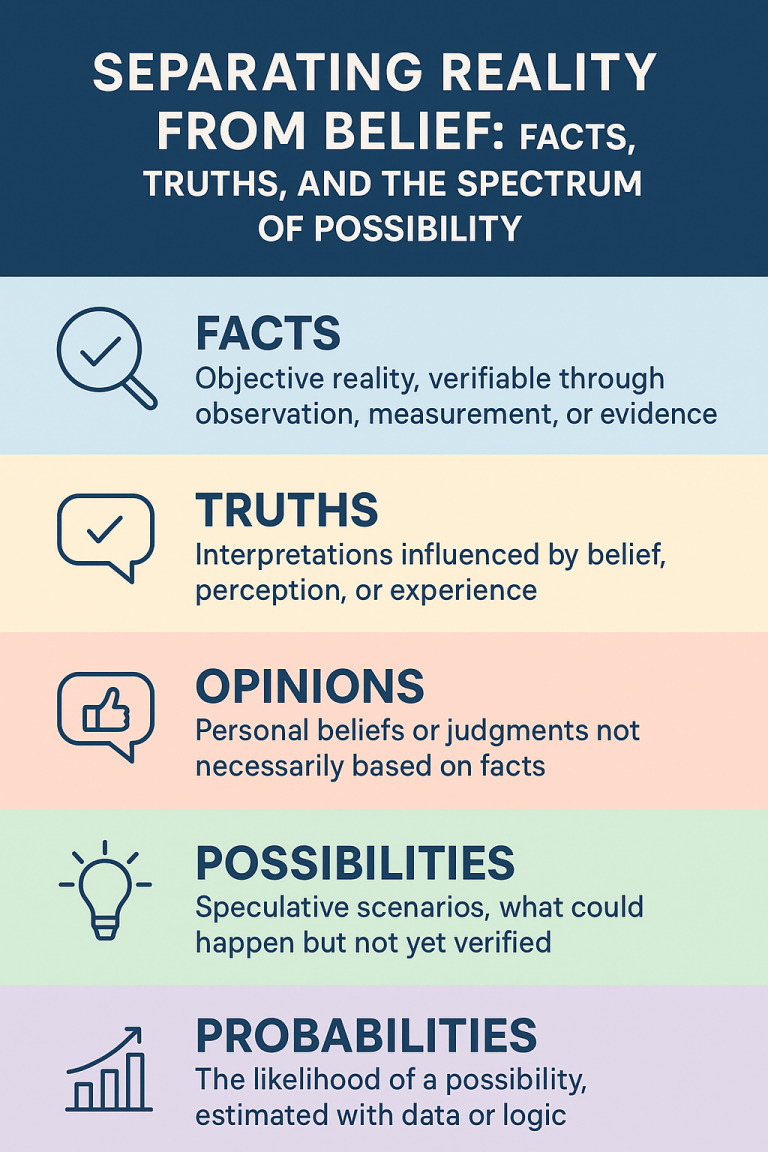
Whether discussing microbiology, electrical theory, combustion, energy systems, or workplace safety, scientific thinking teaches us to separate measurable evidence from assumptions.
History & Society
History is rarely as simple as heroes and villains.
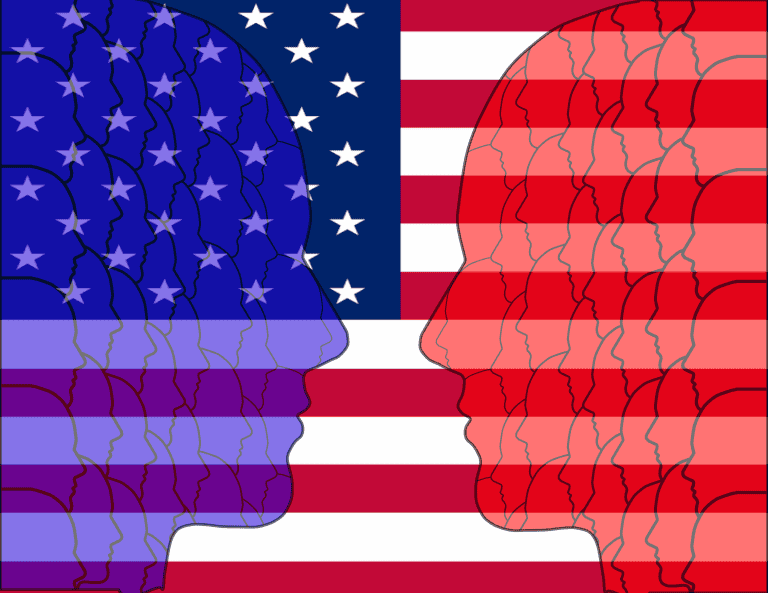
Understanding historical events requires evaluating multiple perspectives, recognizing bias, considering context, and distinguishing evidence from interpretation.
Rather than accepting conclusions because they are popular, critical thinking encourages us to investigate how those conclusions were reached.
Thinking Beyond Headlines
Modern communication rewards speed.
Social media rewards engagement.
News organizations compete for attention.
Algorithms promote content that keeps people clicking.
None of those incentives necessarily reward accuracy or thoughtful discussion.
That is why slowing down matters.
Critical thinkers learn to ask questions like:
- What evidence supports this claim?
- What information might be missing?
- Is this conclusion based on facts or assumptions?
- Are multiple perspectives being considered?
- Who benefits if I accept this claim without questioning it?
Those questions apply just as well to technical manuals and workplace decisions as they do to news articles and public debates.
A Skill That Lasts a Lifetime
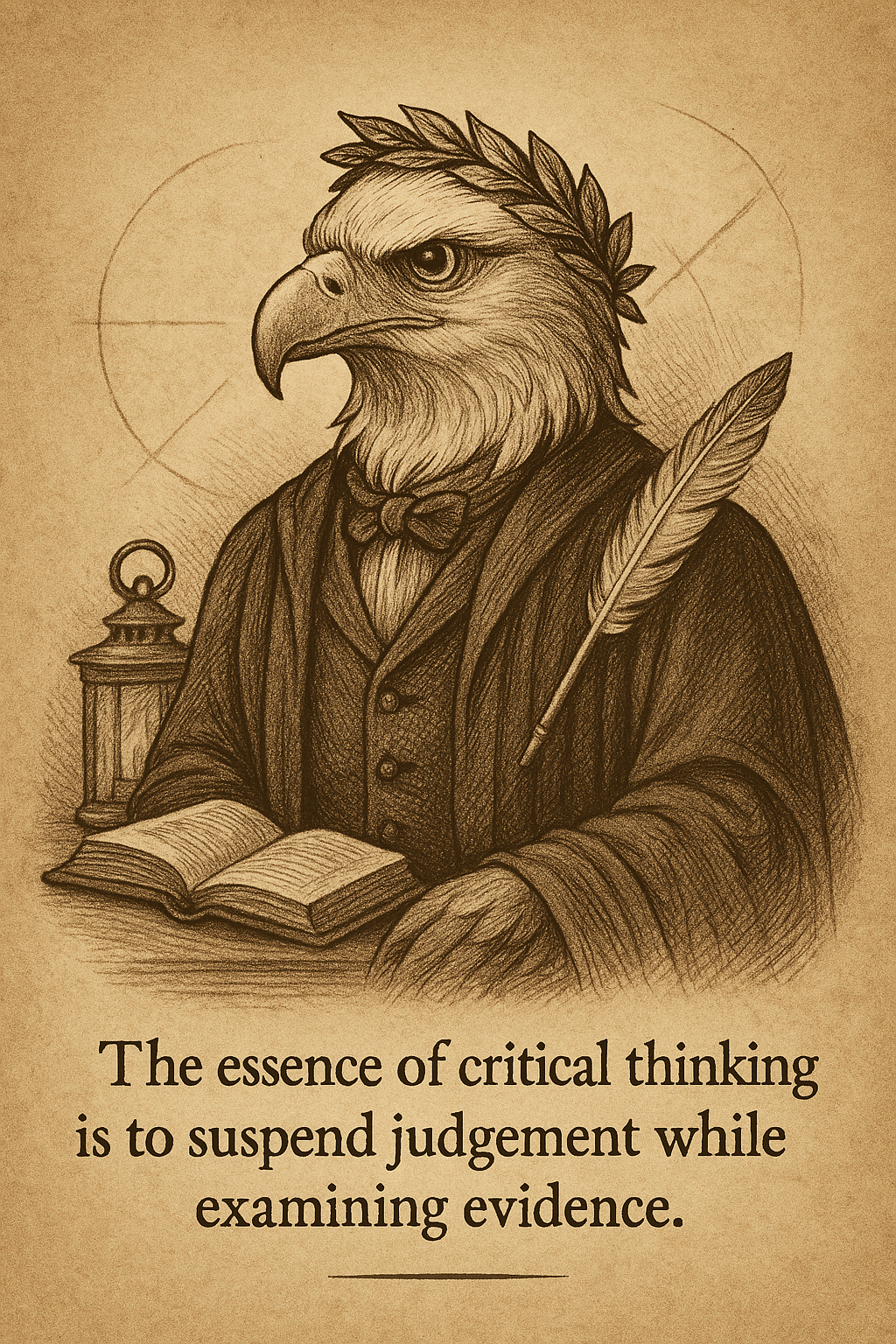
Critical thinking is not about becoming cynical or distrusting everything you read.
It is about becoming curious enough to investigate before reaching conclusions.
It helps technicians solve difficult problems.
It helps managers make better decisions.
It helps students become lifelong learners.
It helps communities have healthier conversations.
Most importantly, it helps individuals continue growing regardless of their profession or background.
Knowledge changes.
Technology evolves.
Industries adapt.
The ability to think clearly remains valuable throughout every stage of life.
Continue Your Journey
Critical thinking is only the beginning. Now it’s time to put these principles into practice throughout Eagleye Forum.
- Operations Hub — Apply systems thinking while learning HVAC/R, electrical systems, mechanical equipment, water systems, energy, and facility operations.
- Development Hub — Strengthen your leadership, business knowledge, project management, information technology, continuous improvement, and professional skills.
- Mindset Forge — Continue developing discipline, leadership, resilience, and decision-making through our mindset-focused articles.
- History & Society — Explore historical events and current issues by evaluating evidence, context, and multiple perspectives.
- Quiz Hub — Reinforce what you’ve learned by testing your knowledge and identifying areas for improvement.
Every article on Eagleye Forum is designed around the same philosophy:
Understand the system. Question assumptions. Evaluate evidence. Never stop learning.