#3 Thomas Jefferson- The Architect of Liberty
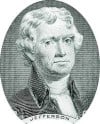
4/13/1743 – 7/4/1826
Party: Democratic-Republican
Timeline; 1801-1809
#3 Thomas Jefferson- The Architect of Liberty
Jefferson is considered the most brilliant President and he is also another one of the Founding Fathers of the United States of America, who was the principal author of the Declaration of Independence in 1776. He was a great architect, farmer, and scientist that founded the University of Virginia.
He was the first Secretary of State under Washington, and the second Vice President, serving under John Adams before he was elected the third President. As a proponent of democracy, republicanism, and individual rights, he motivated American colonists to break from Great Britain and form a new nation. He, along with James Madison, organized the Democratic-Republican Party to oppose the Federalist Party during the formation of the first party system.
Along with Madison, he wrote the Kentucky and Virginia Resolutions, which was to strengthen states rights in opposition to the National Government by nullifying unconstitutional laws, such as they deemed Adams’s Alien and Sedition Acts.
1801;
- John Adams passes one last law to help Federalists remain in power of Congress; Judiciary Act of 1801
- At the age of 57, Jefferson became the third President of the United States with Aaron Burr winning the Vice Presidency.
- Tripoli declares war on the U.S. by cutting down the flagpole at the U.S. consulate.
1802;
- Congress recognized the war with Tripoli and authorized the arming of merchant ships going into what was to be, The First Barbary Wars.
- Judiciary Act of 1801 repealed, Judiciary Act of 1802 passed
- Whiskey and Naturalization laws repealed.
- Jefferson signs the Enabling Act.
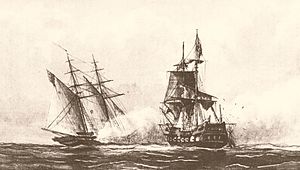
BARBARY WARS
1803;
- Ohio (free) becomes the seventeenth state.
- Case of Marbury v Madison was decided, where the basis for judicial review of congressional and executive actions on the grounds of their constitutionality.
- The Louisiana Purchase treaty was signed.
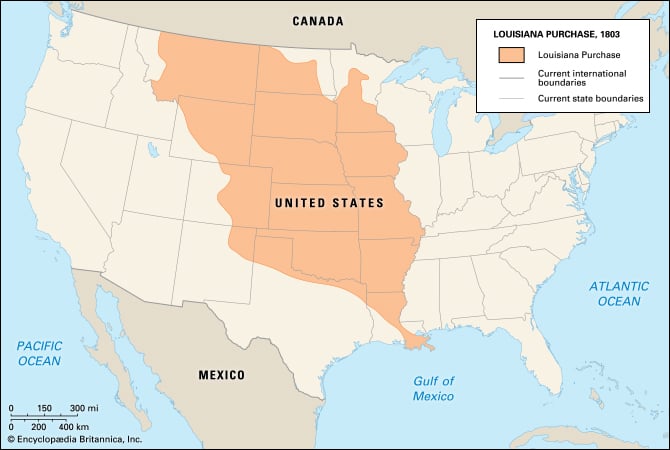
LOUISIANA PURCHASE
1804;
- Aaron Burr is brought up on treason charges for killing Alexander Hamilton and is on the run.
- Twelfth amendment ratified, changing the rules of elections that Vice Presidents are voted separately, not just the runner up since Jefferson and Burr tied creating chaos in the first election.
- Jefferson dispatches Lewis and Clark for an expedition to explore the Louisiana Territory
- New Jersey ends slavery, becomes free state
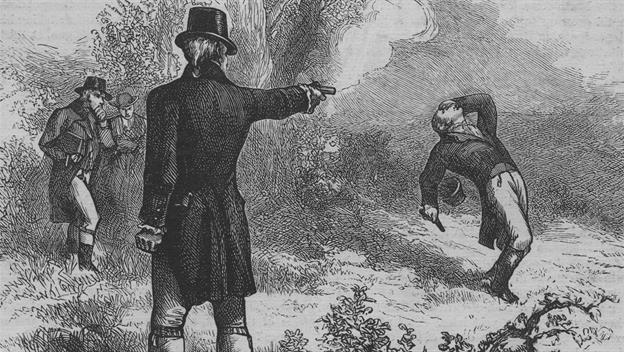
AARON BURR – ANDREW HAMILTON DUEL
1805;
- Jefferson wins re-election with George Clinton as his Vice President.
- Midway through the year, the U.S. and Tripoli finally reached a treaty of peace, ending the Tripolitan war (also known as Barbary war).
1806;
- The Lewis and Clark Expedition ends where it began; St. Louis.
- Legislation was also passed providing military organizational structure.
- Jefferson asks for ban on slave trade.
1807;
- Congress passes law prohibiting the Importation of Slaves, effective 1/1/1808.
- Jefferson modifies, authorizes and signs the Embargo Act.
- Burr is caught and eventually acquitted.
1808; Second Embargo Act (1807) comes into force
1809;
- Congress repeals Embargo Acts.
- Jefferson signs Non-Intercourse act closing U.S. ports to France and England until they agreed to respect rights of U.S. citizens.
Historians generally rank Jefferson as one of the greatest U.S. Presidents. He is on the face of the $2 bill as well as Mount Rushmore.
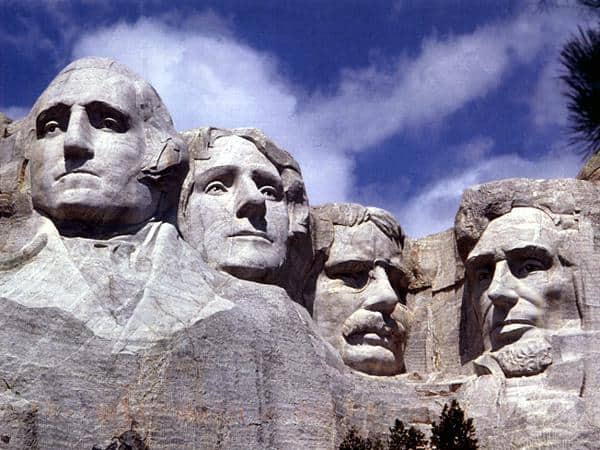
MOUNT RUSHMORE
Famous quotes:
“The tree of liberty must be refreshed from time to time with the blood of patriots and tyrants.”
“In matters of style, swim with the current; in matters of principle, stand like a rock.”
“I hold it, that a little rebellion, now and then, is a good thing, and as necessary in the political world as storms in the physical.”