The Core Systems of a Central Utility Plant
What Is a Central Utility Plant (CUP)?
Every day, millions of people walk through hospitals, universities, airports, manufacturing facilities, data centers, and office campuses without realizing that an entire network of mechanical systems is quietly operating behind the scenes.
Heating, cooling, ventilation, and hot water are often taken for granted, yet they all depend on a complex infrastructure working around the clock to keep buildings safe, comfortable, and operational.
At the center of many large facilities is a Central Utility Plant (CUP), also referred to as a Central Plant or Central Plant Operations (CPO).
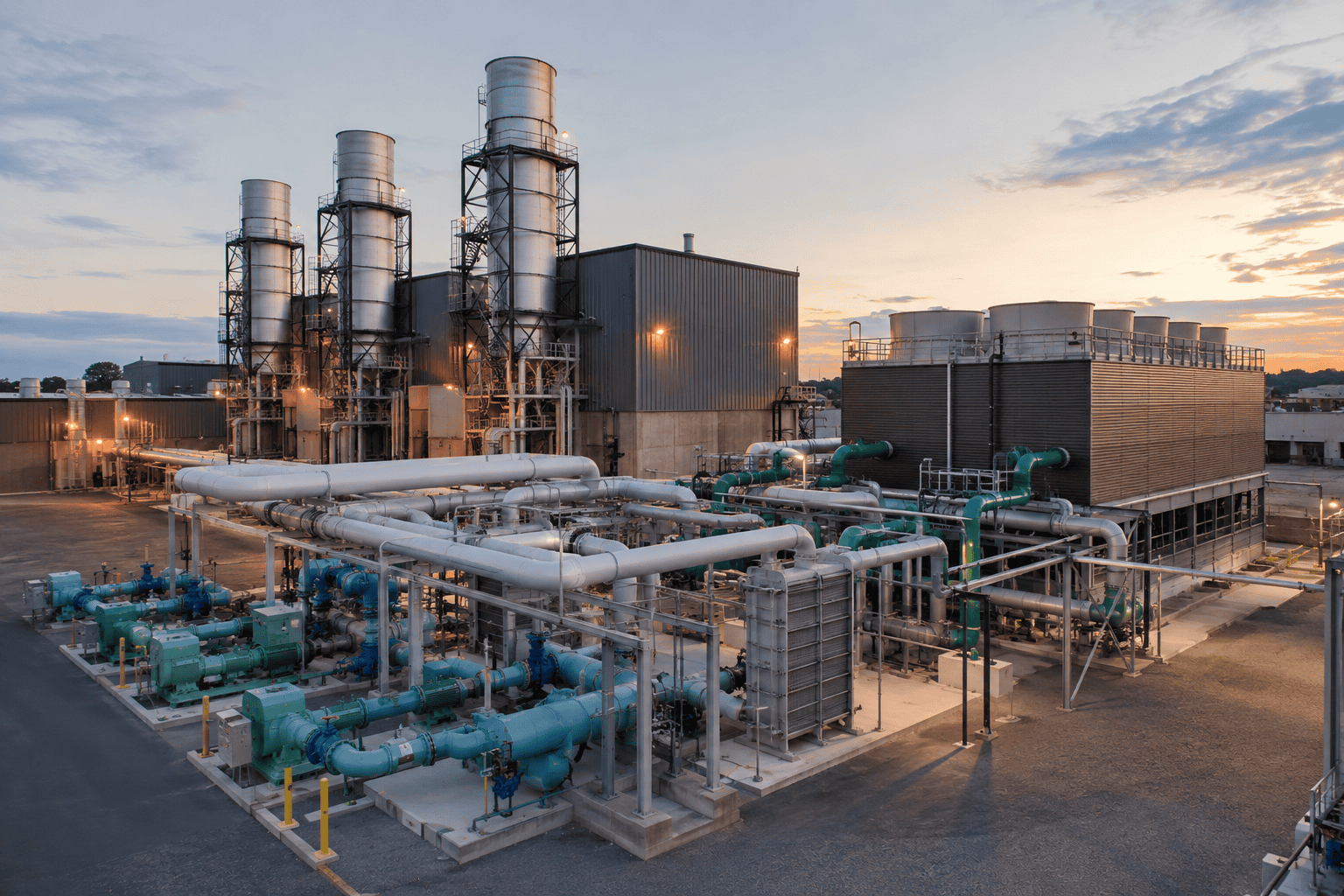
Rather than placing separate boilers and air-conditioning equipment in every building, a central utility plant produces heating and cooling from one centralized location and distributes that energy throughout an entire campus.
Think of it as the heart of the facility.
Just as your heart pumps blood throughout your body, a central utility plant produces thermal energy and circulates it through miles of underground piping to every building it serves.
Whether supplying a hospital that cannot lose climate control, a university campus with dozens of buildings, or an industrial plant operating twenty-four hours a day, the objective remains the same:
Produce thermal energy efficiently. Distribute it reliably. Operate continuously.
What Does a Central Utility Plant Do?
Although every facility is different, the purpose of a central utility plant is straightforward.
It must:
- Produce heating
- Produce cooling
- Distribute thermal energy
- Remove unwanted heat
- Operate safely and efficiently
- Provide reliable service 24 hours a day
To accomplish these goals, multiple mechanical systems work together as one integrated operation.
The Major Systems of a Central Utility Plant
A central utility plant is not one machine—it is an interconnected collection of specialized equipment. Each system performs a specific function, but none operate independently. Together, they create the heating and cooling that modern facilities depend on.
Boilers
Boilers are responsible for producing heat.
Depending on the facility, boilers may generate hot water, steam, or both. They are fueled by natural gas, fuel oil, electricity, or other energy sources and serve as the primary source of thermal energy during colder months or for year-round industrial processes.
Boiler systems commonly provide:
- Building heating
- Domestic hot water
- Steam generation
- Industrial process heat
- Humidification
- Sterilization equipment
Most central plants operate multiple boilers so equipment can be rotated for maintenance while maintaining uninterrupted service.
Steam Systems
Many hospitals, universities, and industrial facilities continue to rely on steam because it can transport large amounts of energy efficiently.
Steam is commonly used for:
- Building heating
- Sterilization
- Humidification
- Laundry services
- Food processing
- Industrial manufacturing
- Heat exchangers
After releasing its heat, the steam condenses back into water and returns to the plant through a condensate return system, where it can be reheated and reused.
Although many modern facilities use heating hot water instead of steam for space heating, steam remains one of the most versatile heating mediums used in large campuses.
Chillers
If boilers create heat, chillers remove it.
Chillers cool water by transferring unwanted heat away from the building and into a separate heat rejection system.
The chilled water produced by the chiller is pumped throughout the campus to air handling units, fan coils, and other cooling equipment where it absorbs heat from occupied spaces before returning to the plant to be cooled again.
Typical chilled water supply temperatures range from 42–45°F (5.5–7°C) under normal operating conditions, although operators may adjust these temperatures to match seasonal demand, humidity levels, or plant efficiency strategies.
Cooling often represents the largest electrical load in an entire facility, making chiller efficiency one of the most important aspects of plant operation.
Cooling Towers
A chiller removes heat from the building, but that heat still has to go somewhere.
Cooling towers provide the final step in the cooling process by rejecting unwanted heat into the atmosphere.
Warm condenser water leaves the chiller and travels to the cooling tower, where air movement and evaporation remove heat before the cooled water returns to the chiller to repeat the cycle.
This continuous loop allows water-cooled chillers to operate efficiently even during periods of extreme outdoor temperatures.
Without cooling towers, water-cooled chillers would quickly lose their ability to reject heat and cooling performance would decline dramatically.
Pump Distribution Systems
Producing heating and cooling is only half the job.
The energy must also be delivered to every building connected to the plant.
Large centrifugal pumps circulate thousands of gallons of water every minute through underground distribution piping that may extend for miles across a campus.
Pump systems commonly move:
- Heating hot water
- Chilled water
- Condenser water
- Condensate
- Domestic hot water
Modern pumping systems frequently use Variable Frequency Drives (VFDs) to automatically adjust pump speed based on system demand, reducing energy consumption while maintaining proper pressure and flow.
Without the distribution system, the heating and cooling equipment would never reach the buildings they are intended to serve.
Heat Exchangers
Heat exchangers allow thermal energy to move from one water system to another without allowing the two fluids to mix.
They are commonly installed between the central plant and individual buildings, allowing each side to maintain its own water chemistry, pressure, and flow characteristics while still transferring heat efficiently.
Heat exchangers are used for:
- Building isolation
- Steam-to-hot-water conversion
- Domestic hot water production
- Process heating
- Primary and secondary pumping systems
Because they isolate systems while transferring heat, heat exchangers are one of the most valuable pieces of equipment found in a modern central utility plant.
How the Systems Work Together
Each of these systems performs a different task, but they operate as one continuous process.
Heating Cycle
Boilers → Pumps → Buildings → Return Water → Boilers
Boilers generate thermal energy while pumps distribute hot water to buildings. After releasing heat, the cooler return water flows back to the boilers to be reheated.

Cooling Cycle
Chillers → Pumps → Buildings → Return Water → Chillers
Chillers produce chilled water, which circulates through buildings to absorb heat before returning to the plant to be cooled again.

Heat Rejection Cycle
Chillers → Condenser Water → Cooling Towers → Condenser Water → Chillers
Heat removed from the buildings is carried by the condenser water system to the cooling towers, where it is released into the atmosphere before the cooled condenser water returns to the chiller.
Supporting Systems
Behind these primary systems are numerous support systems that improve efficiency, protect equipment, and keep the plant operating safely.
These may include:
- Building Automation Systems (BAS)
- Water treatment
- Chemical feed systems
- Expansion tanks
- Air separators
- Fuel systems
- Emergency generators
- Electrical switchgear
- Instrumentation and controls
- Variable Frequency Drives (VFDs)
Although these systems are often overlooked, they play a critical role in maintaining reliable plant operation.
Who Operates a Central Utility Plant?
Central utility plants are typically staffed by highly trained operators responsible for monitoring equipment twenty-four hours a day.
Depending on the organization, job titles may include:
- Central Plant Operator
- Central Utility Plant Operator
- Stationary Engineer
- Operating Engineer
- Facilities Engineer
- Plant Technician
- Chief Engineer
Operators continuously monitor temperatures, pressures, flows, water chemistry, alarms, equipment performance, and energy consumption while responding to changing building loads and seasonal conditions.
Their goal is simple: provide reliable service while operating the plant as safely and efficiently as possible.
Why Central Utility Plants Matter
Most people never see the equipment that keeps their buildings functioning.
They simply expect hospitals to remain cool during the summer, classrooms to stay warm during the winter, laboratories to maintain precise environmental conditions, and manufacturing plants to operate without interruption.
Behind those expectations is a central utility plant quietly producing, distributing, and managing thermal energy every hour of every day.
Understanding how boilers, steam systems, chillers, cooling towers, pump distribution systems, and heat exchangers work together provides the foundation for understanding every other aspect of central plant operations.
Whether your goal is to become a central plant operator, improve your knowledge of facility engineering, or simply understand how large buildings function, mastering these core systems is the first step toward understanding the mechanical heartbeat of modern infrastructure.
Explore other sections of the Central Plant