Leading Language: How Words Shape Decisions Before Facts Arrive
Every decision begins before the decision itself.
Long before evidence is examined, data is reviewed, or conclusions are reached, something else has already started influencing the outcome:
The language being used.
One of the most valuable lessons I’ve learned throughout my career is that words do far more than communicate information. They shape expectations, influence emotions, and often determine how people interpret facts before those facts are ever presented.
This isn’t just something that happens in politics or the media.
It happens during management meetings.
It happens in vendor presentations.
It happens in performance reviews.
It happens in advertisements.
It happens during troubleshooting.
It even happens in conversations with ourselves.
Understanding leading language isn’t about becoming cynical. It’s about learning to separate evidence from presentation so you can make better decisions.
What Is Leading Language?
Leading language—sometimes called loaded or emotive language—is the practice of influencing someone’s conclusion before they’ve had an opportunity to evaluate the evidence.
Sometimes it’s intentional. Sometimes it isn’t.
Either way, it changes how information is received.
Consider these two statements.
Neutral
“The maintenance manager approved replacing the air handler.”
Leading Language
“The reckless manager wasted thousands of dollars replacing an air handler that didn’t need replacing.”
The first statement communicates an event.
The second communicates an opinion disguised as a description.
Notice what happened.
Before you know anything about the equipment…
Before you’ve seen maintenance records…
Before you’ve reviewed repair history…
You’ve already been encouraged to reach a conclusion.
That’s the power of leading language.
Why It Works
Our brains are designed to react quickly.
Emotion is faster than analysis.
Long before logic evaluates a statement, emotion begins assigning meaning to it.
Words like:
- catastrophic
- dangerous
- lazy
- irresponsible
- revolutionary
- cutting-edge
- failing
- heroic
all create expectations before evidence arrives.
Those words may eventually prove accurate.
But professionals don’t accept conclusions because of adjectives.
They verify them with evidence.
Leading Language Isn’t Just a Media Problem
The news often receives criticism for emotionally charged headlines, but the same technique exists in almost every profession.
Whenever language attempts to influence your conclusion before presenting evidence, leading language is at work.
The environment changes.
The psychology doesn’t.
Leading Language in Management
Imagine a supervisor tells upper management:
“Our maintenance department has become lazy.”
That sounds factual.
It isn’t. It’s a conclusion.
A better leader asks different questions.
- Have emergency work orders increased?
- Has staffing changed?
- Has the average age of equipment increased?
- Are technicians spending more time responding to breakdowns than performing preventive maintenance?
- Has training kept pace with new technology?
The word lazy shuts down investigation.
The questions reopen it.
Strong leaders don’t diagnose people before diagnosing systems.
They investigate the facts first.
Leading Language in Facility Operations
Anyone who has worked in maintenance has probably seen a vendor proposal describing equipment as:
- “Approaching catastrophic failure.”
- “Critically outdated.”
- “High liability.”
- “Mission critical.”
- “Industry leading.”
Those statements immediately create urgency.
Now remove the adjectives.
What are the measurable facts?
- Bearing vibration increased by 12%.
- Motor amperage has risen above historical averages.
- Oil analysis shows elevated metal content.
- The condenser approach temperature has increased over the last six months.
Now we’re discussing evidence.
Maybe the equipment should be replaced.
Maybe it shouldn’t.
The point is that professionals evaluate the measurements before accepting the conclusion.
Good maintenance departments replace equipment because of data, not because of adjectives.
Leading Language in Manufacturing and Sales
Manufacturers use framing every day.
Every product claims to be:
- Revolutionary.
- Premium.
- Industry-leading.
- Best-in-class.
- Next generation.
Those phrases aren’t necessarily dishonest.
They’re also not technical specifications.
Professionals learn to ask better questions.
Compared to what?
Measured how?
Using which standards?
Over what period?
Evidence transforms marketing into information.
Leading Language in the Workplace
Employees use leading language just as often as managers.
“The company doesn’t care.”
“Management never listens.”
“They’re always against us.”
Sometimes those concerns are justified.
Sometimes they’re emotional summaries of much more complicated situations.
Neither should be accepted—or dismissed—without evidence.
Critical thinking works in every direction.
The goal isn’t defending management or employees.
The goal is understanding reality.
Why This Matters
Leading language often prevents organizations from solving problems.
Once someone accepts the conclusion, they stop looking for evidence.
Instead of asking,
“What’s actually happening?”
they begin asking,
“Who can we blame?”
That’s where accountability begins to disappear.
The same mistake occurs in troubleshooting.
An experienced technician doesn’t assume a compressor has failed simply because someone describes it as “bad.”
They gather data.
Measure voltage.
Check pressures.
Verify airflow.
Test components.
The diagnosis comes after the evidence—not before it.
Organizations should operate the same way.
A Better Habit
Whenever you encounter emotionally charged language, pause for a moment and ask yourself four simple questions:
What are the measurable facts?
What words are encouraging me to reach a conclusion?
How would this statement sound if written neutrally?
What information is missing?
Those four questions slow emotional thinking and encourage analytical thinking.
Whether you’re evaluating a news article, reading a vendor proposal, conducting a performance review, or troubleshooting equipment, the process is exactly the same.
Better Language Creates Better Decisions
Every organization depends on communication.
Technicians communicate with operators.
Operators communicate with supervisors.
Supervisors communicate with managers.
Managers communicate with executives.
Manufacturers communicate with customers.
Governments communicate with citizens.
The quality of those decisions depends on the quality of the information being exchanged.
When language becomes more emotional than informative, misunderstanding grows.
Trust declines.
Poor decisions become more common.
But when organizations communicate with evidence first and conclusions second, better decisions naturally follow.
Leading language isn’t something to fear.
It’s something to recognize.
Because once you recognize it, you regain the ability to evaluate information on its own merits instead of reacting to someone else’s framing.
Good technicians do it.
Good leaders do it.
Good managers do it.
Good critical thinkers do it.
They don’t let language make the decision for them.
They let the evidence speak first.
Continue Your Journey
Leading language is just one piece of becoming a better thinker and decision-maker. Continue building your understanding throughout Eagleye Forum.
- 🧠 Critical Thinking — Learn how to question assumptions, recognize bias, and evaluate evidence before reaching conclusions.
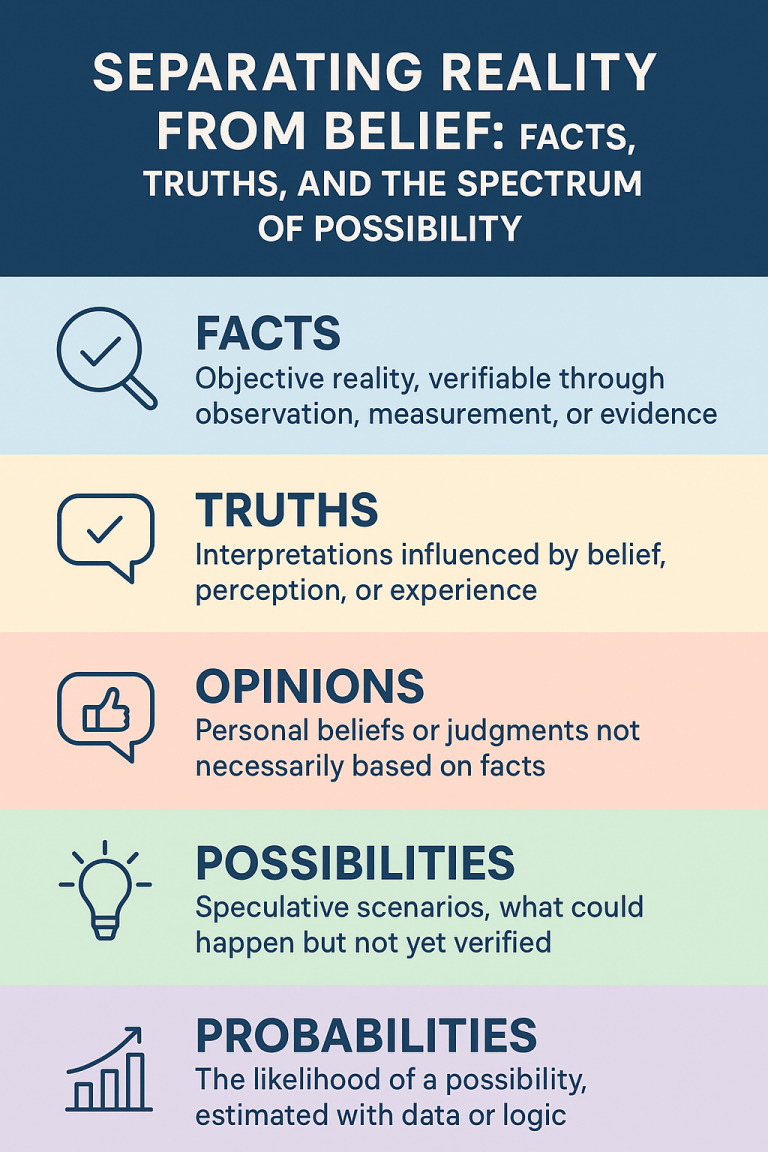
- 📚 Understanding the Spectrum of Information — Build the vocabulary needed to classify information accurately before acting on it.
- ⚙ Operations Hub — Apply these same principles to troubleshooting HVAC, electrical, mechanical, water, and facility systems through evidence-based diagnosis.
- 📈 Leadership & Continuous Improvement — Discover how accountability, communication, and process improvement create stronger teams and better organizations.
- 🤖 AI as a Support Tool — Learn how AI can organize information quickly, while understanding why human judgment is still essential for separating facts from framing.