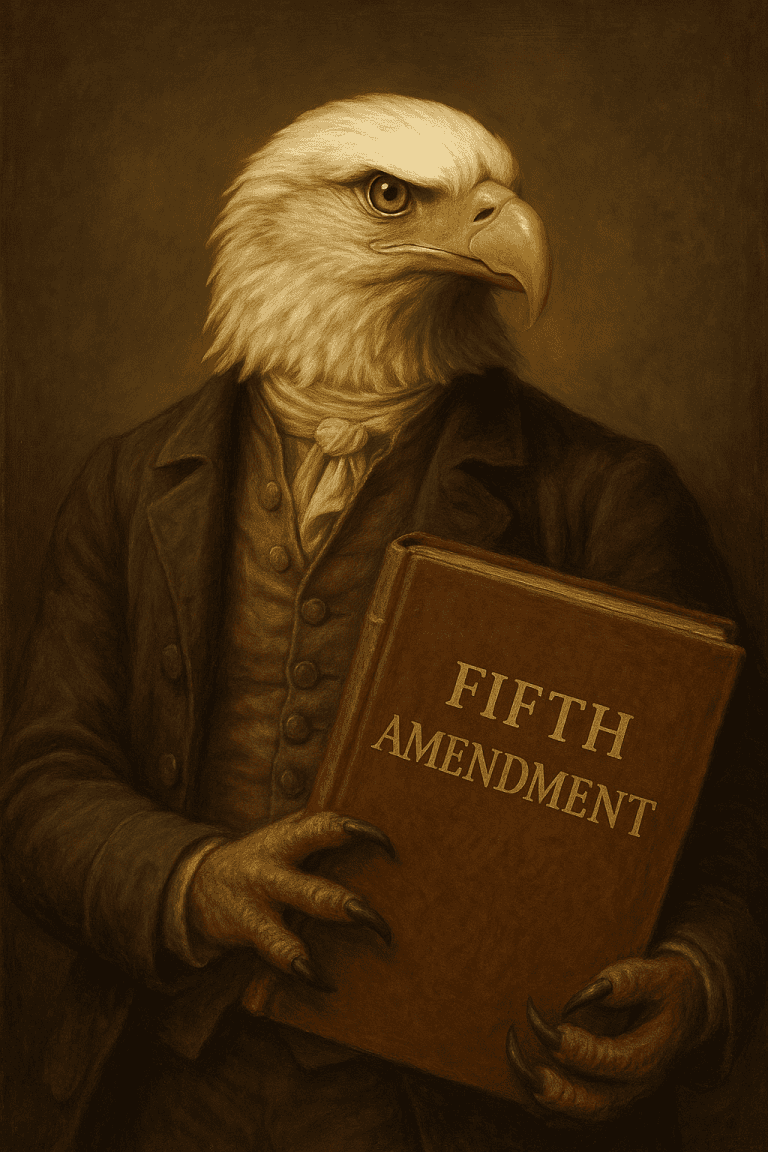
9th Amendment
9th Amendement: True Freedom
“The enumeration in the Constitution, of certain rights, shall not be construed to deny or disparage others retained by the people.”

Historical Context
- Introduced: 1789 as part of the Bill of Rights.
- Ratified: December 15, 1791.
- Amended? No — the wording has never changed.
- Key Interpretations Over Time:
- Originally included to reassure skeptics of the Constitution (like the Anti-Federalists) who feared listing rights would imply that unlisted rights didn’t exist.
- Rarely used in court, but sometimes cited in landmark privacy and liberty cases.
- Griswold v. Connecticut (1965): Recognized marital privacy rights (contraceptives) under the “penumbras” of the 1st, 3rd, 4th, 5th, and 9th Amendments.
- Roe v. Wade (1973): Ninth Amendment cited in arguments for privacy rights (though the Court relied more heavily on the 14th).
The Ninth Amendment is a safety net; it protects rights not spelled out in black and white.
Simplified Breakdown
- Enumeration of Rights
- Just because a right is listed doesn’t mean it’s the only right.
Translation: The Bill of Rights is not an exclusive checklist.
- Retained by the People
- The people hold more rights than the government could ever list.
Translation: Freedom doesn’t begin and end with the Constitution.
How It’s Treated Today
- Courts: The Ninth is rarely the sole basis for rulings, judges usually pair it with other amendments (like the 4th or 14th).
- Privacy Rights: It has been invoked in arguments for privacy, marriage rights, and reproductive rights.
- Political Use: Some argue the Ninth is too vague, and therefore nearly meaningless. Others argue it’s one of the most important reminders that liberty is broader than the written word.
- Modern Issues: Could apply to digital privacy, bodily autonomy, or even emerging debates about AI, genetic data, and medical freedoms.
How It Should Be Applied
- Recognize the Ninth as a living principle: rights evolve as society evolves.
- Protect personal autonomy in areas not foreseen by the Founders (digital data, medical privacy, family decisions).
- Guard against the idea that “if it’s not in the Constitution, it doesn’t exist.” That was the exact fear the Ninth was written to prevent.
Core Idea
The Ninth Amendment reminds us that freedom is bigger than the text. The Constitution doesn’t grant rights, it protects them. People already hold countless rights by nature of being free; the Ninth ensures the government can’t claim silence = permission to infringe.
Do you think the Ninth Amendment should be used more often in modern debates (like digital privacy, medical freedom, or parental rights)? Or is it too vague to be effective in today’s courts?