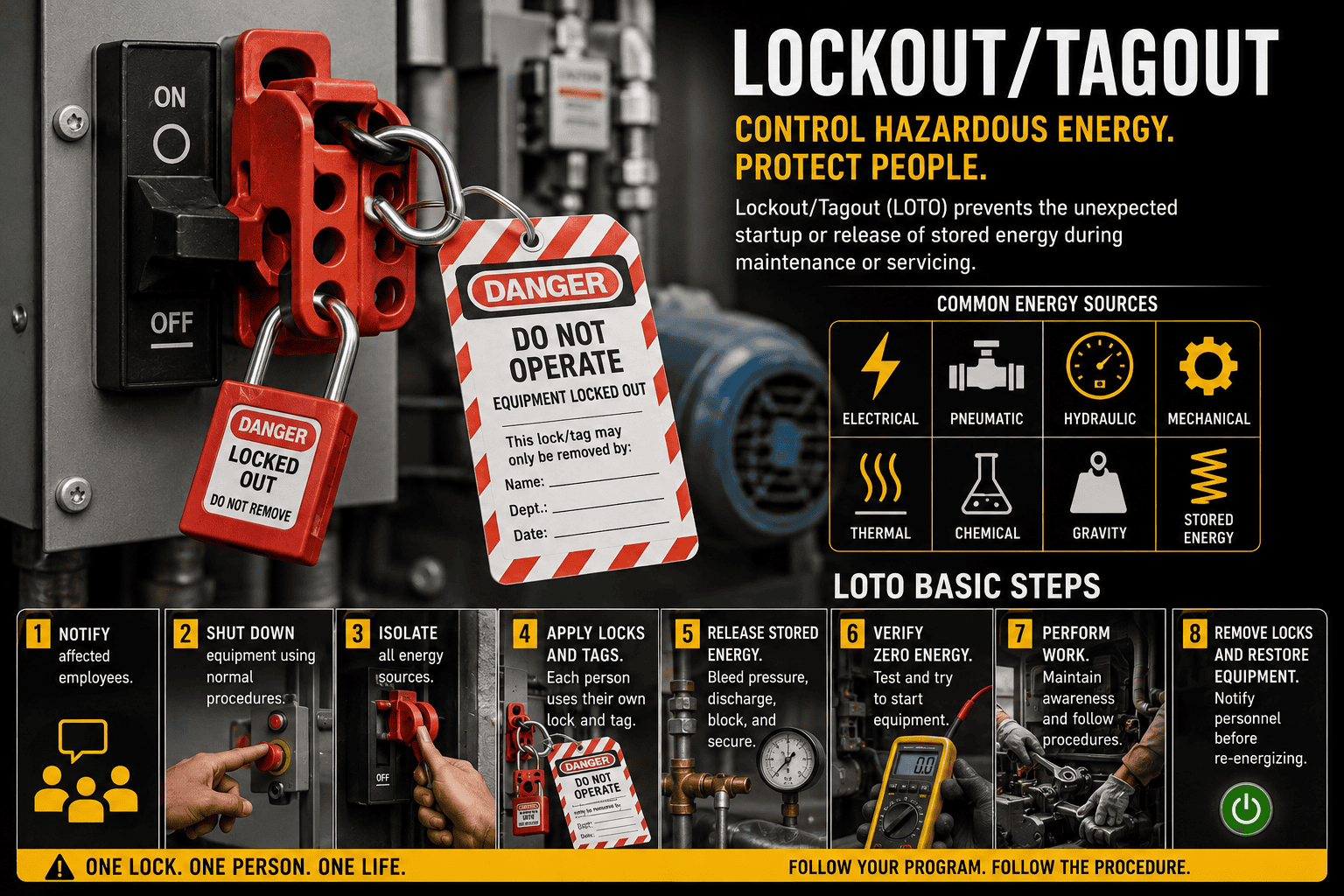
Lockout/Tagout (LOTO): Controlling Hazardous Energy
Every year, workers are seriously injured or killed because machinery unexpectedly starts, stored energy is released, or electrical systems are energized while maintenance is being performed. Lockout/Tagout (LOTO) exists to prevent these incidents by ensuring equipment cannot be operated until all work has been completed and every authorized worker is safely clear.
Whether you’re replacing a motor, changing a valve, repairing a conveyor, servicing an air handler, or troubleshooting a pump, understanding proper LOTO procedures is one of the most important safety skills you can develop.
What Is Lockout/Tagout?
Lockout/Tagout is a safety procedure used to isolate hazardous energy before servicing or maintaining equipment.
The process involves:
- Shutting down the equipment.
- Isolating every energy source.
- Applying a lock so the isolation device cannot be operated.
- Applying a warning tag identifying who placed the lock and why.
- Verifying that the equipment cannot start before work begins.
The purpose is simple:
No one should be able to restore energy until every worker has removed their own protection.
OSHA Requirements
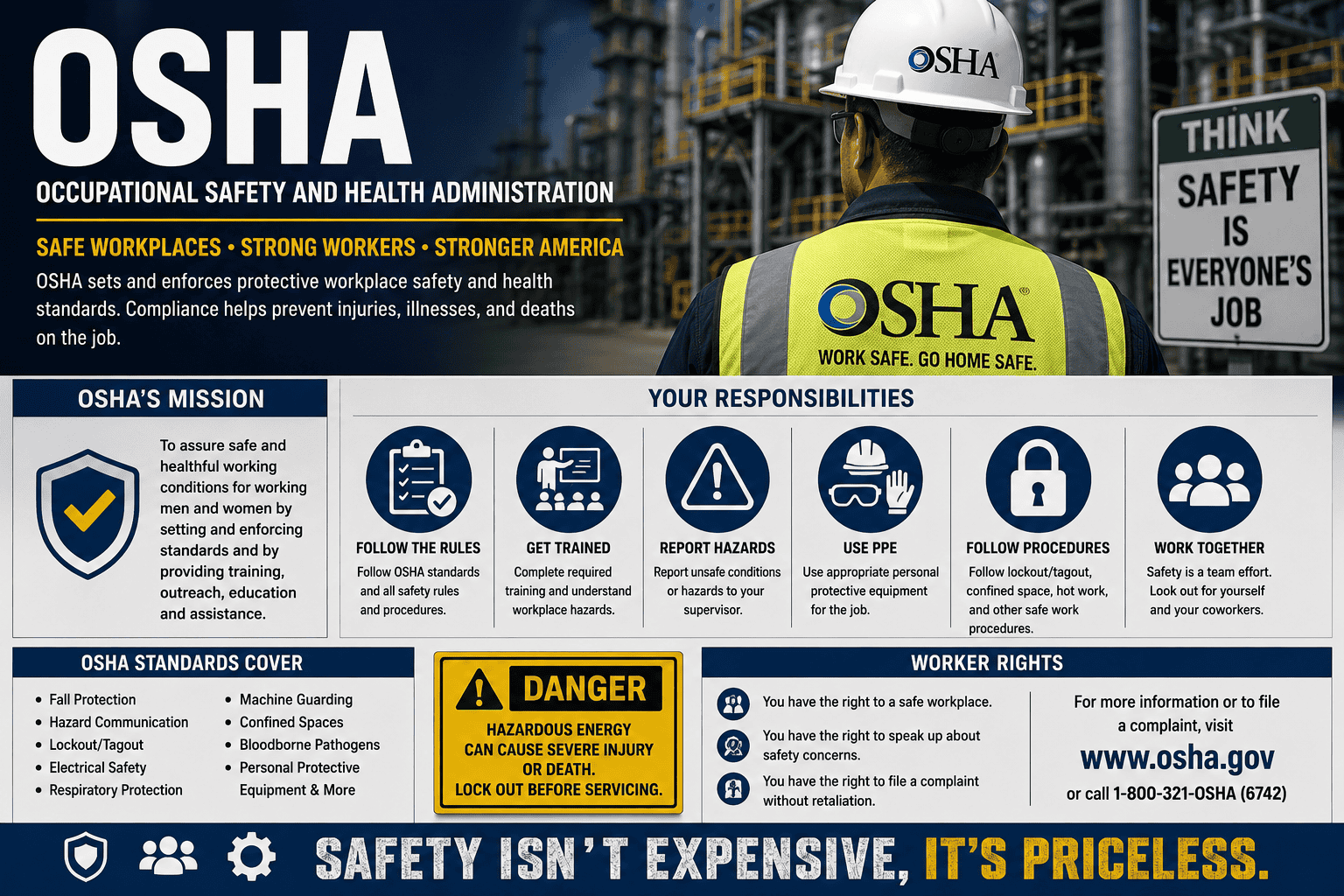
In the United States, Lockout/Tagout requirements are found under OSHA’s Control of Hazardous Energy standard (29 CFR 1910.147).
The standard applies whenever the unexpected energization, startup, or release of stored energy could injure employees during servicing or maintenance.
OSHA requires employers to have:
- A written Lockout/Tagout program.
- Energy control procedures.
- Employee training.
- Periodic inspections of the program.
- Appropriate lockout devices.
- Procedures for group lockout when multiple workers are involved.
- Procedures for outside contractors when applicable.
The goal is not simply placing a lock on equipment—it is ensuring hazardous energy is controlled from start to finish.
OSHA Tells You What—Not Always How
One of the biggest misconceptions about Lockout/Tagout is that OSHA specifies every detail of how a program must look.
It does not.
OSHA establishes performance requirements—what employers must accomplish to protect workers—but it generally leaves the implementation details to the employer.
For example, OSHA does not specifically require:
- Red locks
- Blue locks
- Department-specific colors
- Numbered lock systems
- Keyed-alike or keyed-different programs
- Standardized tag colors
- Particular lock brands
Instead, employers develop procedures that work for their facilities while meeting OSHA’s safety requirements.
Many organizations choose to follow guidance published by organizations such as ANSI, which provides widely respected best practices for developing comprehensive energy control programs. These recommendations often cover topics such as standardized lock colors, tag formats, group lockout methods, auditing practices, and employee responsibilities.
ANSI guidance can help create consistency and improve safety, but unless an employer has adopted those practices as part of its own program or another regulation applies, they are generally considered recommendations rather than federal OSHA requirements.
In other words:
OSHA requires an effective Lockout/Tagout program. How that program is organized is largely up to the employer, provided it meets OSHA’s performance standards.
Types of Hazardous Energy
Many people immediately think of electricity when they hear Lockout/Tagout, but electrical energy is only one of many hazards.
Energy can exist in many forms, including:
Electrical
- High voltage
- Low voltage
- Capacitors
- Batteries
- UPS systems
Mechanical
- Rotating shafts
- Flywheels
- Belts
- Springs
- Elevated loads
Hydraulic
Hydraulic systems may remain under thousands of PSI even after pumps are shut down.
Stored pressure must be safely relieved before maintenance begins.
Pneumatic
Compressed air systems can unexpectedly move cylinders, valves, or actuators if pressure remains trapped.
Thermal
Steam systems, boilers, and hot water piping can retain dangerous temperatures long after shutdown.
Chemical
Pressurized chemicals or reactive substances may require isolation before servicing.
Gravity
Raised equipment, suspended loads, elevator cars, and machine components may fall if not mechanically secured.
Stored Energy
One of the most overlooked hazards is energy that remains after power is disconnected.
Examples include:
- Charged capacitors
- Compressed springs
- Flywheel momentum
- Steam pressure
- Hydraulic accumulators
- Compressed air tanks
- Elevated loads
- Heated equipment
Simply turning off equipment does not guarantee it is safe.
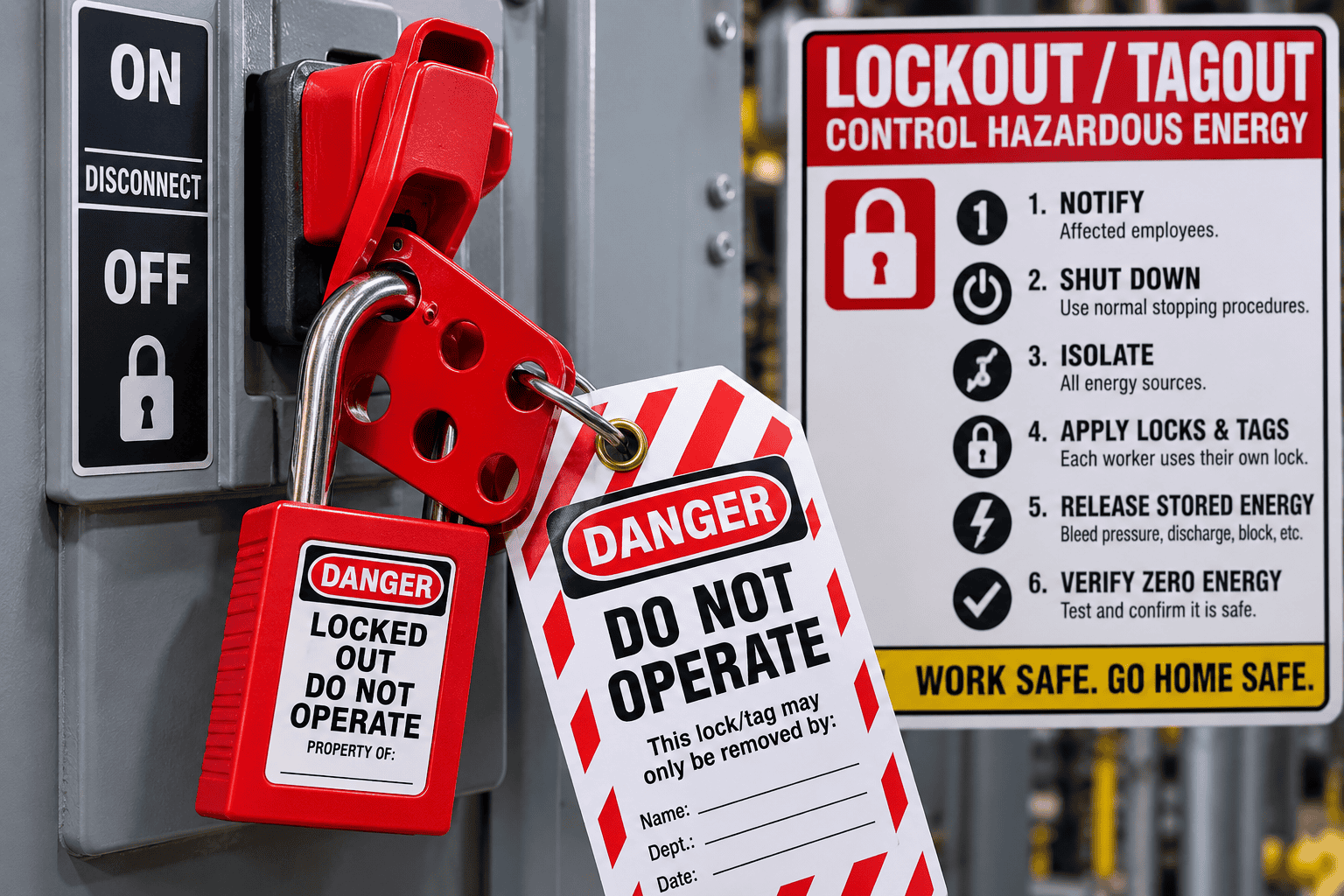
Basic Lockout/Tagout Process
While each employer’s procedure will differ, most follow the same general sequence.
1. Notify affected employees
Inform operators and nearby personnel that equipment will be removed from service.
2. Shut down the equipment
Use normal stopping procedures.
3. Isolate every energy source
Open disconnects, close valves, block mechanical movement, and isolate all hazardous energy.
4. Apply locks and tags
Each authorized employee places their own lock and identification tag.
5. Release stored energy
Bleed pressure.
Discharge capacitors.
Block moving parts.
Allow equipment to cool.
Secure suspended loads.
6. Verify zero energy
Attempt to start the equipment using normal controls.
Test for voltage where appropriate.
Verify pressure is zero.
Never assume isolation worked.
7. Perform the work
Maintenance can now begin.
8. Remove locks
Each worker removes only their own lock after confirming the area is safe.
9. Restore equipment
Notify personnel before re-energizing.
Why Every Worker Uses Their Own Lock
One of the core principles of Lockout/Tagout is personal control.
Every authorized employee working on equipment places their own lock.
No one should remove another person’s lock except through a documented emergency removal procedure established by the employer.
This ensures that equipment cannot be restarted while even one worker remains exposed to hazardous energy.
Group Lockout
Large maintenance projects often involve multiple trades working simultaneously.
Instead of placing dozens of locks directly on equipment, many facilities use lock boxes or group lock systems.
The primary isolation points are locked by designated personnel, and the keys are secured inside a lock box. Each worker then places their own personal lock on the lock box. The equipment cannot be re-energized until every personal lock has been removed.
This method allows many employees to maintain individual control while simplifying complex shutdowns.
Common Lockout Mistakes
Many serious accidents occur because basic steps are skipped.
Common mistakes include:
- Assuming power is off without testing.
- Forgetting secondary energy sources.
- Failing to relieve stored pressure.
- Relying only on push buttons or emergency stops.
- Removing another employee’s lock.
- Using someone else’s key.
- Skipping verification.
- Beginning work before all energy sources are isolated.
Most LOTO failures occur because someone assumed equipment was safe instead of proving it was safe.
Lockout vs. Tagout
Although the terms are often used together, they are not identical.
A lockout physically prevents an energy-isolating device from being operated.
A tagout is a warning label indicating that equipment must not be energized.
Whenever equipment can be physically locked, OSHA generally expects lockout to be used. Tagout-only systems are permitted only under specific conditions and must provide an equivalent level of employee protection.
Final Thoughts
Lockout/Tagout is far more than placing a padlock on a disconnect. It is a systematic process designed to eliminate one of the leading causes of serious workplace injuries: the unexpected release of hazardous energy.
OSHA requires employers to establish and maintain an effective energy control program, train employees, and ensure hazardous energy is properly isolated before work begins. While OSHA sets the minimum legal requirements, many organizations adopt ANSI guidance and other industry best practices to create more consistent, comprehensive, and user-friendly programs. Details such as lock colors, numbering systems, and tag formats are usually determined by the employer, provided the overall program remains effective and compliant.
The strongest Lockout/Tagout programs combine clear procedures, proper training, consistent implementation, and a workplace culture where no one takes shortcuts with hazardous energy. Every lock represents someone’s life—and every verification step is an opportunity to ensure that person goes home safely.