
A Central Utility Plant (CUP) is the heart of many large facilities, quietly producing and distributing the heating and cooling energy that keeps hospitals, universities, airports, industrial campuses, and commercial complexes operating around the clock. While most occupants never see the equipment behind the scenes, central plants rely on a carefully engineered network of boilers, steam systems, chillers, cooling towers, pumps, expansion tanks, piping, and automated controls working together as one integrated system.
This hub explores the core technologies that make central utility plants possible. You’ll learn how boilers generate heat, how steam systems transport thermal energy, how chillers produce chilled water for air conditioning, and how cooling towers reject unwanted heat back into the atmosphere. We’ll also cover the critical support systems—including pump distribution networks, expansion tanks, heat exchangers, water treatment, and Building Automation Systems (BAS)—that monitor, control, and optimize plant performance.
Whether you’re new to facility engineering or an experienced operator looking to strengthen your understanding, these articles break down complex plant operations into practical, real-world concepts. By understanding how each system functions individually—and how they interact as a complete energy network—you’ll gain the foundation needed to troubleshoot problems, improve efficiency, and better appreciate the engineering that keeps modern facilities running every day.
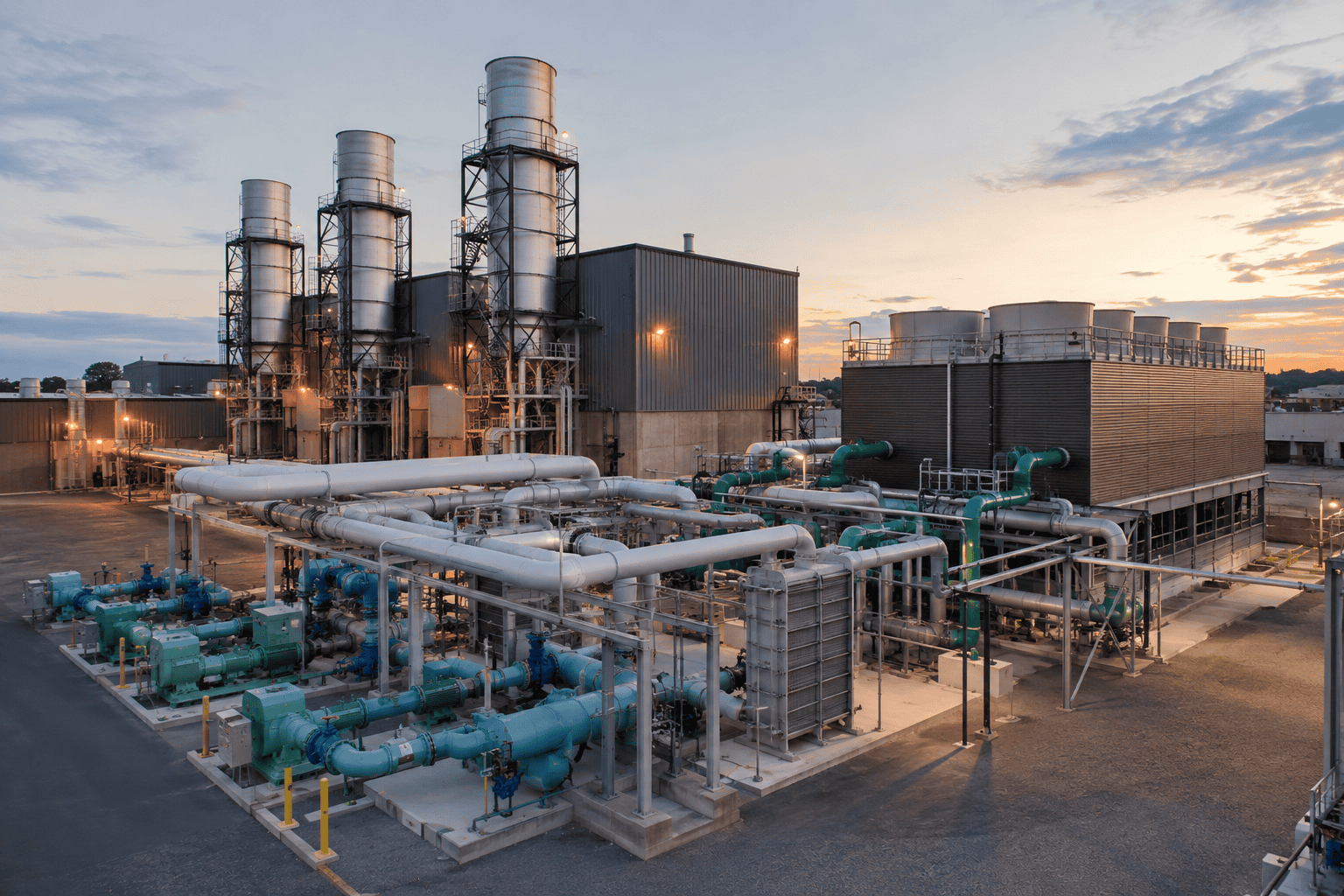
Core Systems of a Centril Utility Plant
Every Central Utility Plant is built around a group of interconnected systems that generate, transfer, and distribute thermal energy throughout a facility. While each plant is designed to meet its own operational needs, most rely on the same core components: boilers, steam or hot water systems, chillers, cooling towers, pumps, expansion tanks, heat exchangers, water treatment, and automated controls. Understanding how these systems work together provides the foundation for operating, maintaining, and troubleshooting virtually any central plant.
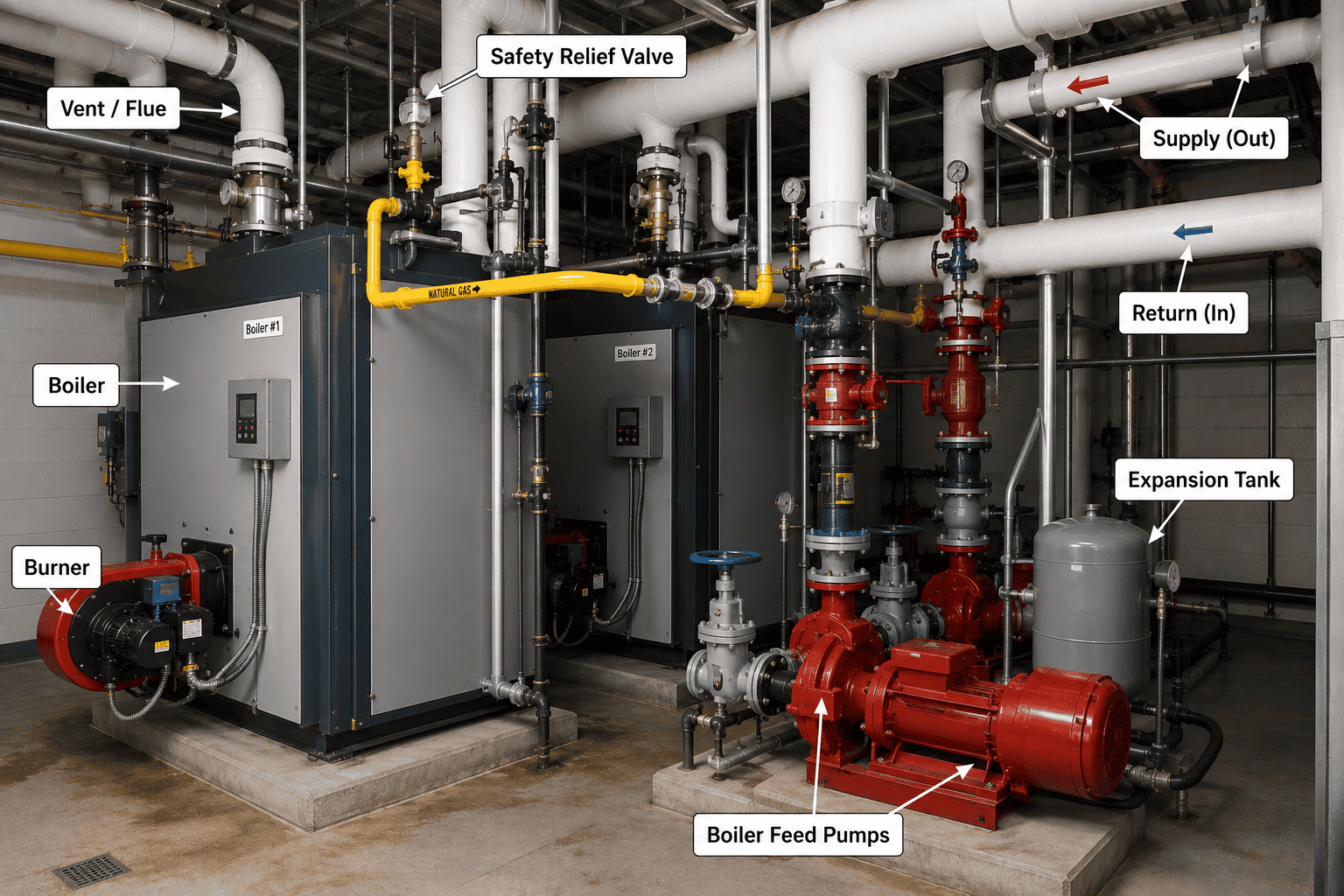
How Boilers work
Boilers are the primary heat-producing equipment in a Central Utility Plant, converting the chemical energy stored in fuel into thermal energy that can be distributed throughout a facility. By heating water to produce hot water or steam, boilers provide the energy needed for space heating, domestic hot water, industrial processes, humidification, and other building systems. Understanding how boilers generate, control, and safely transfer heat is one of the most important foundations of central plant operations.

Steam Bioiler Operations
Steam systems are one of the most efficient methods of transferring thermal energy throughout large facilities. By converting water into steam, a boiler creates a high-energy medium that can travel long distances with minimal heat loss before releasing its energy through heat exchangers, coils, or process equipment. Understanding how steam is generated, distributed, condensed, and returned to the boiler is essential for operating a safe, reliable, and efficient Central Utility Plant.