#1 George Washington- The Father of Our Country
2/22/1732 – 12/14/1799
Party: None / Independent
Timeline; 1752-1796
#1 George Washington- The Father of Our Country
There is a rumor that in the Battle of Monongahela, during the French-Indian war, General Braddock (Sitting on the horse pictured below) was shot off his horse and soldiers started fleeing, George Washington took over the rear guard to protect troops as they fled, during this, he had two horses shot out from under him, once they got away it was noted that Washington had four bullet holes in his coat, but no wounds. He sent a letter to his mother indicating everything, but how accurate is it? You decide. While I, personally, have found multiple sites putting the bullet holes off as pure myth, I have found others, Encyclopaedia Britannica for one, to state it as truth.
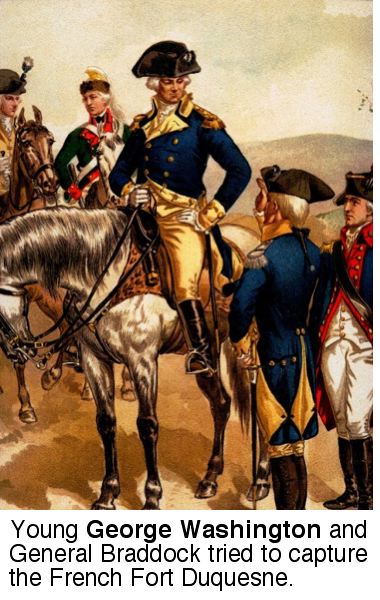
1752-1758; George Washington held ranks of Major and Colonial with the British Militia during the French and Indian Wars.
1759-1765; Washington stayed away from the military life, running his plantation off the Kanawha River.
1765; The Stamp Act was announced, which was the first direct tax on the colonies.
1767; The Townshend Acts were announced which were a series of tax acts throughout that year.
1770; The Townshend Acts were repealed after Washington called for a ban on English goods until so. The only tax the colonies were paying after that were for tea.
1773; The Tea Act was announced which then brought the Colonists of the Thirteen Colonies, merchants, smugglers and artisans to stop the tea distribution and defy the taxes levied, referred to as The Boston Tea Party.
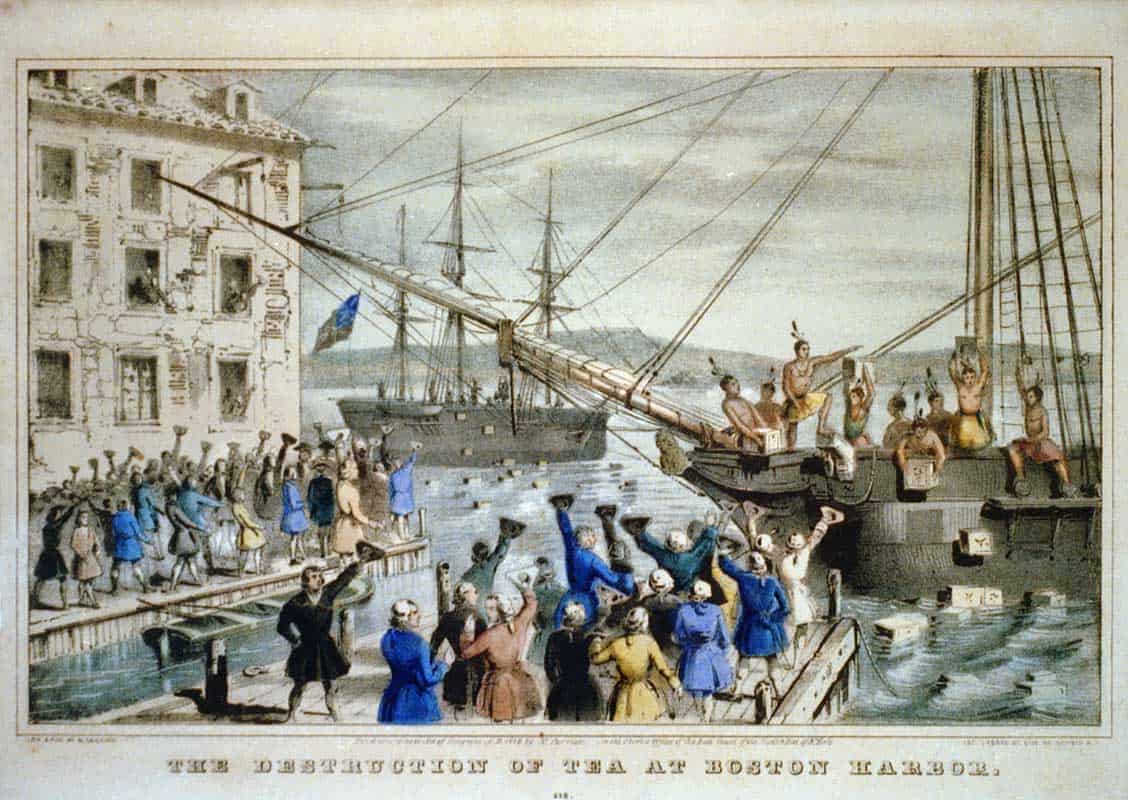
BOSTON TEA PARTY
1774; The Continental Congress was formed after the punitive taxes that came from the Boston Tea Party were levied. Washington was one of the first delegated.
1775; After The Battles of Lexington and Concord the colonies went to war. Washington appeared at the Second Continental Congress in military uniform signaling he was prepared for war. Washington founded the Continental Army as Congress unanimously declared him Full General and Commander in Chief.
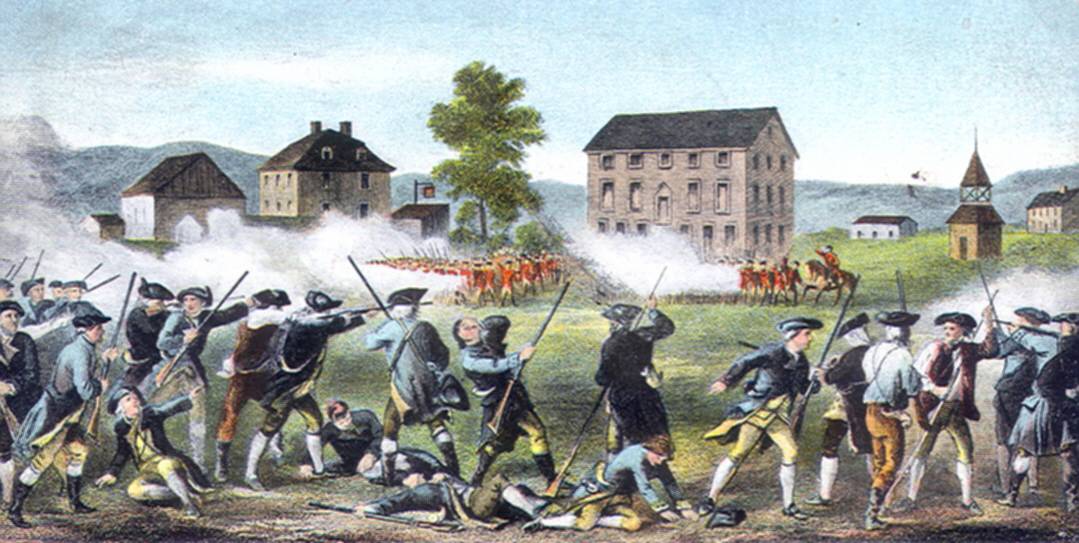
BATTLES OF LEXINGTON AND CONCORD
1776;
- France starts to provide covert aid to the Americans
- Popular belief is Washington and a few others visited Betsy Ross to create a flag for the new colony. Originally the colors did not have a significant meaning but eventually it was labeled that white signifies purity and innocence, red signifies hardiness & valour, and blue, also known as the color of the Chief, signifies vigilance, perseverance and justice.
- The Continental Congress releases the declaration of Independence
- The Battle of Long Island takes place
- The Siege of Bostontakes place
- Washingtonand company crosses the icy Delaware river for the Battle in Trenton
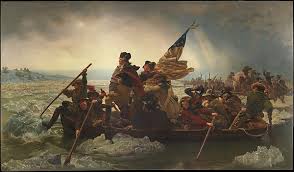
WASHINGTON CROSSES DELAWARE RIVER
1777; The Battles of Saratoga takes place where Britain surrenders almost 6,000 troops
1778; France recognizes U.S. independence
1780; Washington finds out that General Benedict Arnold had changed sides.
1781; The Victory at Yorktown ends major fighting in the Continental North America.
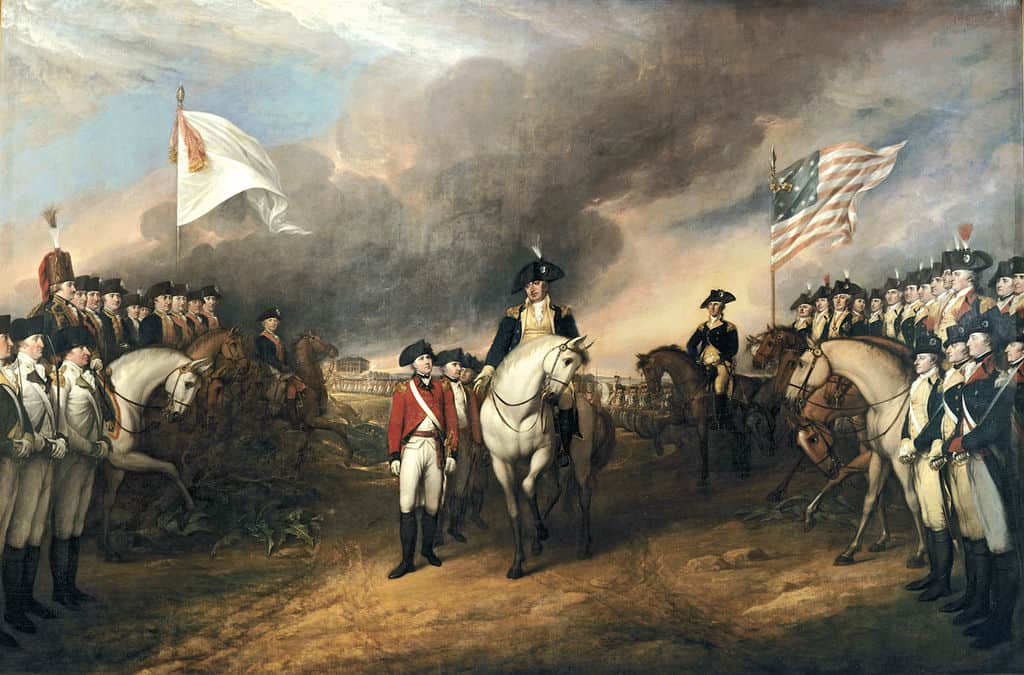
LORD CORN WALLACE SURRENDER AT YORKTOWN
While there were still British soldiers occupying northern territories from 1781-1784, they finally vacated late 1784, after the Treaty of Paris (1783) broke and Great Britain started to recognize the independence of the United States. Shortly after, General Washington disbanded the Army and resigned as Commander in Chief.
1787; Delaware (slave), Pennsylvania (free) and New Jersey (slave til 1804) become states.
1788; Georgia (slave), Connecticut (free), Massachusetts (free), Maryland (slave), South Carolina (slave), New Hampshire (free), Virginia (slave), and New York (slave until 1799) become states
1789;
- Congressional delegates designed the Presidency with Washington in mind. After convincing him to run, they voted unanimously that he be the First President at the age of 57, John Adams came in second and was named Vice President.
- North Carolina (slave) becomes a state in the union
1790;
- First naturalization law which established terms of citizenship
- Permanent home of the Nation’s capital to be moved to along the Potomac River and called the District of Columbia. While in building mode, the Capital moved from New York to Philadelphia.
- Rhode Island (free) becomes the 13th of the original colonies to become a state.
1791;
- Washington signs bill for First bank of the United States.
- The first internal revenue law was created; tax on distilled spirits.
- Commissioners name the territory of D.C., Washington D.C. in honor of their first President.
- States officially ratify the first ten amendments, known as The Bill of Rights.
- Vermont (free) becomes the 14th state

BILL OF RIGHTS
Washington unified the new nation and shaped the chief executive’s duties. After convincing him to run a second term, he unanimously won again in 1792.
1792; Kentucky (slave) becomes the 15th state
From 1792 to 1794, his administration dealt with trying to play neutral in the Britain and France feud but hosting the France minister deteriorated relations with Britain which caused them to make a new Treaty, dubbed Jay Treaty, late 1794.
1795; Treaty of San Lorenzo passed, which gave Americans the right to ship goods through the port of New Orleans, without paying duties to the Spanish government.
1796; Tennessee (slave) becomes the 16th state of the Union.
Washington refused to run a third term, which set the precedent for two terms. He gave his farewell address late 1796 and early 1797 and retired to his home in Mount Vernon. He died two years later from illness.
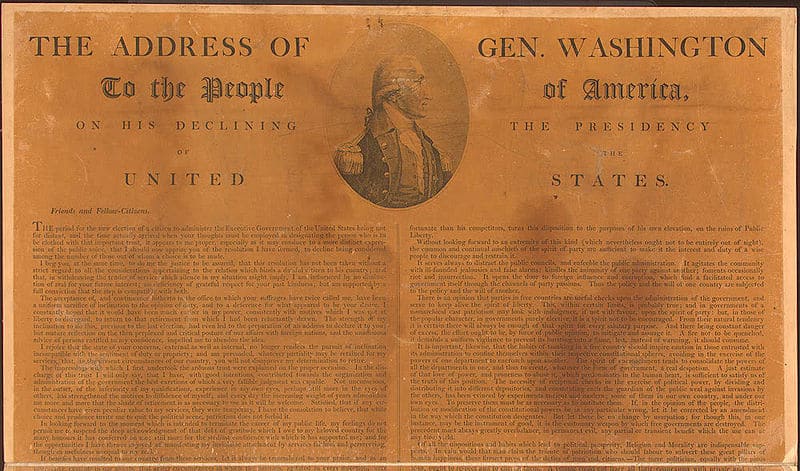
WASHINGTON FAREWELL ADDRESS
Not only is he one of the (if not the biggest) Founding Fathers of the United States of America, in his lifetime he was regarded as the “Father of his country” and to this day, he is the face of the one-dollar bill, the 25 cent piece, and as well as a face on Mount Rushmore
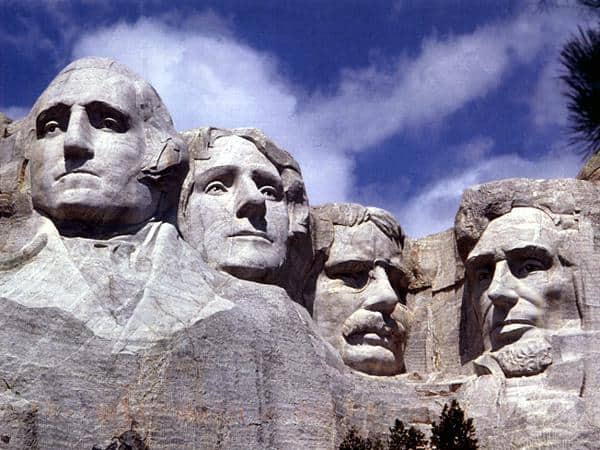
MOUNT RUSHMORE
Famous quotes:
“If the freedom of speech is taken away, then dumb and silent we may be led, like sheep to the slaughter”
“Observe good faith and justice toward all nations. Cultivate peace and harmony with all”
“Associate with men of good quality if you esteem your own reputation; for it is better to be alone than in bad company.”