
#19 Rutherford B. Hayes- The Contested President

10/4/1822 – 1/17/1893
Party: Republican
Timeline; 1877-1881
#19 Rutherford B. Hayes- The Contested President
Hayes was an attorney and city solicitor of Cincinnati (1858-1861) but when the Civil War began he left politics to join the Union Army, as an officer. He was wounded a few different times, the worst being the Battle of South Mountain (1862) where he earned a reputation for bravery in combat and earned the rank of major general. After the war he went back to politics and served in the U.S. Congress (1865-1867) and then as Governor of Ohio on two separate occasions (1868-1872, 1876-1877).
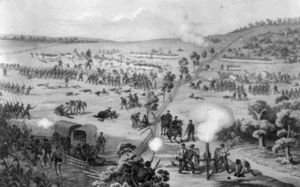
BATTLE OF SOUTH MOUNTAIN
1877;
- Hayes becomes the 19th President of the United States at the age
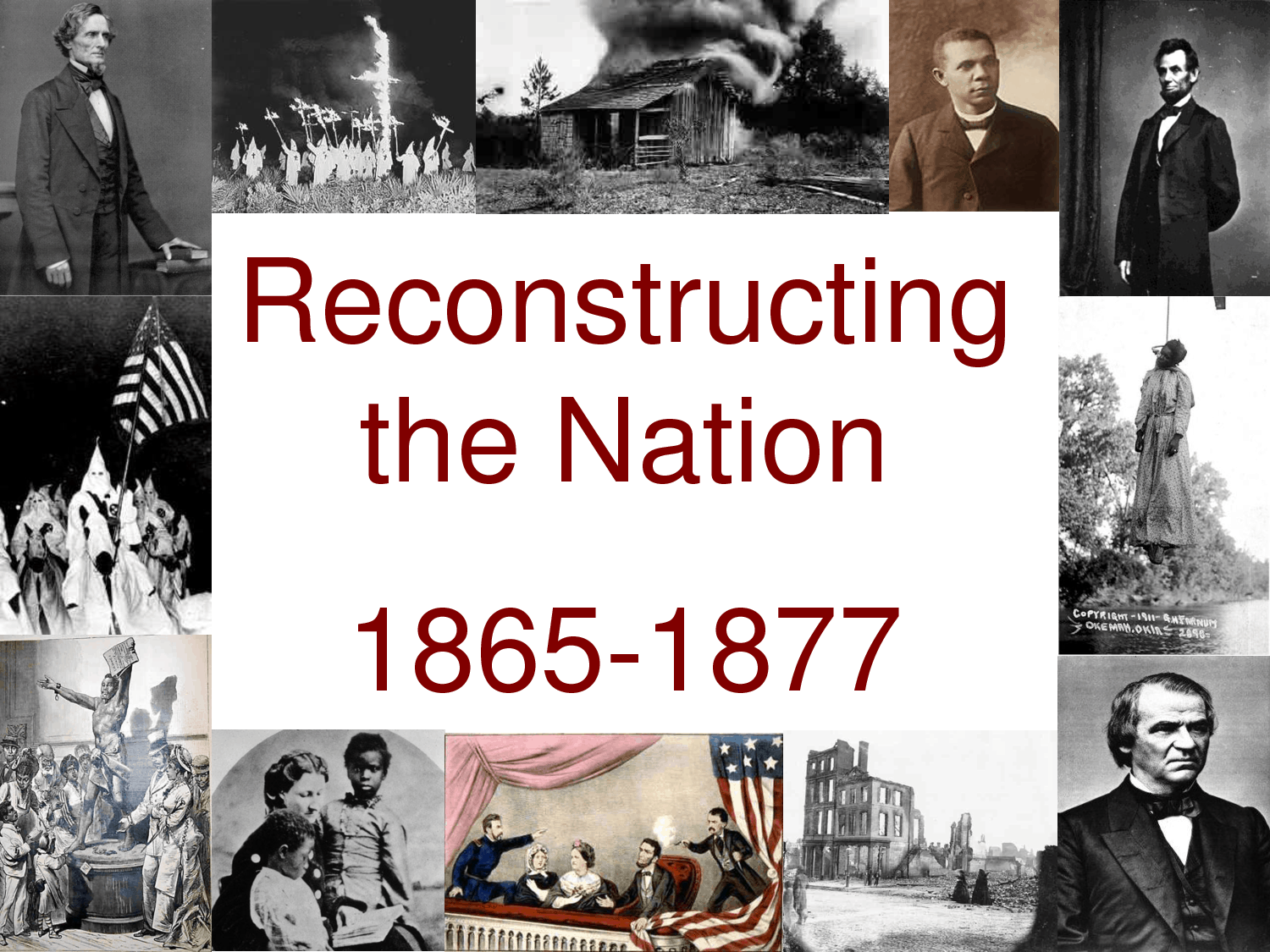
of 54. He secures only 48 percent of the popular vote and 164 electoral votes to Tilden’s 184. However, voter fraud and unclear results are reported in several states. A controversial decision of a special electoral commission ultimately proclaims Hayes President, with some Democrats referring to Hayes as “Rutherfraud.” - In return for the presidency, the Republicans make various concessions, including the removal of federal troops from the South in what was known as the Compromise of 1877 or the Great Betrayal as African-Americans referred to it as.
- Troops depart the statehouse in South Carolina following a meeting at the White House.
- As in South Carolina, he officially withdraws soldiers from Louisiana. Governor Packard has no choice but to submit, declaring, “One by one, the Republican
state governments of the South have been forced to succumb to force, fraud or policy.” Hayes’s withdrawal of troops from the South marks the end of Reconstruction.
- Troops are sent to patrol the nearly lawless Mexican border and cross it if necessary to pursue bandits. Mexican president Diaz protests and sends troops to the border as well. Ultimately, economic concerns motivate both parties to work towards a settlement.
- Hayes issues an Executive Order that forbids the involvement of federal employees in political activities. The President takes such action in the hope that it will curtail corruption; the Executive Order stipulates that those in office can no longer be dismissed for political reasons. Congress rejects additional proposals. These events testify to Hayes’s interest in civil service reform.
- The Great Railroad Strike of 1877 begins on the Baltimore and Ohio (B&O) line at Camden Junction, Maryland; additional strikes will follow, lasting a month, but lacking organization, the strikes frequently degenerate into mob activity. Federal troops are sent to protect mail and quell the riots that take place in numerous cities, angering many workers.

GREAT RAILROAD STRIKE
1878;
- Founded in 1869 by Uriah S. Stephens, a tailor in Philadelphia, the Knights of Labor is
established as a national organization. It is the first labor union to attempt to organize all workers and hopes to establish a worker-owned factory system. - A U.S.-Samoan treaty is signed in Washington which gives the United States the right to establish a naval and coaling station at the port of Pago Pago; it also pledges American assistance to Samoa if a third country interferes with Samoan chiefs. The Senate ratifies the treaty
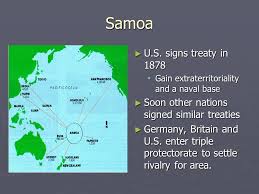
U.S.-SAMOA TREATY
- Hayes vetoes the Bland-Allison Act, advocated by farmers and debtors, but Congress passes the measure over his veto. The act calls for the resumption of silver coinage at a rate between $2 and $4 million per month.
- Hayes vetoes a bill which bans incoming vessels from carrying more than fifteen Chinese passengers. Hayes then works to negotiate changes to the Burlingame Treaty with China in order to set limits on Chinese immigration.
- America recognizes the Diaz regime in Mexico in an effort to avoid greater conflict.
- House Democrats begin an investigation of the controversial presidential election of 1876, much to the chagrin of Hayes, who fears that the investigation may be an attempt to replace him with Tilden.
- Following congressional midterm elections, the Democratic Party controls both houses of Congress for the first time since the Civil War. Consequently, Hayes will have little sway in Congress.
1879;
- Hayes allows the resumption of gold payments for Civil War greenbacks, paper money not backed by specie, silver, or gold. This is a continuation of the Specie Act begun under President Grant. During the Hayes administration, as the government’s gold supply grows and the issuance of silver coins increases, the economy begins to recover. By the spring of 1879, the government has retired all Civil War bonds.
- After a political struggle between Hayes and Senator Conkling, the Senate approves Hayes’s appointments for the New York Customhouse. Although these fail to end inefficiency in the civil service system, the country largely supports Hayes’s commitment to reform.
- Congress passes the Army Appropriations Bill. The law includes a “rider” which forbids the use of federal troops at polls, which many regard as an attempt to nullify black
voting rights. Hayes vetoes the bill, but the House sustains the veto. Hayes again vetoes the rebuffed version, and many Republicans feel the veto secures the election of 1880. - Hayes vetoes a version of the appropriations bill for the third time; a later bill excludes “certain judicial expenses” forbidding the army to “police the polls”; Hayes will agree to this language.
- The appropriations designated by Democrats exclude implementation of election law funds; Hayes vetoes the bill.
- In a speech to Congress, Hayes continues to support a Central American canal to unite the Atlantic and Pacific oceans.
1880; The United States and China sign a treaty which repeals a section of the 1868 Burlingame treaty. The move gives the United States the power to “regulate, limit or suspend” but not completely prohibit Chinese immigration. The treaty also includes a clause banning the opium trade. In return, the United States grants China trading privileges.
Hayes kept his pledge not to run for re-election, retired to his home in Ohio, and became an advocate of social and educational reform. He died from complications after a heart attack.
Famous quotes;
“One of the tests of the civilization of people is the treatment of its criminals.”
“He serves his party best who serves his country best.”
“Do not let your bachelor ways crystallize so that you can’t soften them when you come to have a wife and a family of your own.”


