
#43 (GWB) George W. Bush- War on Terror President

7/6/1946 –
Party: Republican
Timeline; 2001-2008
#43 (GWB) George W. Bush- War on Terror President
Bush served in the Air National Guard (1968-1974) after he earned his M.B.A. degree from Harvard. After his service he joined his father in politics, helping with his campaigns before running on his own when he won the seat of Governor of Texas (1995-2000) while also being part owner of the Texas Rangers (1989-1998). He and his dad are the second father-son duo to serve as Presidents, John Adams and John Q. Adams being the first.
2001;
- Bush becomes the 43rd President of the United States at the age of 54. Dick Cheney is his V.P.
- Bush decides to reinstate the ban on aid to international groups performing or counseling on abortion.
- United States airplanes attack Iraqi radar sites to enforce a “no-fly zone.”

- The Bush administration affirms its decision to abandon ratification of the Kyoto Protocol, an international treaty signed by 180 countries to reduce global warming that set limits on industrial emissions.
- A U.S. spy plane is clipped by a Chinese fighter jet, forcing the American plane to make an emergency landing on Chinese soil, dubbed the Hainan Island Incident
- President Bush signals a change in relations with China by officially pledging military support for Taiwan in the event of an attack by China.
- Bush signs a $1.35 trillion tax cut into law.
- President Bush addresses the nation, outlining his plans for the federal funding of stem cell research.
- Terrorists hijack four commercial jets and crash them into the World Trade Center in New York City, the Pentagon in Washington, D.C., and the Pennsylvania countryside. It is the worst attack on American soil since Pearl Harbor
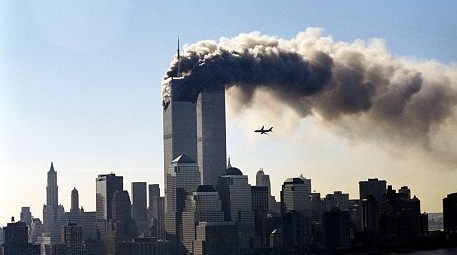
SECOND PLANE ABOUT TO HIT THE WORLD TRADE CENTER
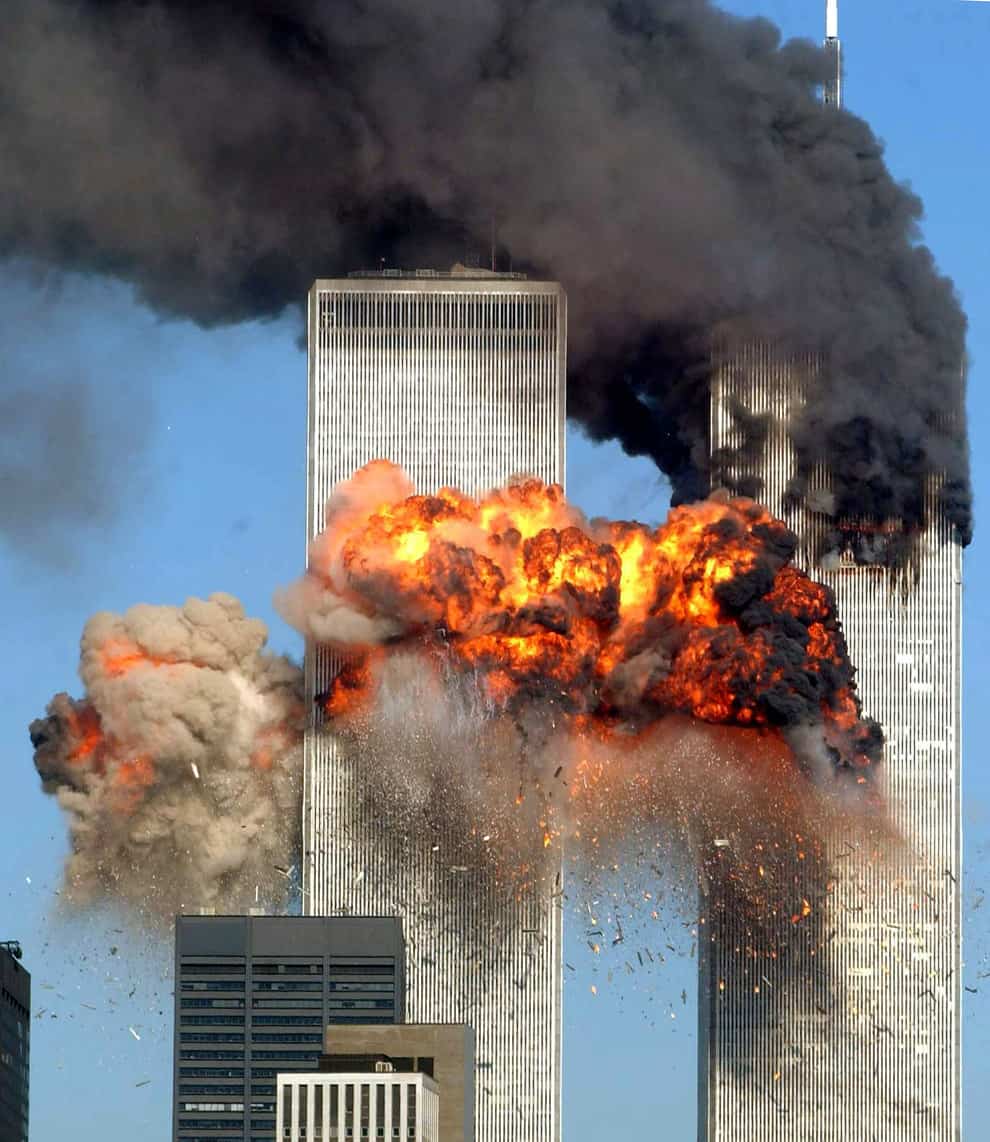
AFTERMATH OF THE SECOND PLANE HITTING THE WORLD TRADE CENTER
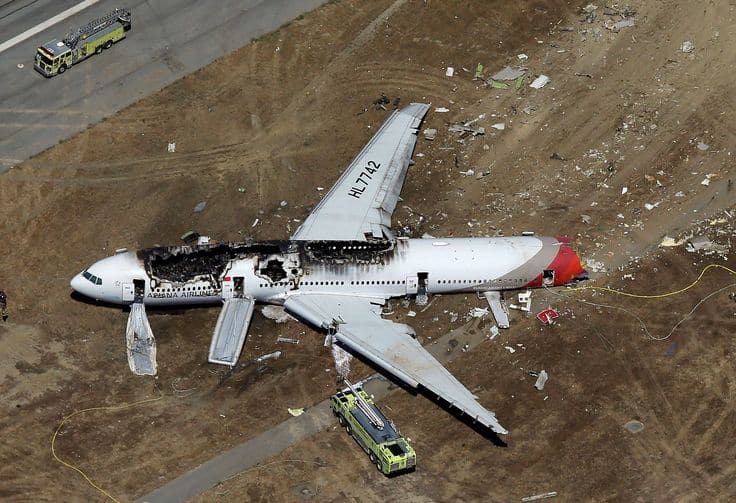
PLANE TAKEN DOWN INTO A PENNSYLVANIA FIELD
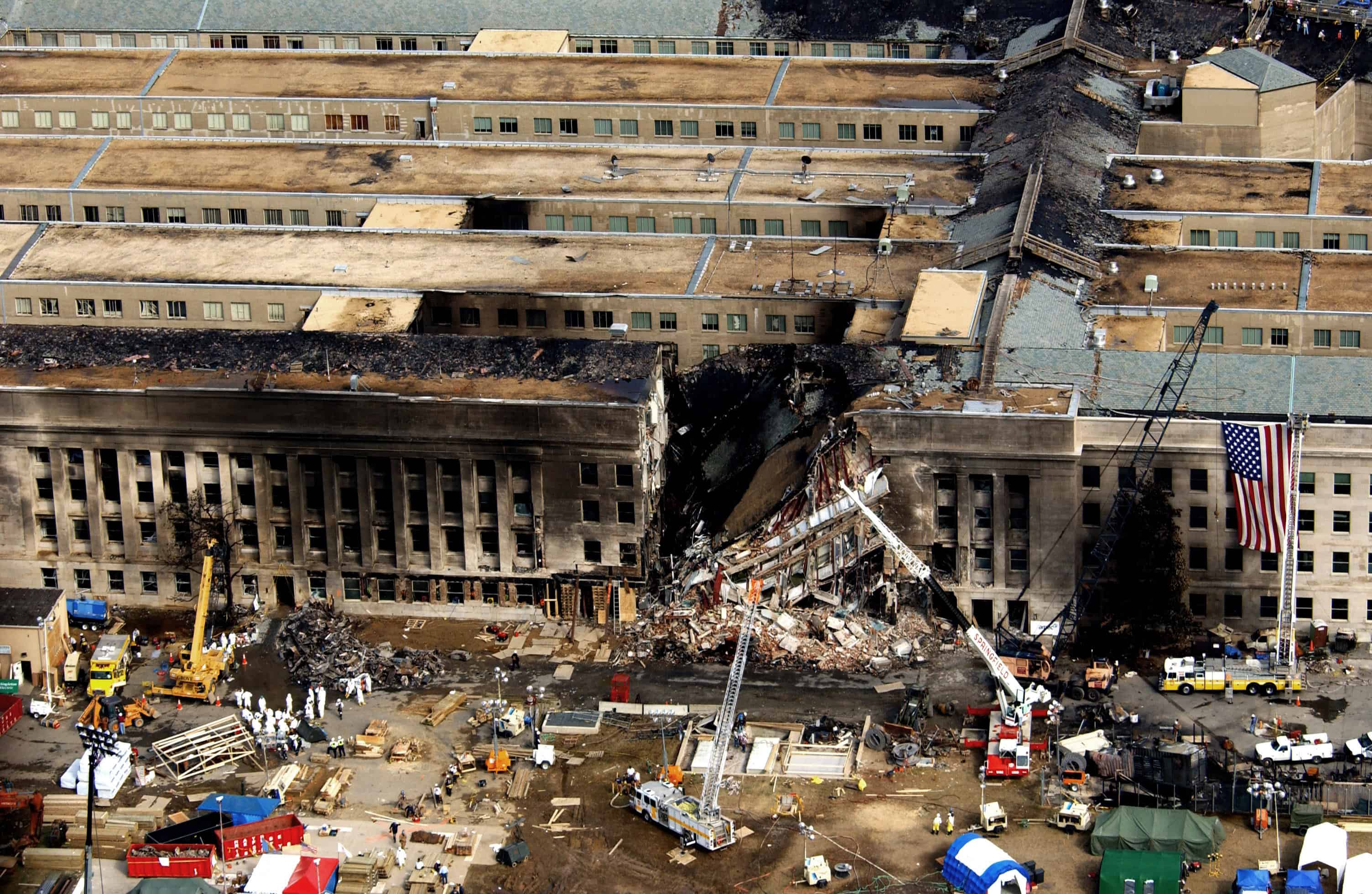
PENTAGON AFTER THE 9/11 ATTACKS
- Bush appears before a joint session of Congress to outline the administration’s plans to defeat world terrorism, singling out Osama bin Laden and his al-Qaeda organization as the primary targets of such a policy.
- Bush announces the commencement of military action in Afghanistan, an operation code-named “Enduring Freedom.”

- The Capital shuts down amidst an Anthrax scare. Persons in Florida and New York have already tested positive for the frequently fatal bacteria.
- The Enron Corporation files for Chapter Eleven bankruptcy protection, the largest bankruptcy case in American history.
- Bush notifies Russia of his intention to withdraw from the 1972 Anti-Ballistic Missile Treaty.
2002;
- President Bush signs a landmark education reform bill into law. Known as the No Child Left Behind Act
- In his State of the Union address, President Bush warns that the War on Terror is only beginning. Specifically citing North Korea, Iran, and Iraq
- Bush renews his call on Palestinian leader Yasser Arafat to end attacks on Israel
- Bush announces that the forty-year-old trade embargo against Cuba will continue until conditions, including free and fair elections, are met.
- Congress presses the Bush administration for further information about warnings of the September 11, 2001, attacks.
- Bush and Russian president Vladimir Putin sign a nuclear arms treaty, vowing to reduce their nations’ arsenals by two-thirds over the next ten years.
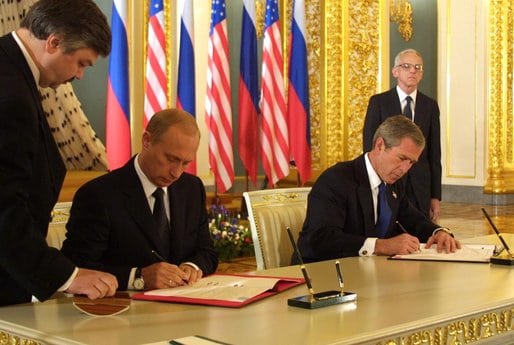
BUSH AND PUTIN SIGN NUCLEAR ARMS TREATY
- Bush announces broad changes to security departments in charge of protecting the nation from terrorism.
- Following the Enron and WorldCom scandals, in which both companies claimed profits which turned out to be highly inflated, Bush calls for new laws on corporate abuse.
- Seeking support for action against Iraq, President Bush addresses Congress, identifying Iraqi strongman Saddam Hussein as “a serious threat.”
- Bush addresses the United Nations’ Security Council, making his case for military action to enforce UN resolutions in Iraq.
- The House and Senate vote and give authorization to Bush to use force against Iraq.
- Department of Homeland Security is established
- Following a United Nations report issued by arms inspectors indicating that Iraq remained in violation of Security Council Resolution 1441, Bush speaks out again against Iraq. Inspections in Iraq continue.
2003;
- Bush reveals a tax-cut plan of $674 billion over ten years.
- The seven-member crew of the shuttle Columbia dies in an explosion in space. Debris falls in Texas.
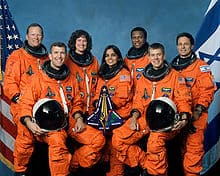
COLUMBIA SHUTTLE CREW
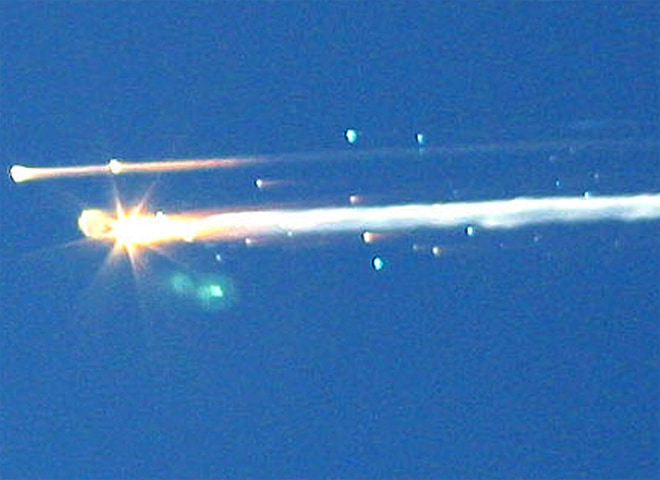
COLUMBIA SHUTTLE EXPLOSION
- CIA director George Tenet announces that North Korea possesses a nuclear ballistic missile capable of hitting the United States.
- Bush announces the U.S. intention to move against Iraq with its coalition of allies. Bush issues an ultimatum for military action, giving Iraqi leader Saddam Hussein and his sons forty-eight hours to leave Iraq.
- The deadline for Hussein to leave Iraq passes. Bush addresses the nation and informs the American people that the United States is at war with Iraq.
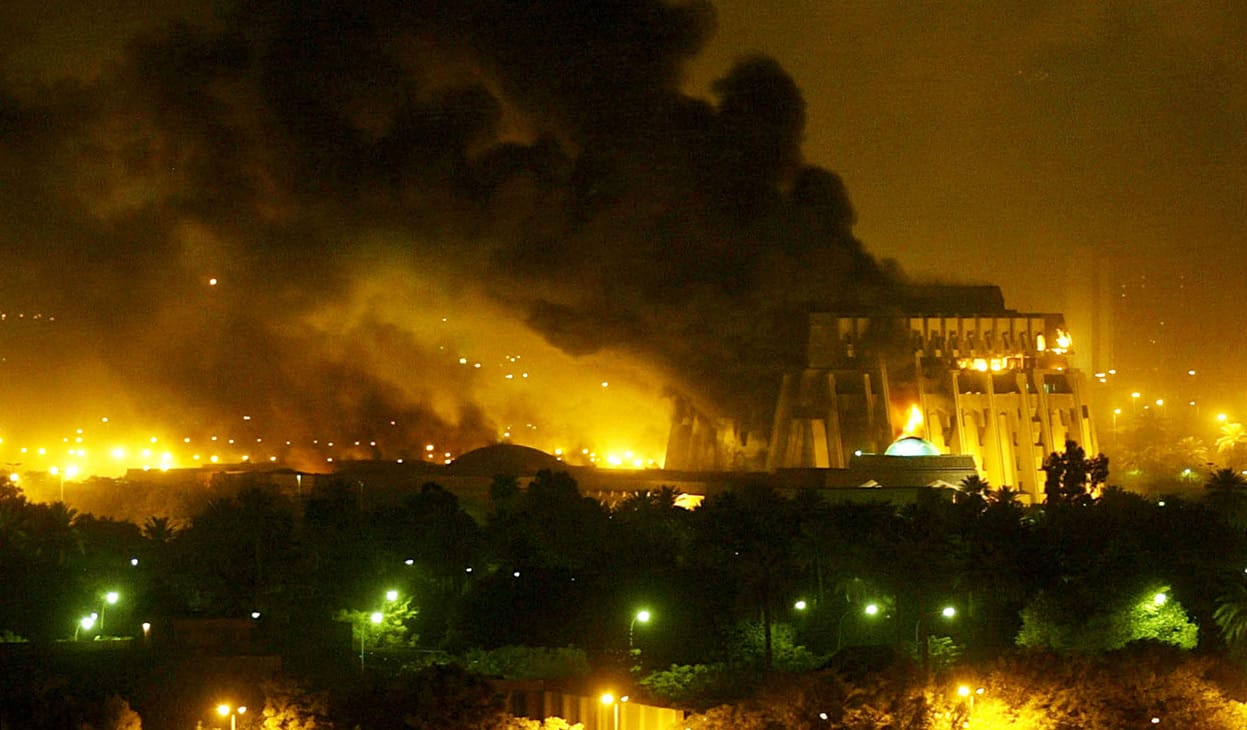
U.S. BOMBS ON BAGHDAD
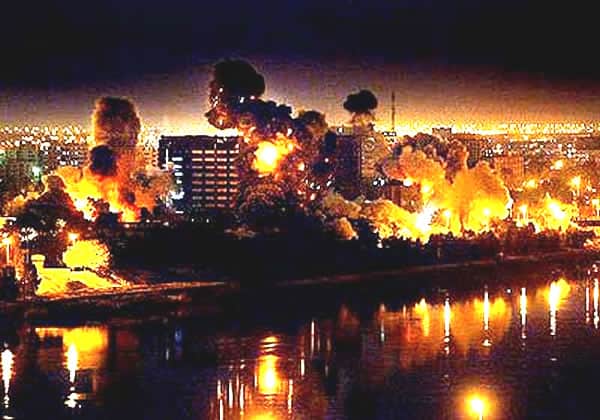
- Bush and British Prime Minister Tony Blair air a joint address on Iraqi television that describes the goals of coalition forces and reassures the Iraqi people that they will be able to live their lives in peace and security in a post-Saddam era
- In a nationally televised address aboard the aircraft carrier USS Abraham Lincoln, Bush stands in front of a “Mission Accomplished” banner and declares that major combat operations in Iraq are over. He links the Iraq War to the War on Terror and vows to continue searching for banned weapons in Iraq.

- The UN Security Council votes to lift sanctions on Iraq imposed since the 1991 Gulf War. The resolution gives the United States and United Kingdom control of Iraq until it establishes a legitimate government and authority to use Iraqi oil revenues for humanitarian aid and reconstruction.
- U.S. marines and Iraqi citizens take down Saddam statue in Firdos Square
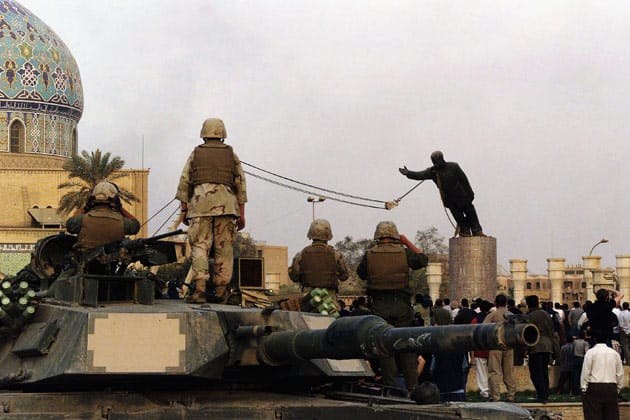
U.S. MARINES AND IRAQI CITIZENS TAKE DOWN SADDAM STATUE
- Bush signs into law his $350 billion tax-cut package, the third-largest in history, in an effort to strengthen the U.S. economy and reverse a trend of increasing unemployment.
- U.S. forces kill Saddam Hussein’s two sons Uday and Qusay in Mosul, Iraq. Officials hope that anti-U.S. attacks in Iraq will decrease as a result.
- The joint Congressional Committee on Intelligence releases the findings of the terrorist attacks of September 11, concluding that intelligence agencies failed to respond to alerts about potential targets and methods.
- The Justice Department announces a full criminal investigation into allegations that Bush administration officials had leaked the name of a covert CIA operative to the media in July, dubbed the Plame Affair. Bush urges full cooperation with the probe.
- Chief U.S. Weapons Inspector David Kay reports that his team has finished their inspection into Iraq’s weapons.
- Bush signs into law a ban on late-term abortion, the first law to ban an abortion procedure since the Supreme Court’s 1973 decision in Roe v. Wade.
- Bush signs a landmark bill overhauling Medicare
- Saddam is caught during Operation Red Dawn

SADDAM CAPTURED
- Iran signs an agreement to grant unrestricted access to UN-IAEA weapons inspectors.
2004;
- Bush gives his fourth State of the Union Address, laying out a broad domestic and foreign policy agenda while stressing issues of national security.
- The Iraqi Governing Council signs an interim constitution to provide a framework for establishment of a transitional government.
- U.S. forces in Iraq confront a violent uprising beginning with Shiite Muslims in Baghdad and spreading to Sunni guerrillas in Fallujah, leading to the heaviest fighting since the invasion began in March of 2003.
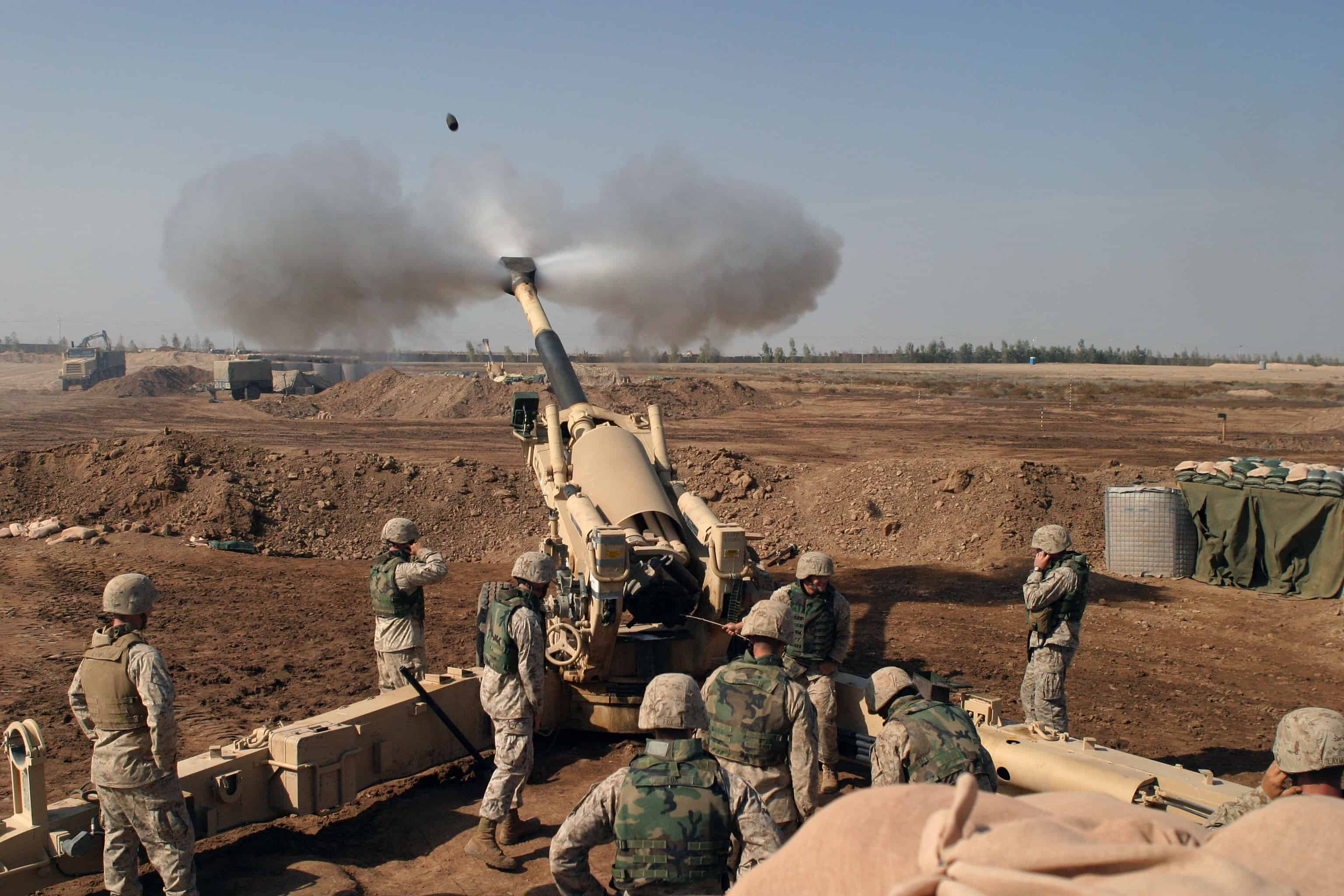
BATTLE OF FALLUJAH

HANDS OF VICTORY IN BAGHDAD
- CBS broadcasts photographs of U.S. Army abuse of Iraqi prisoners in Abu Ghraib prison, a facility on the outskirts of Baghdad.
- Massachusetts becomes the first state to offer marriage licenses to same sex couples. Bush reiterates to Congress his call for a constitutional amendment banning same sex marriage.
- The U.S.-led Coalition for Provisional Authority formerly ends foreign occupation of Iraq, granting the provisional government sovereignty. Still, 130,000 troops remain in Iraq.
- U.S. troops launch an assault to retake the rebel-controlled city of Fallujah in the largest military operation since the initial invasion in March of 2003.
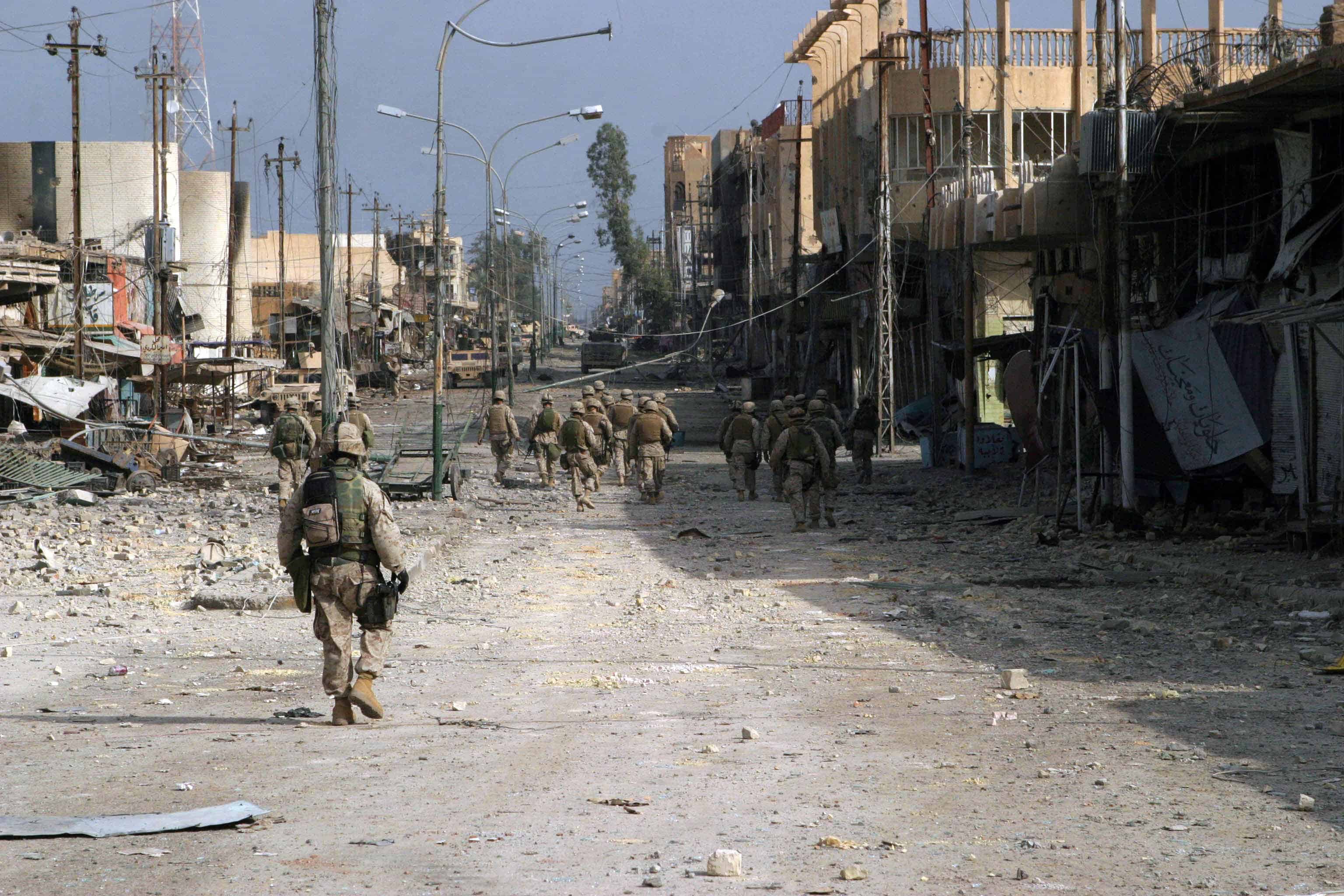
U.S. TROOPS WALK THROUGH STREETS OF FALLUJAH
2005;
- Bush meets with Presidents of France, Germany, and Russia to smooth diplomatic relations after the U.S.-led invasion of Iraq.
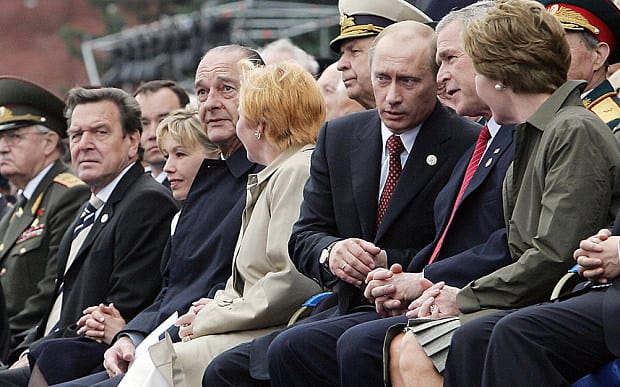
SOCHI MEETING
- Iraqi government announces that a war crimes trial for Saddam Hussein is likely to begin within the next two months and prosecutors would seek the death penalty.
- The Senate easily passes an omnibus energy bill aimed at supporting the traditional energy industries of oil and natural gas, but also provide tax incentives for the use of alternative energy sources such as solar and wind power.
- Vladimir Arutyunian attempts to assassinate Bush when he throws a live hand grenade at Bush’s podium but it does not go odd. He is given a life sentence for it.
- The space shuttle Discovery takes off from the Kennedy Space Center on a mission to deliver repairs to the International Space Station.
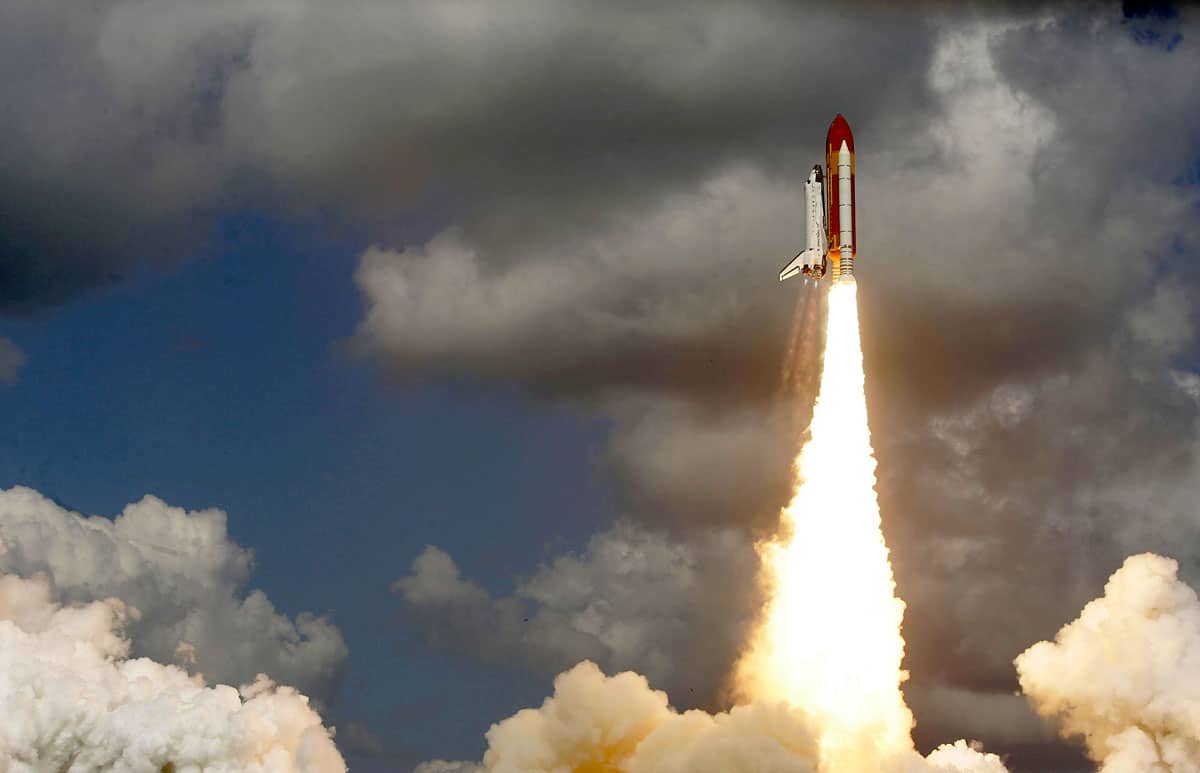
SPACE SHUTTLE DISCOVERY LAUNCH
- Hurricane Katrina strikes the southern coast of the United States with devastating effects.
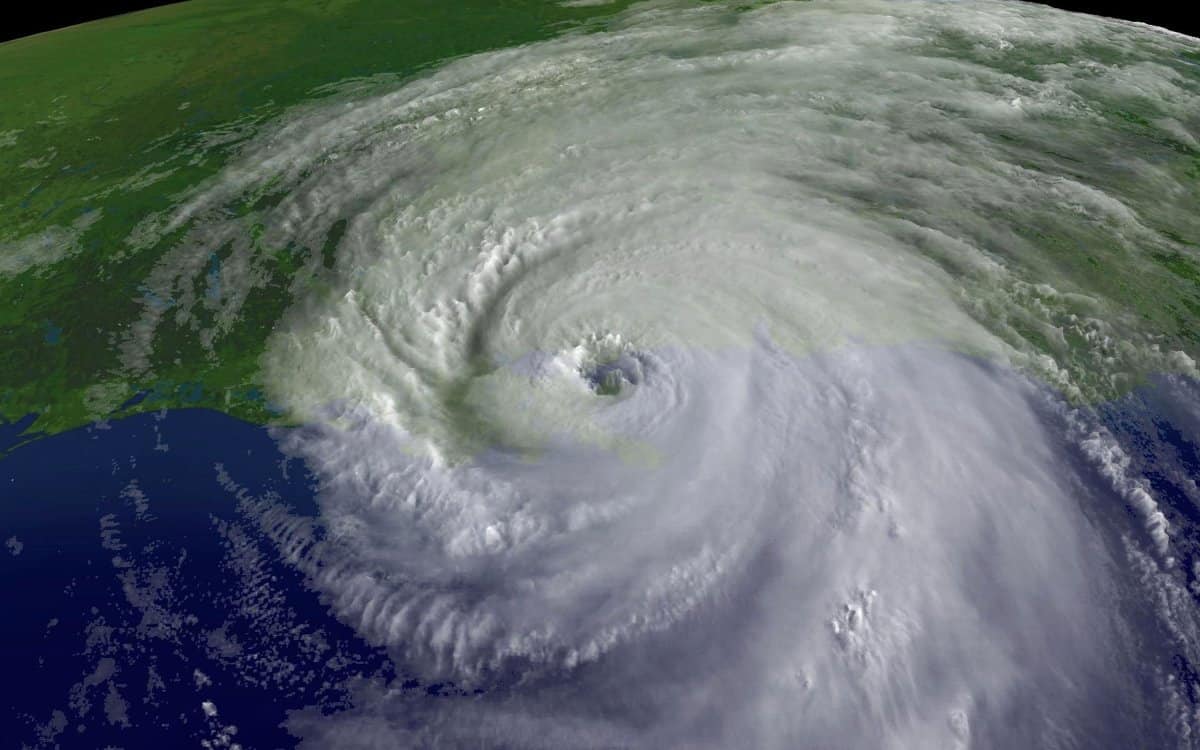
HURRICANE KATRINA VIEW FROM SATELLITE
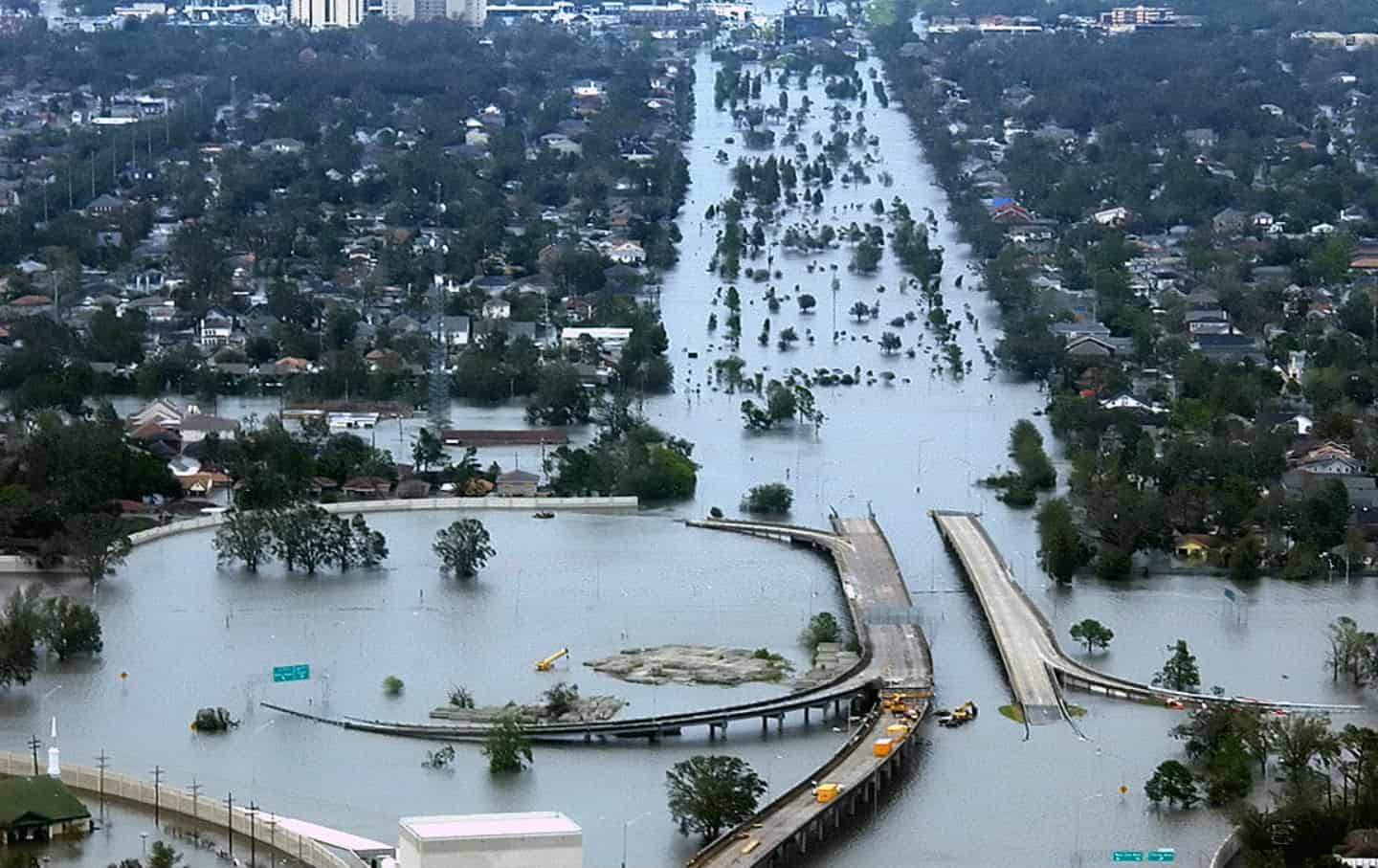
AFTERMATH OF HURRICANE KATRINA
- Bush admits for the first time that the complete removal of U.S. troops from Iraq during the remainder of his term is improbable. He continues to assert the fact that progress is being made in the establishment of Iraqi democracy.
- The U.S. District Court in Alexandria, Virginia, sentences Zacarias Moussaoui to life in prison without parole for his role in the September 11, 2001, terrorist attacks.
2006;
- The Senate votes to ban same sex marriages in the United States, thereby preventing a vote on the actual passage of the amendment.
- Former President Ford is laid to rest in Grand Rapids, Michigan
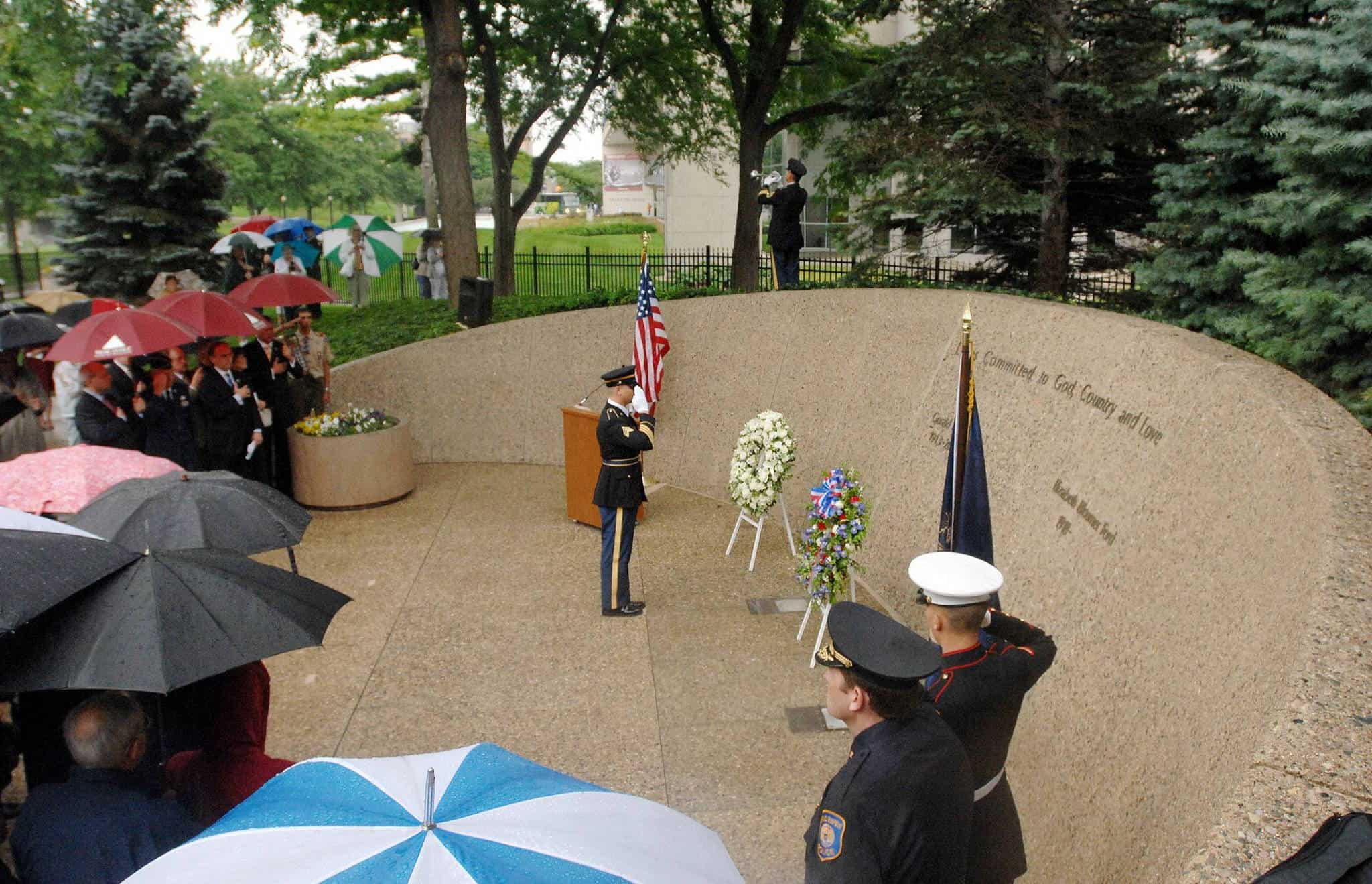
FORD TOMB
- Bush issues his first veto on a bill to lift constraints on federal funding of embryonic stem cell research, and subsequently, the House unsuccessfully attempts to override the veto.
- Bush signs a bill providing for the construction of a 700-mile fence along the United States-Mexico border, in an effort to increase border security and stem illegal immigration.
- Russia dedicates the Teardrop memorial for the lives lost at the 1993 and 2001 World Trade Center attacks
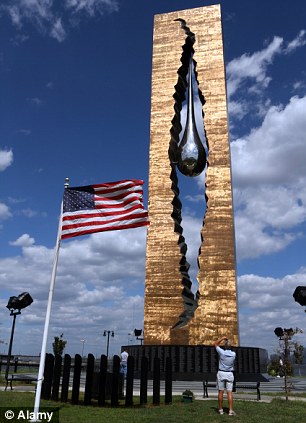
TEARDROP MEMORIAL
- Former Iraqi President Saddam Hussein is hanged in Baghdad, Iraq, after being convicted of crimes against humanity dating back to 1982.
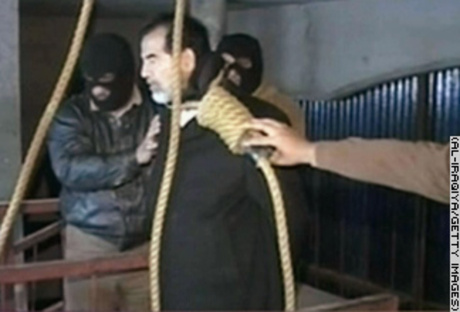
SADDAM BEING HANGED
2007;
- Nancy Pelosi, a Democrat from California, takes office as the first female Speaker of the House.
- The U.S. Air Force launches an air attack on Islamist militias and suspected al-Qaeda operatives in Somalia.
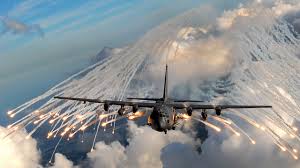
AC-130 GUNSHIP OVER SOMALIA
- Bush announces what would be termed a “troop surge” in Iraq in an attempt to increase security in the capital of Baghdad and smother insurgency centers throughout the country.
- General David Petraeus takes over command of the multinational forces in Iraq to oversee the surge.
- Seung-Hui Cho kills himself and 32 fellow students at Virginia Tech in the deadliest campus gun rampage in U.S. history. President Bush and the First Lady attend the memorial.
- Bush vetoes a war spending bill passed by Congress, which set a timetable for troop withdrawal from Iraq. Within days Bush reaches a record low approval rating.
- The Supreme Court reverses an April decision and agrees to hear appeals from Guantanamo Bay detainees who have not had access to the federal courts.
- Congress passes the Anti-terrorism Bill, allowing the screening of air and sea cargo as well as giving more money in grants to states with greater risk
- Congress passes new energy legislation to increase automobile fuel efficiency standards and mandates increases in bio-fuel production. The bill passes the House and Senate, and President Bush signs it into law.
2008;
- Bush proposes and Senate passes a stimulus package in response to a housing crisis and increasing oil prices, giving individuals several hundred dollars as well as rebates for children and tax deductions for businesses in order to boost the slowing economy.
- U.S. missile strikes in Pakistan kill a top al-Qaeda leader, Abu Laith al-Libi, who trained terror operatives in the region.

DRONE MISSILE LAUNCH
- Six detainees at Guantanamo Bay are charged with conspiracy, murder in violation of the law of war, and terrorism for their roles in 9/11.
- The State Department renews a deal with Blackwater Worldwide, the private defense contractor to provide defense for U.S. diplomats in the Middle East.
- Bush vetoes the Farm Bill, thought to be too excessive of a bill providing subsidies to farmers but the House and Senate override his veto and pass it.
- The Senate Select Committee on Intelligence finds that Bush and other officials exaggerated the evidence showing that Saddam held weapons of mass destruction.
- The U.S. forces hand over control of Anbar Province to the Iraqi military and police.
- Fannie Mae and Freddie Mac are placed under government control to prevent the institutions from going under
- Senate approves an end to the long-standing ban on trading nuclear fuels with India.
- Bush signs a $700 billion bailout plan for failing bank assets, the largest in U.S. history.
- General David Petraeus takes over as Head of Central Command, overseeing all U.S. military operations in Iraq, Afghanistan, Pakistan, Syria, and Iran.
- President Bush issues a $17.4-billion auto bailout to General Motors and Chrysler to keep the two American automotive giants from going bankrupt.
Bush retired to Texas, still making public appearances at Ranger games, political and charity events.
Famous quotes;
“When I take action, I’m not going to fire a $2 million missile at a $10 empty tent and hit a camel in the butt. It’s going to be decisive.”
“I am mindful not only of preserving executive powers for myself, but for predecessors as well.”
“I just want you to know that, when we talk about war, we’re really talking about peace.“


