
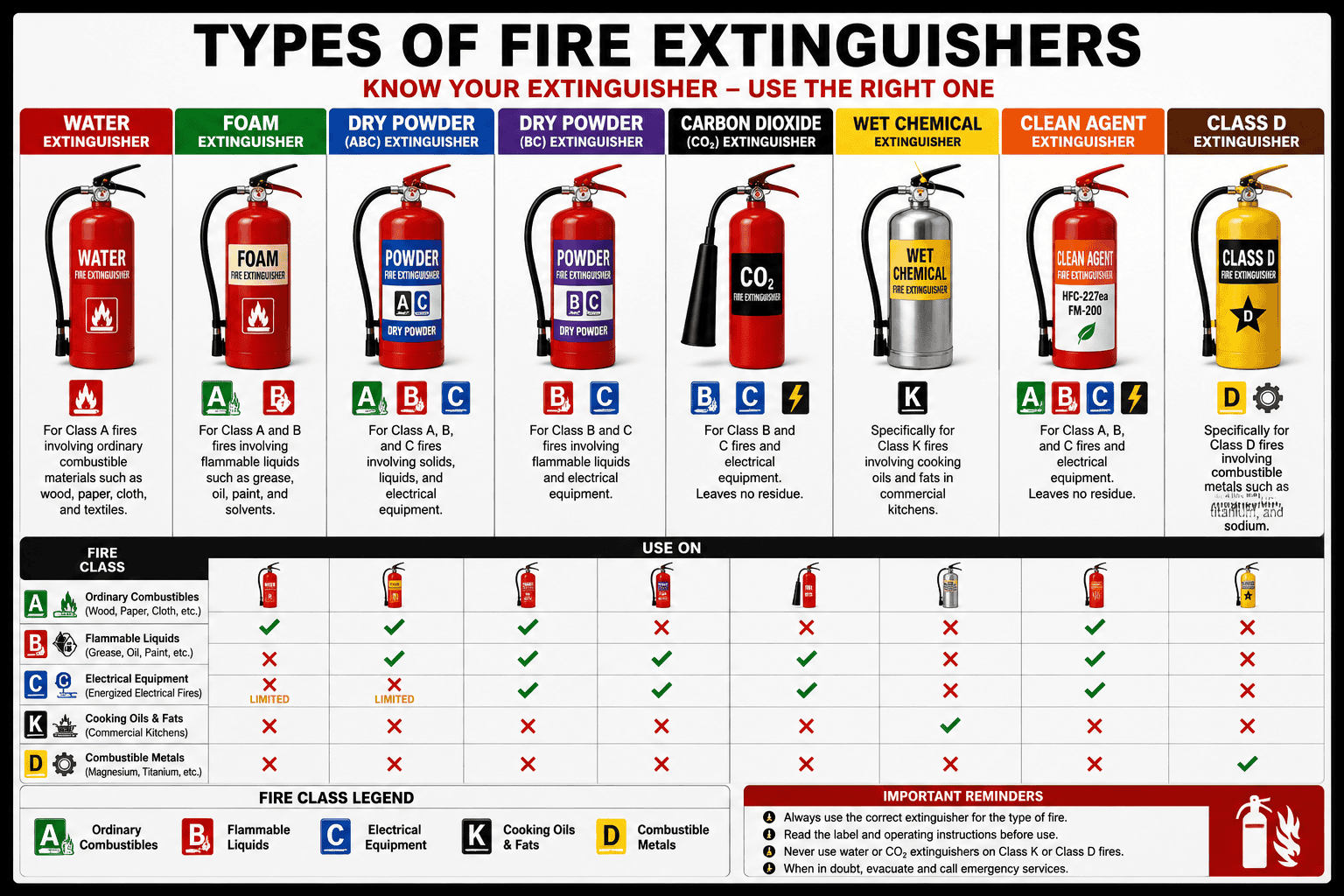
Fire Extinguisher Types, Uses, and Proper Operation
A fire extinguisher is one of the simplest and most effective pieces of fire protection equipment found in homes, businesses, and industrial facilities. While automatic sprinkler systems and fire alarms are designed to protect entire buildings, an extinguisher gives individuals the ability to stop a small fire before it grows into a dangerous emergency.
However, not every extinguisher is designed for every type of fire. Using the wrong extinguisher can be ineffective or even make the situation worse. Understanding the different extinguisher classifications, when to use them, and how to operate them safely is an essential skill for anyone working around commercial or industrial facilities.
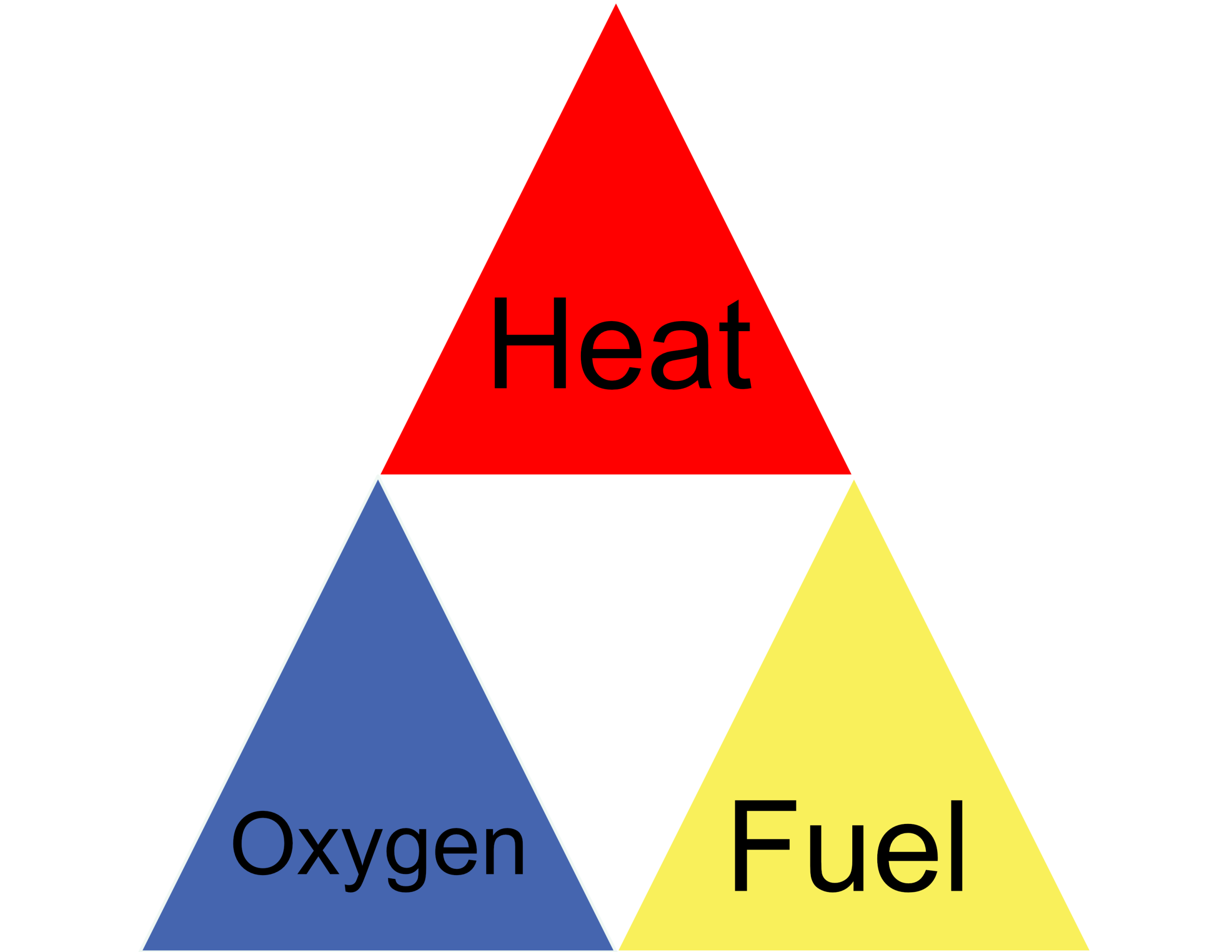
The Fire Triangle
Before choosing an extinguisher, it’s important to understand what allows a fire to exist.
Every fire requires three elements:
- Heat – An ignition source such as sparks, electricity, friction, or an open flame.
- Fuel – Anything capable of burning, including wood, paper, gasoline, or natural gas.
- Oxygen – Normally supplied by the surrounding air.
These three components form what is known as the Fire Triangle. Remove any one of them, and the fire goes out. Every extinguisher works by removing one or more sides of this triangle.
Fire Classes
Fires are grouped into classes based on the type of fuel that is burning.
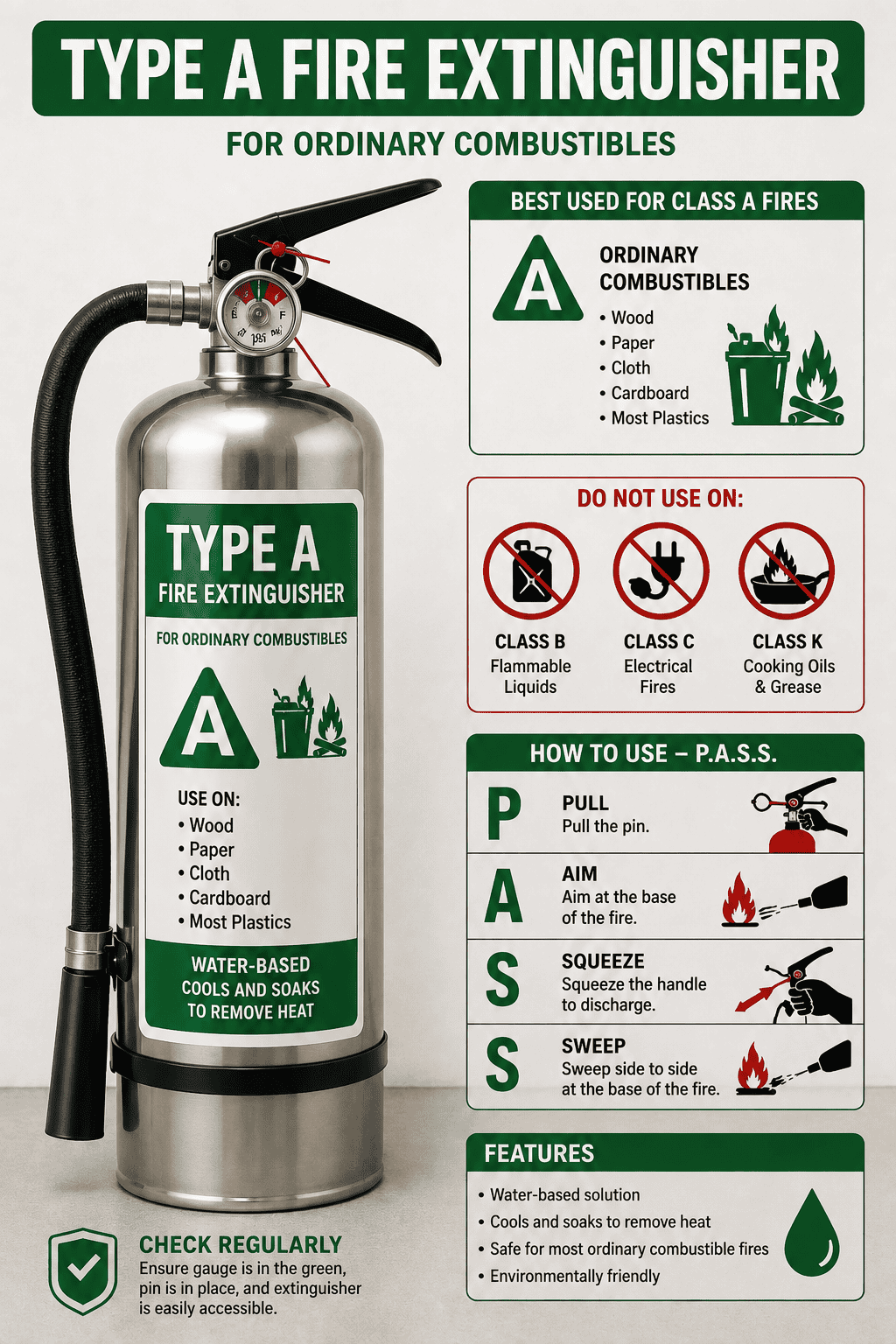
Class A Fires
Class A fires involve ordinary combustible materials such as:
- Wood
- Paper
- Cardboard
- Cloth
- Trash
- Plastics
These are the most common fires found in offices, schools, warehouses, and homes.
Common extinguishers include:
- Water
- Foam
- Dry Chemical (ABC)
- Water Mist
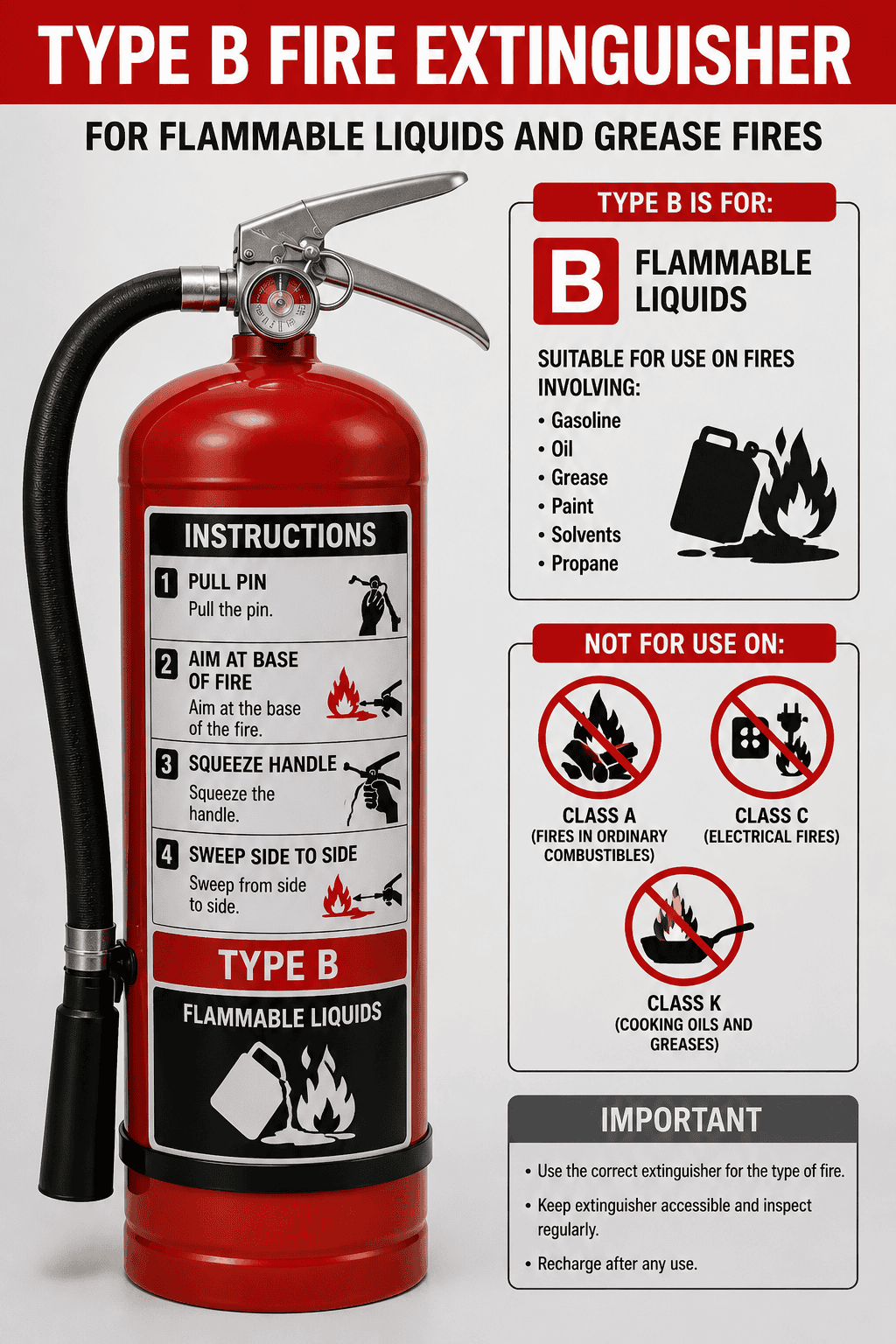
Class B Fires
Class B fires involve flammable liquids and gases such as:
- Gasoline
- Diesel fuel
- Oil
- Paint
- Solvents
- Alcohol
- Propane
These fires should never be extinguished with plain water because water can spread burning liquids.
Common extinguishers include:
- Carbon Dioxide (CO₂)
- Dry Chemical
- Foam
- Clean Agent
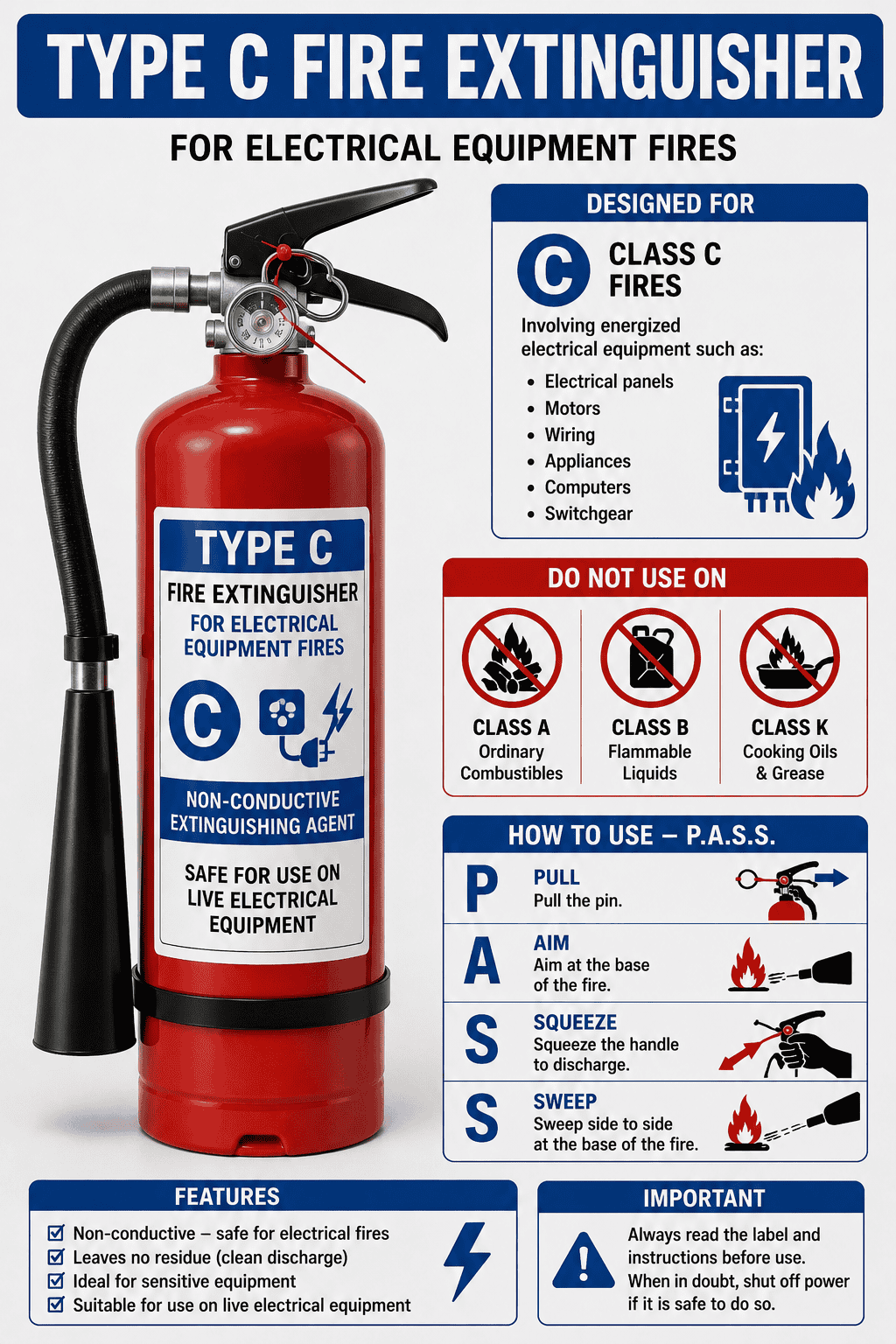
Class C Fires
Class C fires involve energized electrical equipment, including:
- Electrical panels
- Motors
- Transformers
- Computers
- Machinery
- Switchgear
The electricity itself isn’t burning—the surrounding materials are. The danger comes from electrical shock.
Suitable extinguishers include:
- CO₂
- Dry Chemical
- Clean Agent
Once electrical power has been disconnected, the fire usually becomes either a Class A or Class B fire depending on the fuel source.
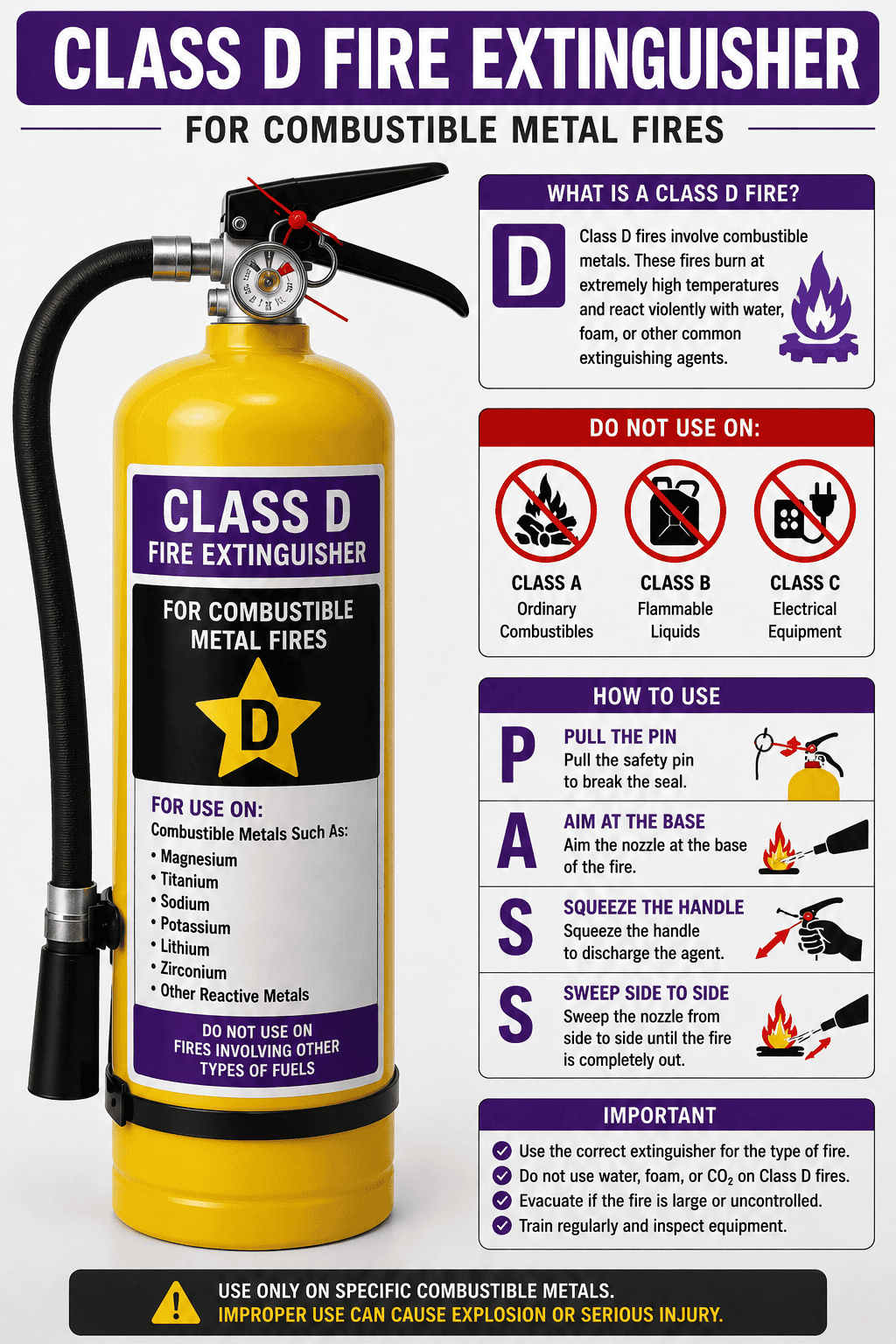
Class D Fires
Class D fires involve combustible metals such as:
- Magnesium
- Titanium
- Sodium
- Potassium
- Lithium metal
These fires burn at extremely high temperatures and react violently with water.
Specialized dry powder extinguishers designed specifically for metal fires must be used.
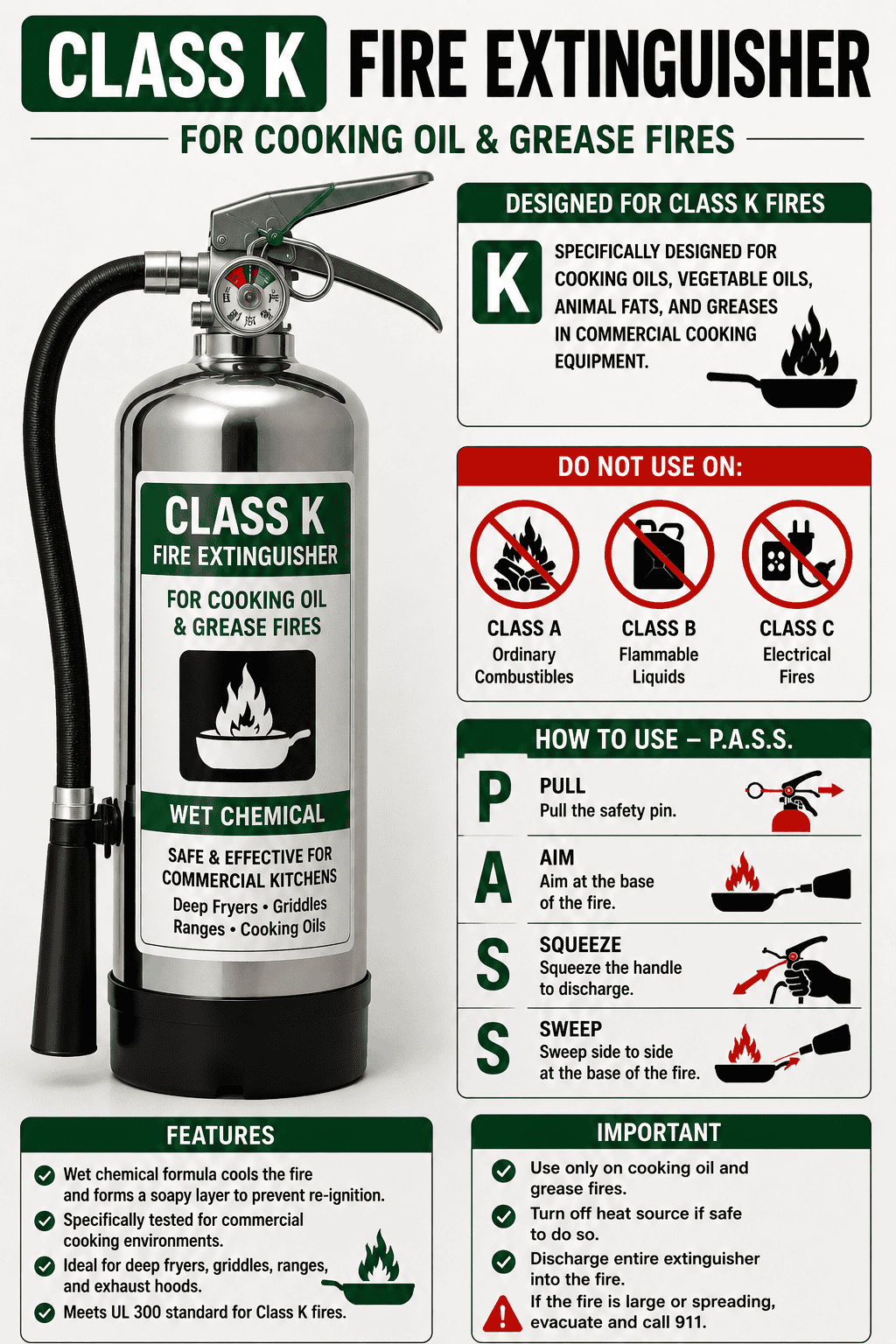
Class K Fires
Class K fires occur in commercial kitchens involving:
- Cooking oils
- Animal fats
- Vegetable oils
- Deep fryers
These fires burn much hotter than ordinary grease fires.
Wet Chemical extinguishers cool the oil while creating a soap-like layer that helps prevent re-ignition.
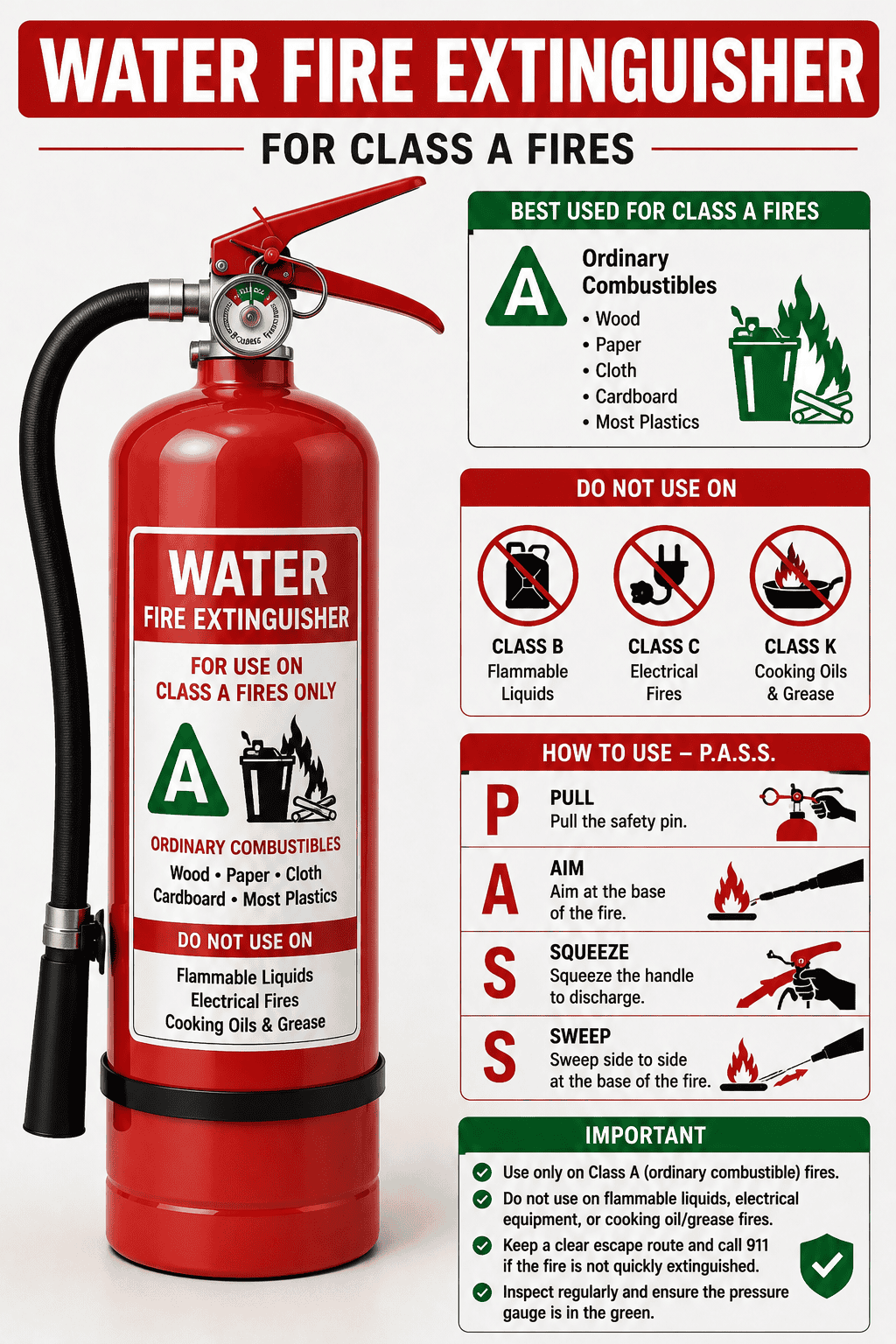
Water Extinguishers
Water extinguishers cool burning materials and work well on ordinary combustible fires.
Best for:
- Paper
- Wood
- Cardboard
- Cloth
Never use a water extinguisher on:
- Electrical fires
- Flammable liquid fires
- Cooking oil fires
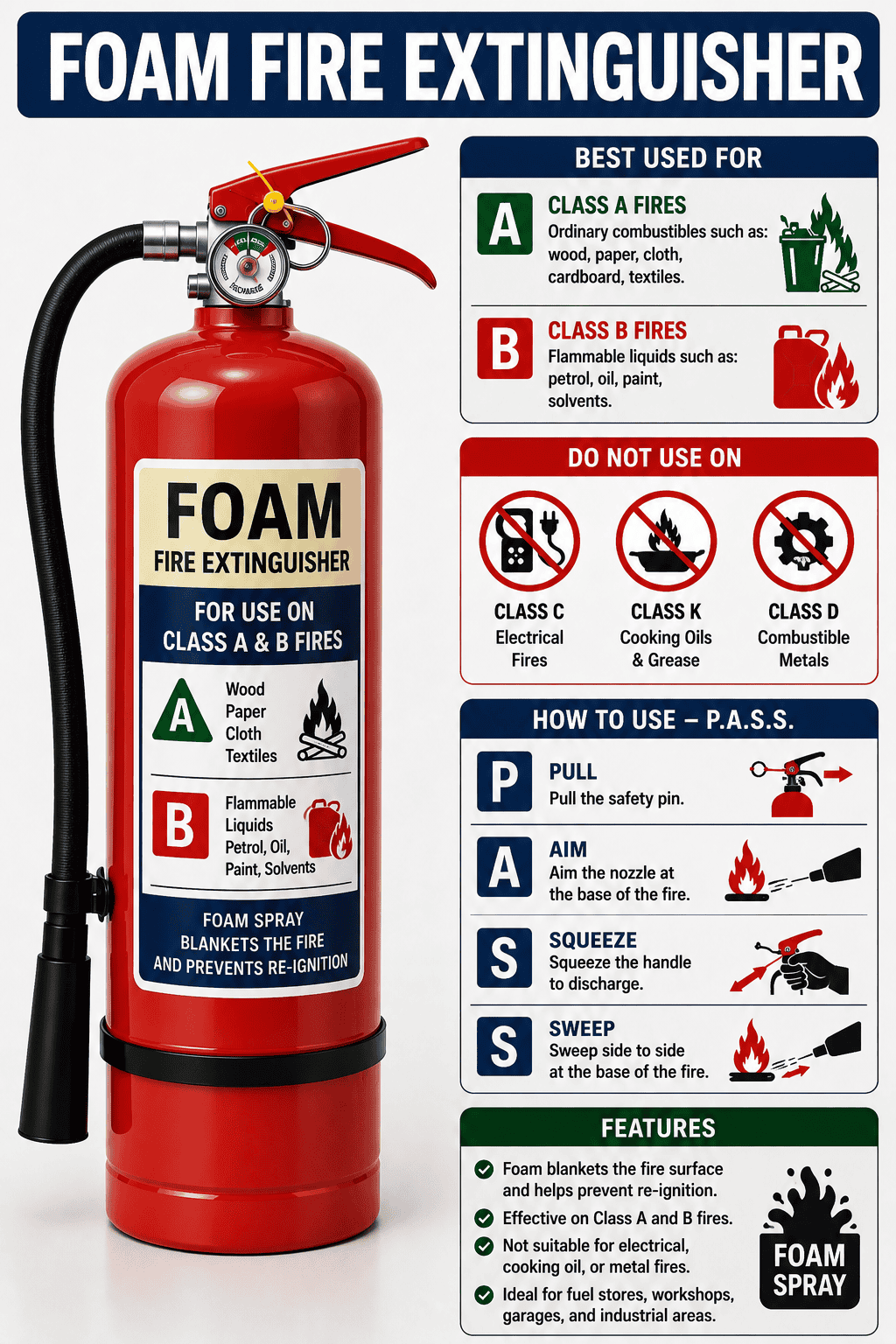
Foam Extinguishers
Foam extinguishers both cool the fire and create a blanket over flammable liquids to prevent vapors from igniting.
Ideal for:
- Class A
- Class B
Common locations include fuel storage areas and maintenance shops.
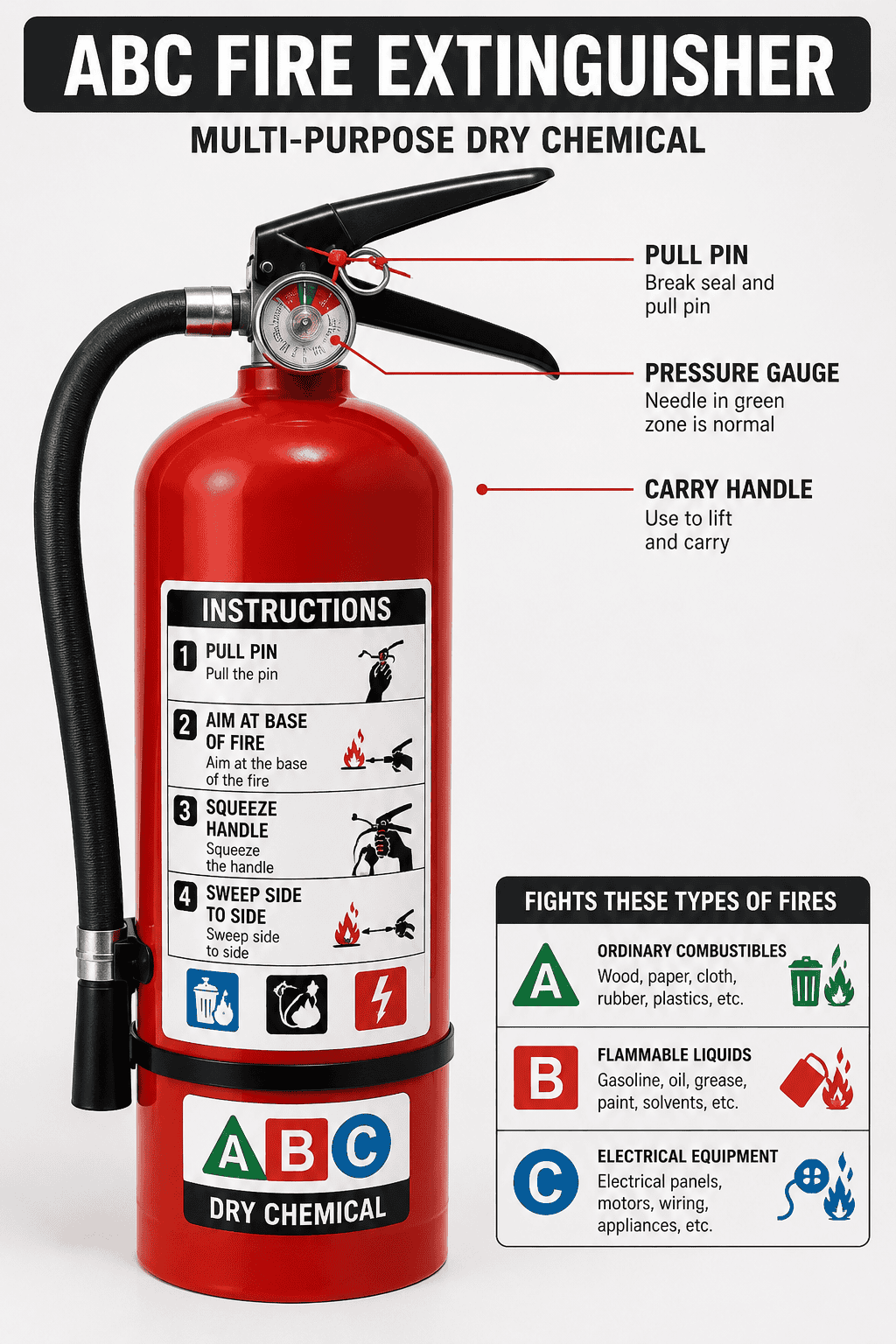
Dry Chemical (ABC)
The ABC dry chemical extinguisher is the most common extinguisher found in commercial buildings.
It interrupts the chemical reaction that keeps the fire burning and can be used on:
- Class A
- Class B
- Class C
Because of its versatility, it is often considered the “general-purpose” extinguisher.
The downside is the powder residue it leaves behind, which can damage electronics and require extensive cleanup.
Carbon Dioxide (CO₂)
CO₂ extinguishers displace oxygen around the fire while cooling the burning material.
Advantages include:
- Leaves no residue
- Safe for electronics
- Excellent for electrical equipment
Common uses include:
- Server rooms
- Electrical rooms
- Laboratories
- Control panels
The discharge horn becomes extremely cold during use, so avoid touching the nozzle directly.
Clean Agent Extinguishers
Clean agent extinguishers use gases that leave no residue and are safe for sensitive equipment.
They’re commonly found protecting:
- Data centers
- Museums
- Hospitals
- Communication equipment
- Laboratories
Although more expensive, they minimize equipment damage after a fire.
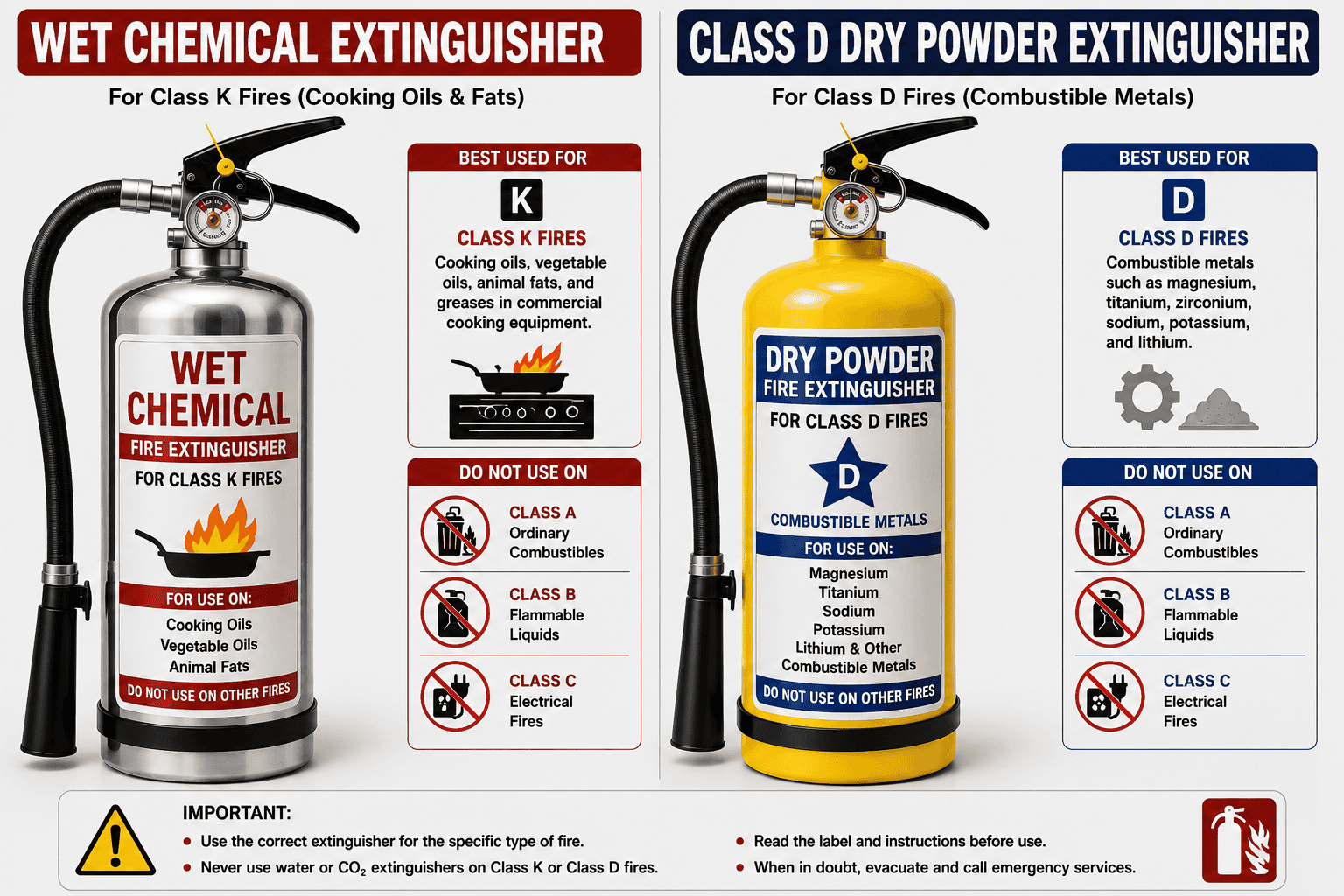
Wet Chemical Extinguishers
Designed specifically for commercial kitchens, wet chemical extinguishers rapidly cool cooking oil while preventing re-ignition.
These are required near:
- Deep fryers
- Commercial ranges
- Restaurant kitchens
Class D Dry Powder Extinguishers
These specialty extinguishers use powders designed specifically for burning metals.
Because different metals require different extinguishing agents, Class D extinguishers are usually selected based on the specific hazard present.
How to Use an Extinguisher
The easiest way to remember proper extinguisher operation is the PASS method.
P — Pull
Pull the safety pin while keeping the extinguisher upright.
A — Aim
Aim the nozzle at the base of the fire, not at the flames.
S — Squeeze
Squeeze the handle slowly to discharge the extinguishing agent.
S — Sweep
Sweep the nozzle from side to side while moving closer only as the flames begin to diminish.
Continue until the fire is completely extinguished and watch the area for any signs of re-ignition.
When Not to Use an Extinguisher
Even the correct extinguisher has limits.
Do not attempt to fight a fire if:
- The fire is spreading rapidly.
- Smoke is making it difficult to breathe.
- Flames are taller than you are.
- The room is filling with heat.
- You don’t have a safe escape route behind you.
- You are unsure which extinguisher to use.
If any of these conditions exist:
- Activate the fire alarm.
- Evacuate immediately.
- Call the fire department.
- Allow trained firefighters to handle the emergency.
No property is worth risking your life.
Inspection and Maintenance
An extinguisher should be inspected regularly to ensure it will operate during an emergency.
Routine inspections typically include checking:
- Pressure gauge is in the green operating range.
- Safety pin is installed.
- Tamper seal is intact.
- No visible corrosion or damage.
- Hose and nozzle are unobstructed.
- Unit is easily accessible.
- Inspection tag is current.
Most facilities perform monthly visual inspections and schedule annual maintenance by qualified technicians. Depending on the extinguisher type, periodic internal inspections, hydrostatic testing, or recharge intervals may also be required.
Final Thoughts
A fire extinguisher is often the first line of defense against a small fire, but it is only effective when the correct type is chosen and used properly. Knowing the different fire classes, selecting the appropriate extinguisher, and remembering the PASS technique can prevent minor incidents from becoming major emergencies. Combined with proper training, regular inspections, and a clear understanding of fire safety procedures, extinguishers remain one of the most valuable tools for protecting lives, facilities, and critical equipment.