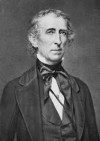
#25 William Mckinley- The Expansion and Empire Builder

1/29/1843 – 9/14/1901
Party: Republican
Timeline; 1897-1901
#25 William Mckinley- The Expansion and Empire Builder
McKinley was the last President to serve in the Civil War (1861-1865), enlisting as a private and finishing as a brevet major. After the war he practiced law and studied politics. He eventually won a seat in Congress as a representative for Ohio (1876-1891) and then became governor (1892-1896)
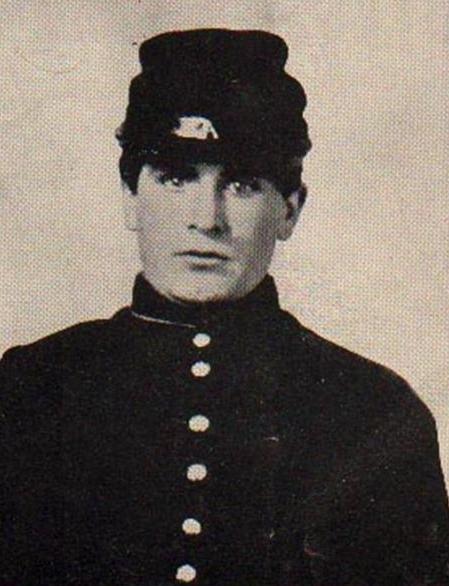
MAJOR MCKINLEY
1897;
- McKinley becomes the twenty-fifth President of the United States at the age of 54. Garret Hobart was his Vice President.
- McKinley becomes first President to ride in an automobile
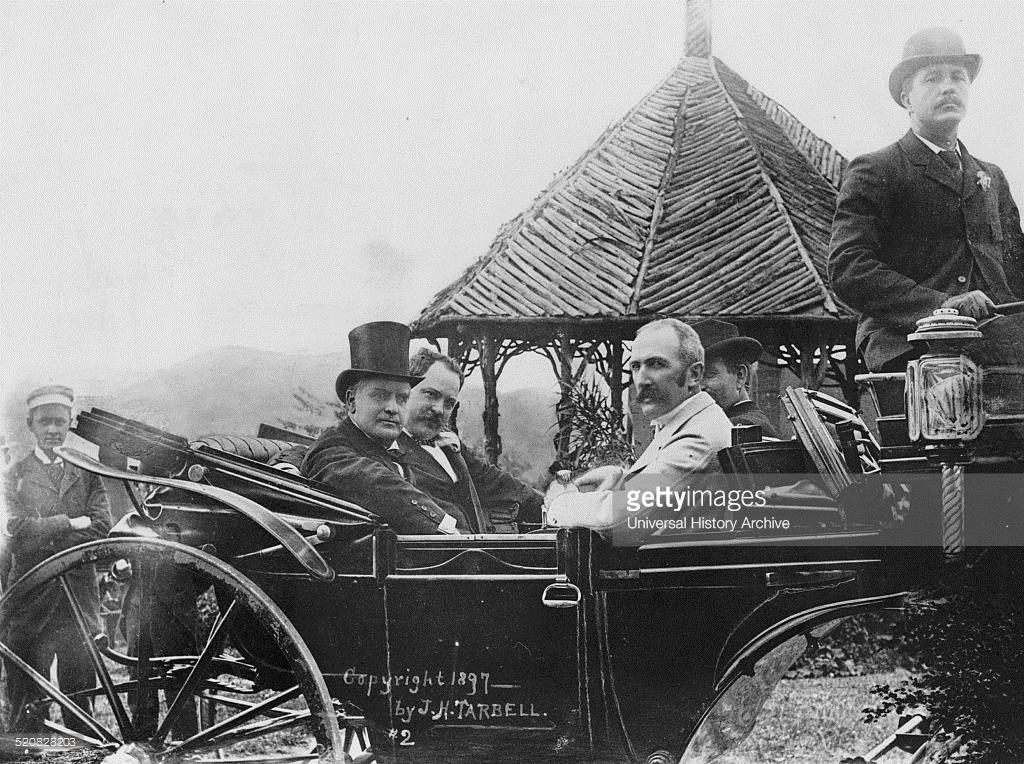
- President McKinley calls Congress into a special session for the purpose of revising the tariff laws.
- John J. McDermott wins the first Boston Marathon. The 26.2 miles from Hopkinton to Copley Square will become one of the world’s most prestigious marathons.
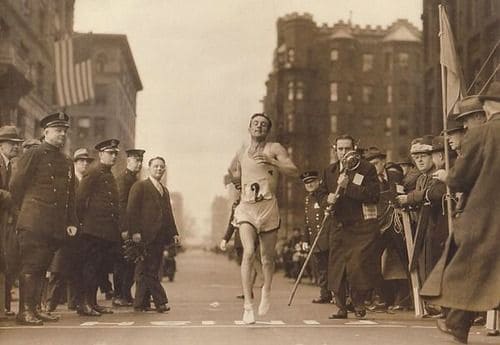
FIRST BOSTON MARATHON WINNER
- Congress appropriates $50,000 for the relief of Americans in Cuba.
- The first shipment of gold discovered in Alaska, totaling $750,000, arrives in San Francisco.
- President McKinley signs the Dingley Tariff Law, which raises custom duties by an average of 57 percent.
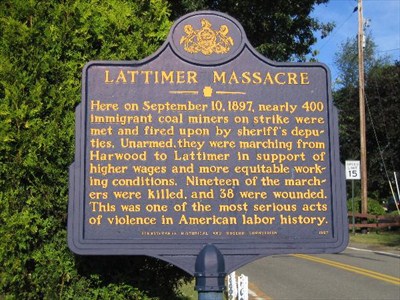
- More than twenty workers are killed in Lattimer, Pennsylvania, after deputy sheriffs open fire on striking coal miners. In sympathy and remembrance of the Lattimer Massacre, coal miners in the Ohio, West Virginia, and the Lehigh Valley of Pennsylvania walk off their jobs
- McKinley sends his first annual message to Congress indicating that while the government of Spain should be given time to reform its behavior in Cuba, America would continue to devote significant diplomatic attention to the island.
1898;
- Pro-Spanish groups riot in Havana, Cuba, in opposition to Cuban autonomy
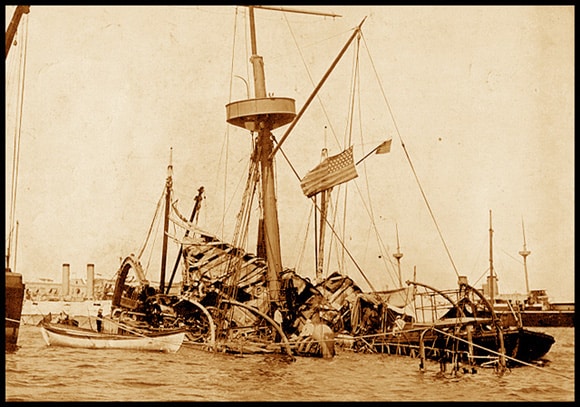
- The U.S. Battleship Maine arrives in Havana on a “friendly visit” but Its true mission is to protect American life and property.

USS MAINE
- The De Lome letter written by the Spanish minister to the United States, containing insults directed at President McKinley, is published in William Randolph Hearst’s New York Journal.
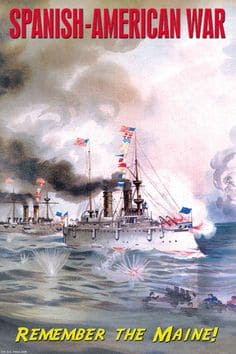
- The battleship Maine explodes and sinks in Havana harbor, killing 266 Americans. Subsequent press coverage of the event points to Spanish sabotage as the cause of the disaster. “Remember the Maine!” becomes a rally cry for Americans ready to go to war with Spain.
- At McKinley’s command, Congress votes a $50 million appropriation for national defense.
- The U.S. Navy reports that the Maine explosion was the result of external factors while the Spanish Navy releases its own report on the Maine disaster, concluding that an internal explosion destroyed the battleship.
- McKinley asks Congress for authority to “use armed force” in Cuba to end the civil war. Meanwhile, Spanish Prime Minister Sagasta makes a last-minute peace concession by offering the Cubans limited autonomy.
- Congress adopts a joint resolution authorizing President McKinley to intervene in Cuba. The resolution also states that the United States has no plans to annex Cuba. Spain counters by severing diplomatic relations with the United States.
- McKinley orders a blockade of northern Cuban ports.
- Congress passes the Volunteer Army Act, which authorizes the organization of the First Volunteer Cavalry, or Rough Riders as the U.S. captures its first spoils of war, the Spanish ship Buena Ventura.
- McKinley calls for 125,000 volunteers to fight the war with Spain.
- Spain and the United States declare war on each other
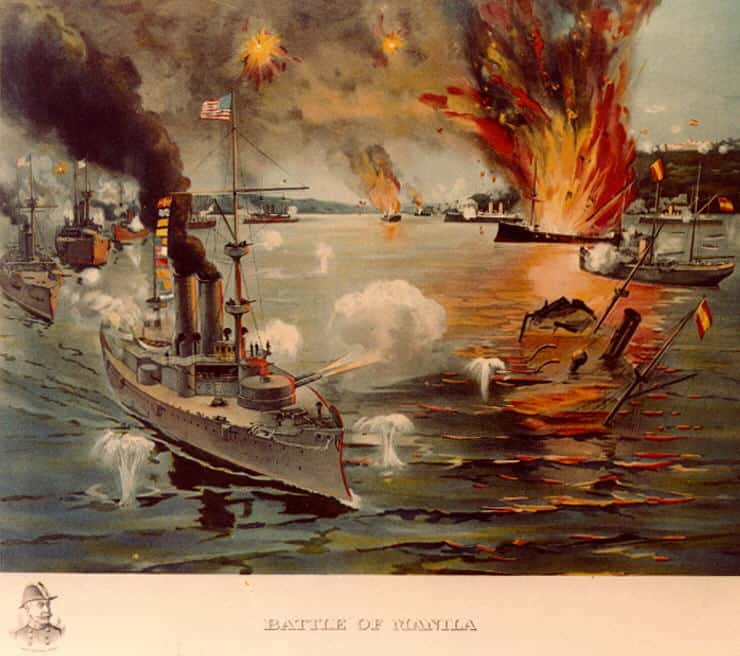
- Commodore George Dewey, commanding an American squadron of six ships, soundly defeats a larger but outgunned Spanish fleet at Manila Bay.
- McKinley issues a new call for volunteers, asking for an additional 75,000. A U.S. troop expedition of 2,500 men also sets sail for Manila, Philippines.
- Congress passes the Erdman Arbitration Act, but the Supreme Court rules it unconstitutional.
- Congress passes the War Revenue Act, which generated about $150 million of tax revenue a year from taxes levied on beer, tobacco, amusements, and some business transactions.
- A Spanish commander of Guam surrenders to advancing western Pacific fleets. Oblivious to the outbreak of war, the Spanish apologized thinking they were under attack for not saluting back.
- The United States defeats Spanish troops at the Battle of Las Guasimas, the first major land battle of the Spanish-American War.
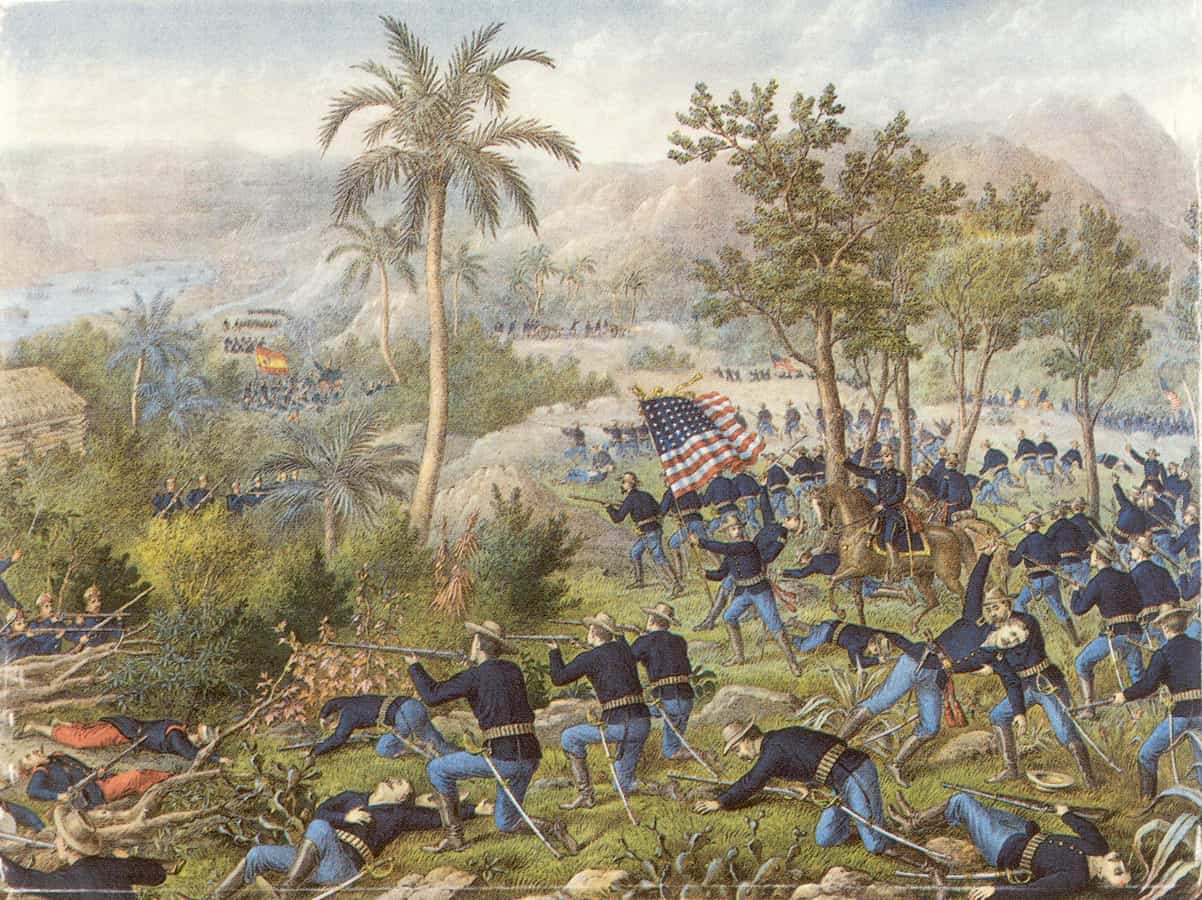
BATTLE OF LAS GUAISMAS
- After heavy fighting, American forces in Cuba take the Spanish garrisons at El Caney and San Juan Hill.
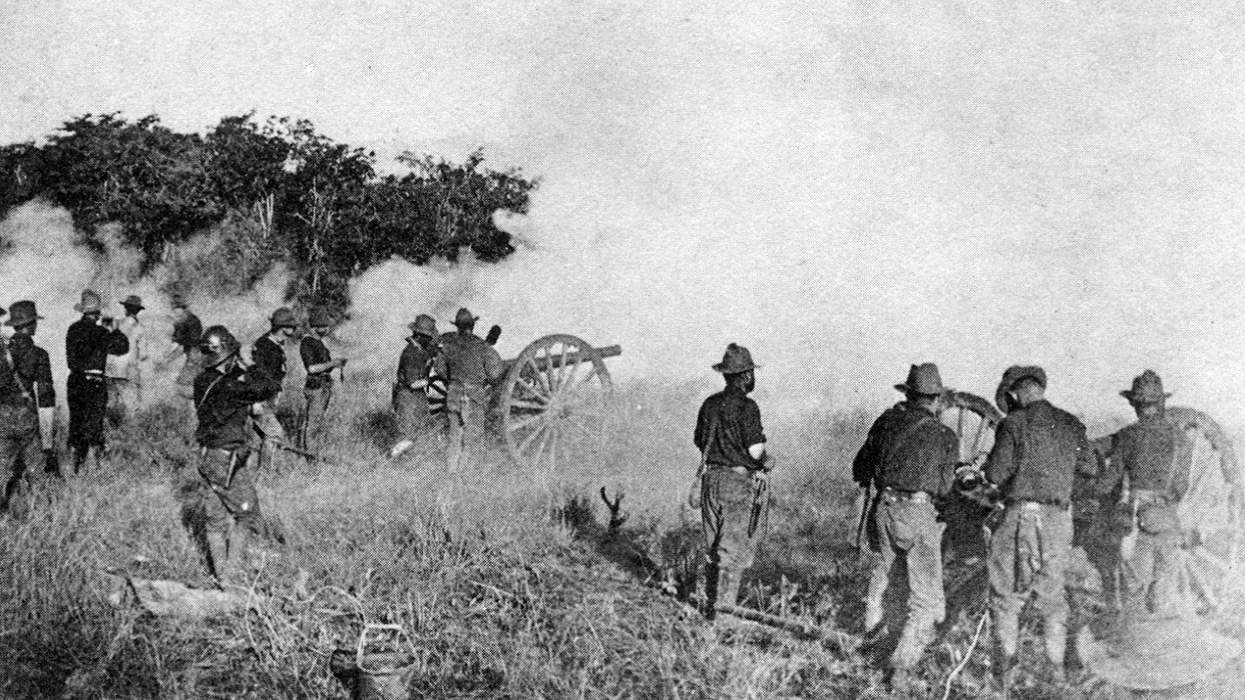
BATTLE OF EL CANEY
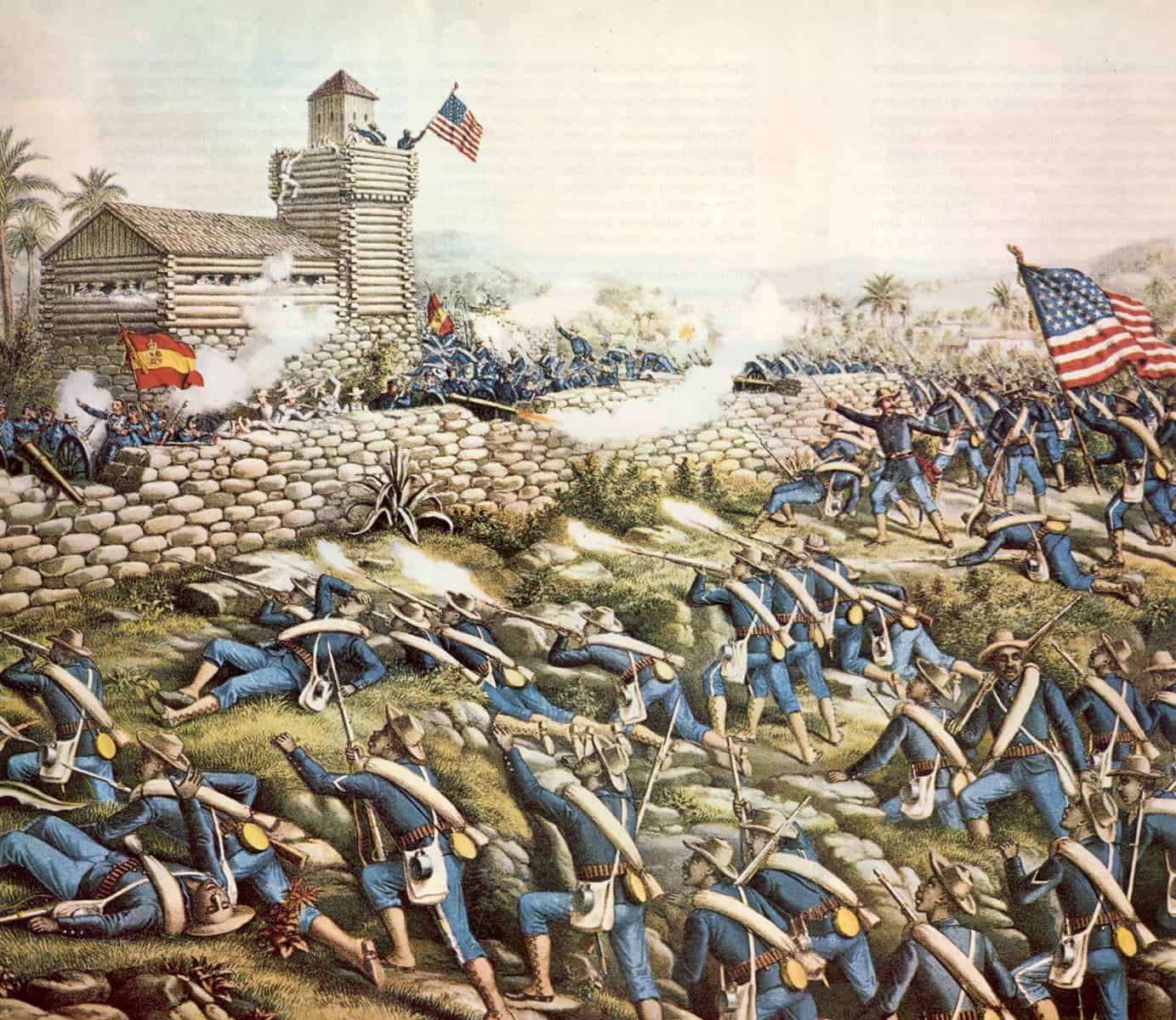
BATTLE OF SAN JUAN HILL
- American naval forces destroy the Spanish fleet off Santiago de Cuba.
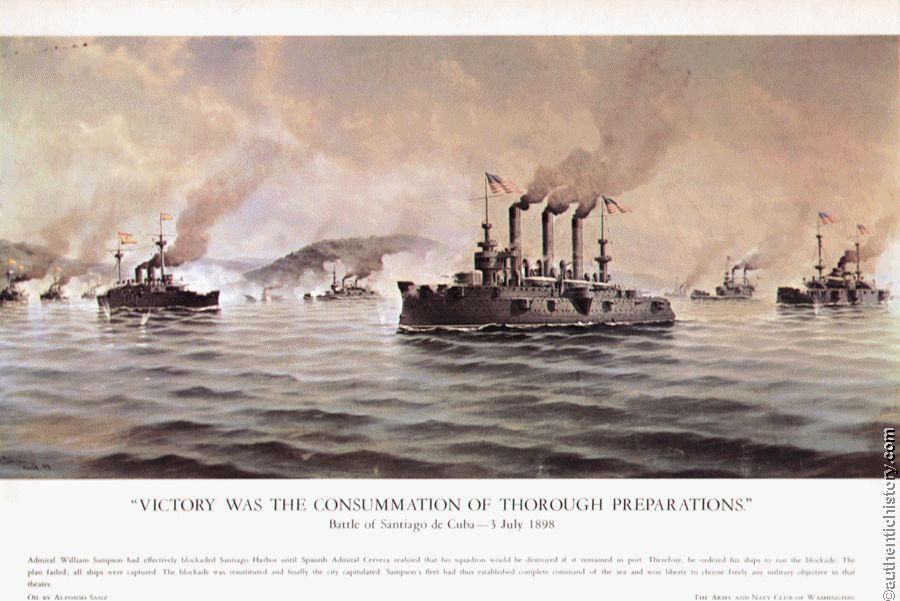
- McKinley signs a joint congressional resolution providing for the annexation of Hawaii.
- Santiago de Cuba surrenders, along with 24,000 Spanish troops, to American General William Shafter.
- American forces invade Puerto Rico, encountering little resistance.
- Spain and the United States sign an armistice in which Spain agrees to grant Cuba its independence and cede Puerto Rico and Guam to the United States. The fate of the Philippines is left to be determined at a postwar conference.
- Spanish forces in the Philippines surrender to the United States.
- A strikers’ riot in Virden, Illinois, leads to thirteen deaths and twenty-five injuries.

- American peace commissioners in Paris receive instructions to demand from Spain the cession of the Philippine Islands.
- McKinley’s sends his second annual message to both Houses of Congress. He declares his intention to build an inter-oceanic canal through Nicaragua and discusses the merits of fighting the Spanish-American war
- The United States and Spain sign the Treaty of Paris.
1899;
- The United States takes official control of Cuba.
- Philippine guerrillas attack U.S. forces in Manila, beginning the Philippine Insurrection.
- The Senate ratifies the peace treaty between the United States and Spain, The United States acquires Puerto Rico and Guam, and assumes the temporary administration of Cuba. While Spain receives $20 million for certain Filipino holdings, some looked at it as an outright purchase of the Philippines.
- Congress authorizes voting machines for federal elections, subject to the request of individual states.
- McKinley sends his third annual message to Congress, focusing primarily on foreign affairs and beefing up the U.S. Navy to benefit overseas commerce
1900;
- Britain and the United States sign the Hay-Pauncefote Treaty to provide for an isthmian canal in Central America.
- McKinley signs the Gold Standard Act, which fixes the standard of value for all money issued or coined by the United States.
- Congress passes an act establishing the Territory of Hawaii.
- The Senate ratifies a modified version of the Hay-Pauncefote Treaty, in which the British government agrees to an American canal with the conditions that it be neutral and unfortified. This treaty abrogates the Clayton-Bulwer Treaty of 1850.
1901;
- The first great oil strike in Texas occurs near Beaumont.
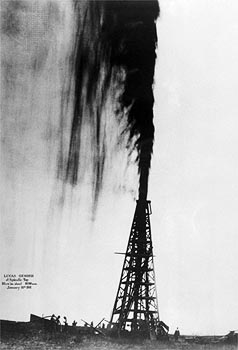
OIL STRIKE
- Congress adopts the Platt Amendment, as part of the Army Appropriation Act of 1901
- Former President Benjamin Harrison is laid to rest in Indianapolis, IN
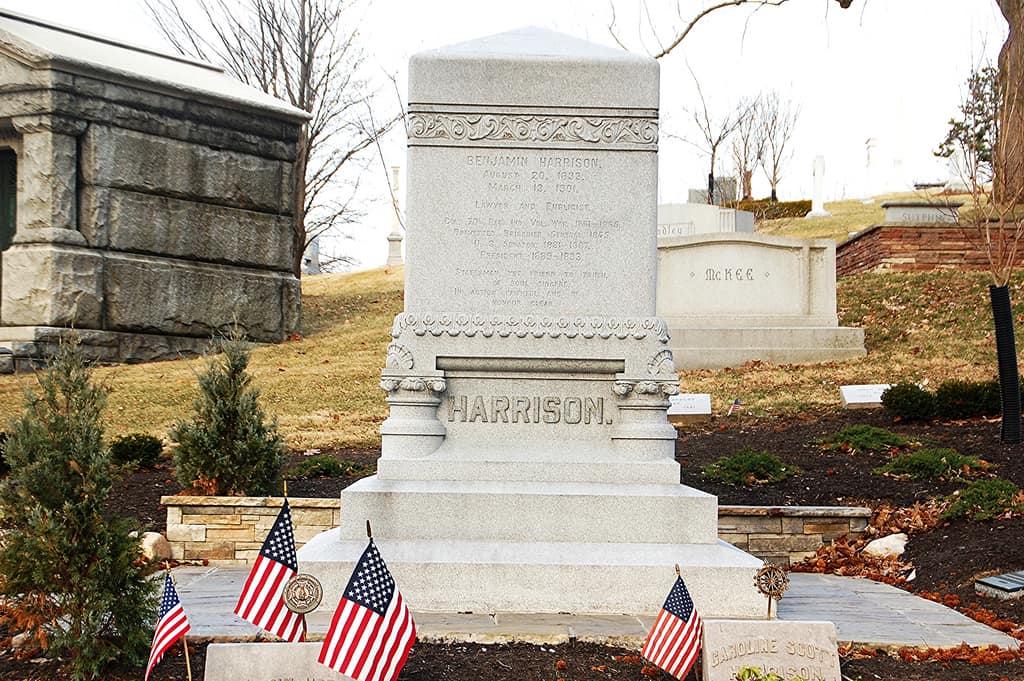
BENJAMIN HARRISON’S TOMB
- McKinley is re-elected President of the United States, with Spanish-American War Hero and New York governor Theodore Roosevelt as his new vice president.
- The British government informs the United States that it will not accept the Hay-Pauncefote Treaty as amended by the Senate.
- Filipino resistance leader Emilio Aguinaldo is captured by Frederick Funston, crippling the Philippine insurrection.
- The rebellion in the Philippines ends by proclamation. Sporadic fighting still continues until American military forces fully secure the island.
- Leon Czolgosz shoots McKinley in the stomach while the President shakes hands at the Pan-American Exposition in Buffalo, New York.
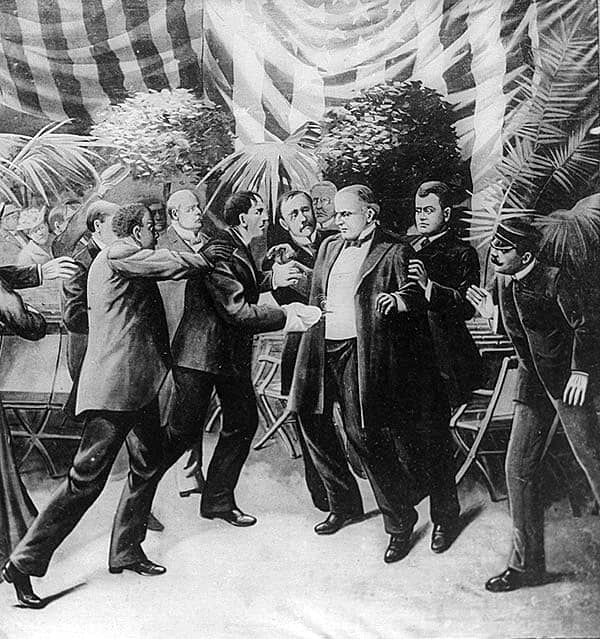
MCKINLEY ASSASSINATION
- Mckinley dies from his wounds a week later due to gangrene and is laid to rest in Canton, OH.
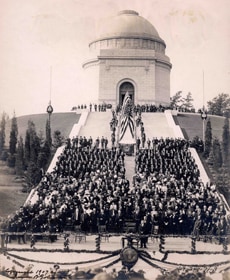
MCKINLEY’S TOMB
- Czolgosz, who admitted to the shooting of McKinley and expressed no remorse for his actions, was sent to the electric chair a month later. Rumor has it that McKinley was assassinated moments after handing a girl his lucky red carnation.
Famous quotes;
“In the time of darkest defeat, victory may be nearest.”
“That’s all a man can hope for during his lifetime – to set an example – and when he is dead, to be an inspiration for history.”
“War should never be entered upon until every agency of peace has failed.“