#4 James Madison- Father of the Constitution
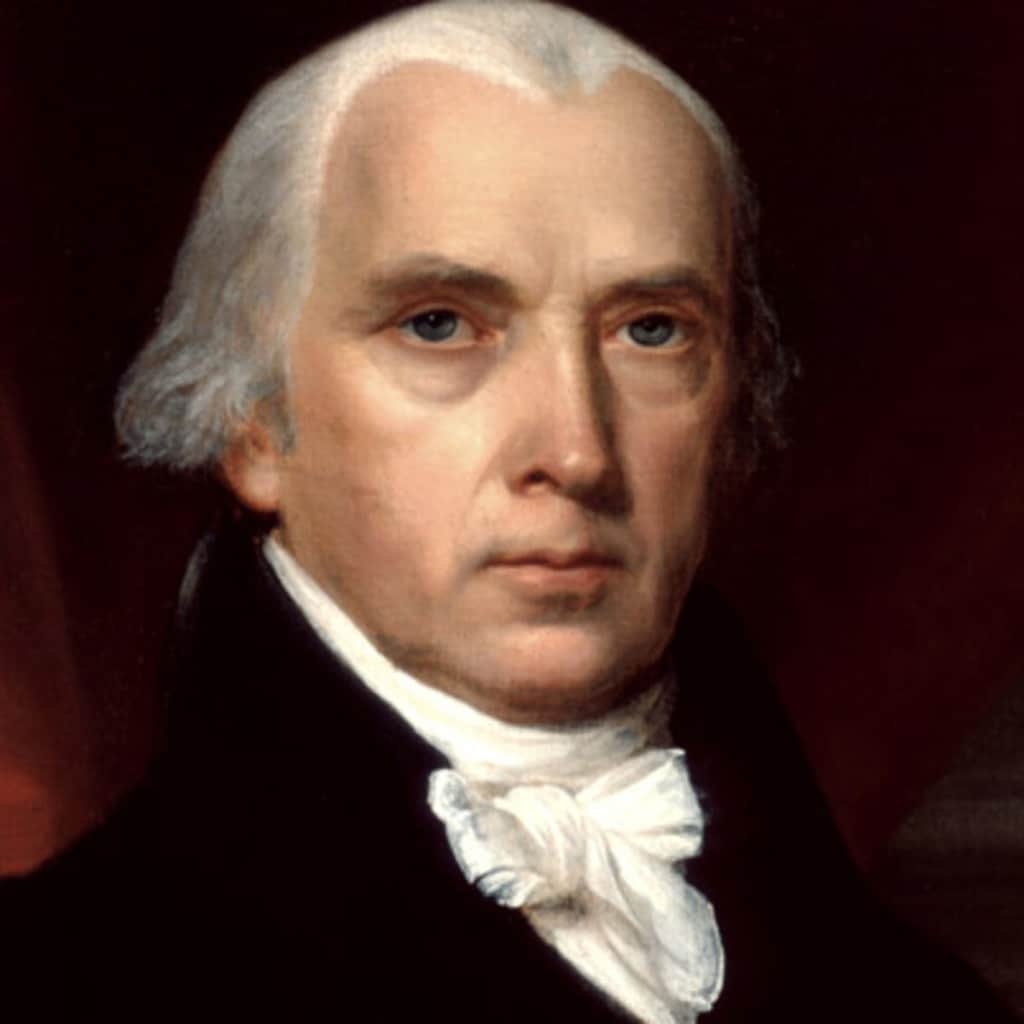
3/16/1751 – 6/28/1836
Party: Democratic-Republican
Timeline; 1809-1816
Madison was hailed as the Father of the Constitution as well as the Father of the Bill of Rights for his pivotal role in drafting and promoting each, respectively. He became a leader in the new House of Representatives, drafting many basic laws and working closely with George Washington to organize the new Federal Government, as well as organizing the Democratic-Republican party, and drafting the Kentucky and Virginia Resolutions with Jefferson, he supervised the Louisiana Purchase as Jefferson’s Secretary of State.
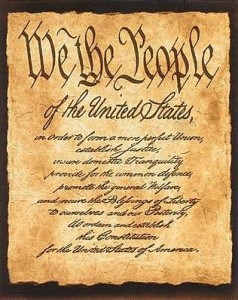
U.S. CONSTITUTION
1809;
- Madison is awarded Presidency at the age of 57, with George Clinton as his Vice President.
- Madison issues a proclamation known as the Erskine agreement, revoking the embargo on Britain.
1810;
- Tensions escalated with Spain prompting Madison and Congress to build the military and fleet back up.
- Madison proclaims authorizing occupation of West Florida, also claimed by Spain.
1811;
- Tensions build with Britain and harden later that year due to the Orders in Council.
- Madison requests declaration of war with Britain.
1812;
- House passes bill to enlarge the U.S. Army but denies enlarging the Navy.
- France sinks Naval ships and Congress declares war.
- Louisiana (slave) is admitted as the eighteenth state of the Union.
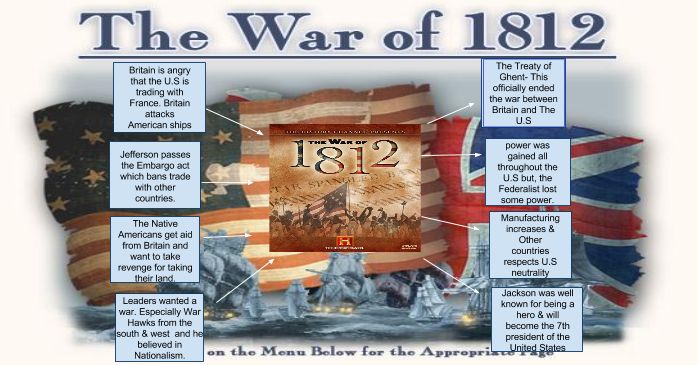
- Madison wins second term, loses George Clinton as V.P. and then requested declaration of war on Britain again over the Orders in Council, this time Congress approves.
- The nation divides as Madison wins again and declares the War of 1812.
1813;
- The Battles of Lake Erie and Battle of Thames become victories while Madison calls for total embargo on Britain.
- The Battle of the Burnt Corn in the Mississippi Territory starts the Creek War with the Native Creek Indians.
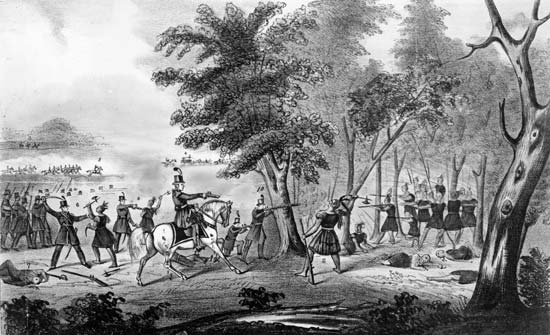
BATTLE OF THAMES
1814;
- Victory at the Battle of Horseshoe Bend eliminated the Confederation as an obstacle to American expansion toward the Gulf Coast. The engagement is one of the most significant American victories in the War of 1812, providing the United States with two-thirds of Creek land in the Treaty of Fort Jackson.
- Napolean’s empire collapses causing Madison to repeal the trade embargo.
- British set blaze to White House and Washington D.C.
- Star-spangled banner is penned by Francis Scott Keys
- Britain signs the Treaty of Ghent in Europe.
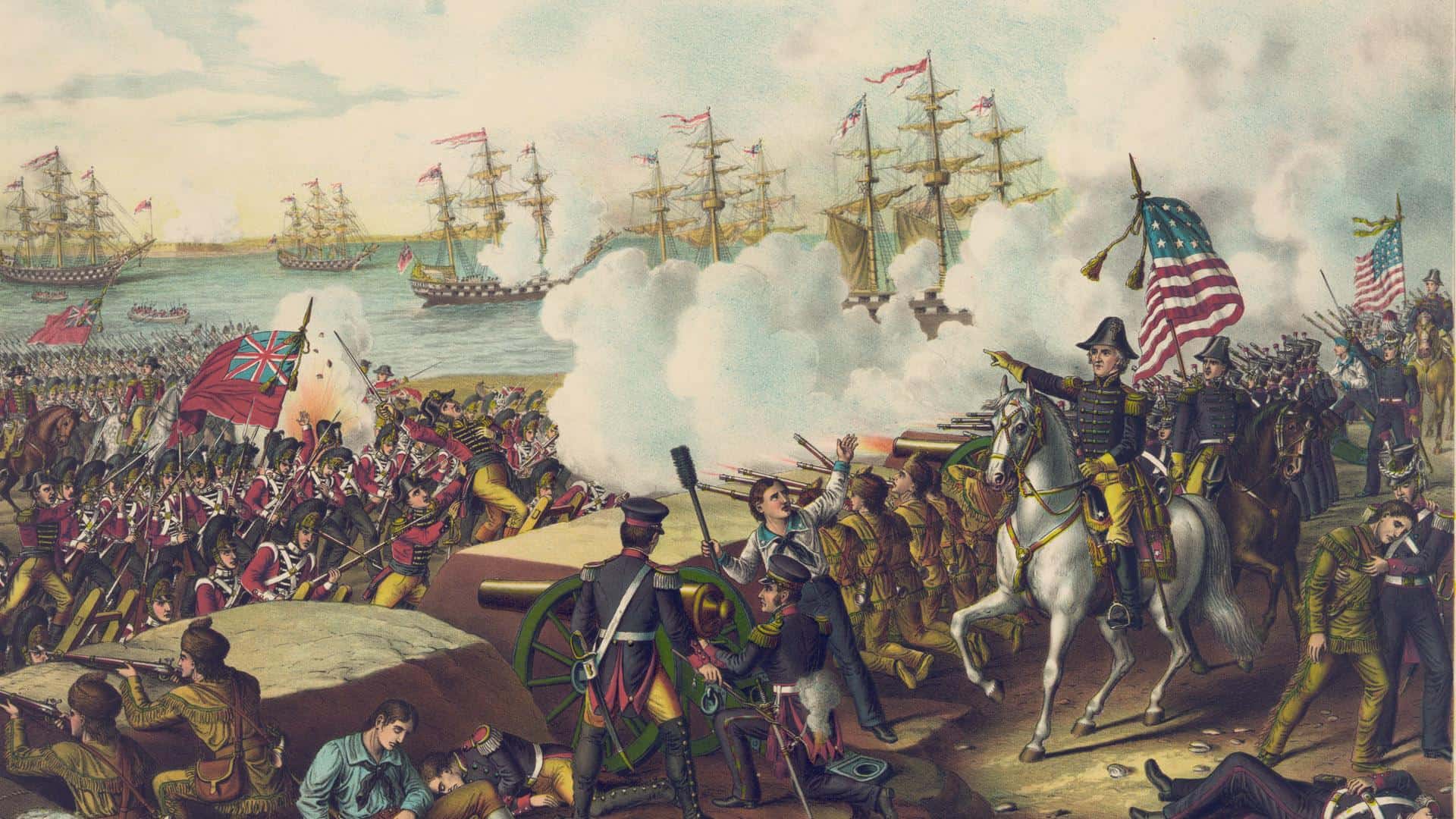
WAR OF 1812
1815;
- Battle of new Orleans is victorious
- News gets back home about the treaty, ending the War of 1812 in a draw.
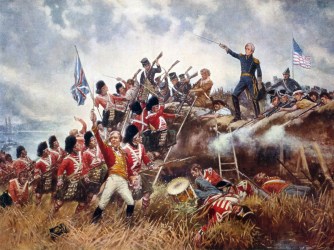
BATTLE OF NEW ORLEANS
1816;
- Madison signs a bill re-chartering a new national bank in Philadelphia
- Madison signs bill admitting Indiana to statehood.
- Indiana (free) becomes the 19th state
After the failure of diplomatic protests and the trade embargo against the United Kingdom, he led the U.S. into the War of 1812 which was a muddy situation for the administration since they neither had a strong army, or solid financial system. As a result of that, Madison supported stronger National Government, a strong military, and the National banking system, which he long opposed. Early on he favored a strong National Government but as time passed he preferred stronger State Government, eventually settling between the two extremes. He is also one of the Founding Fathers of the United States of America. His face is on the $5,000 bill.
Famous quotes:
“If men were angels, no government would be necessary.”
“The truth is that all men having power ought to be mistrusted.”
“Knowledge will forever govern ignorance; and a people who mean to be their own governors must arm themselves with the power which knowledge gives.”