Gerrymandering: One of The Oldest Trick in American Politics
Gerrymandering: The Oldest Trick in American Politics
When people talk about gerrymandering today, you’d think it was a modern scandal.
Truth be told, it’s one of America’s oldest political traditions, born from ambition, power, and a pen.
Origins
The year was 1812.
Massachusetts Governor Elbridge Gerry approved a redistricting plan to give his Democratic-Republican Party an edge in upcoming elections. One of the new districts in Essex County stretched and curled in such a bizarre way that it looked like a salamander on the map.
A local newspaper mocked the creature with a cartoon, labeling it “The Gerry-mander.”
The name stuck, and so did the tactic.
The Strategy Behind the Lines
At its core, gerrymandering is manipulating voting district boundaries to favor one political group over another.
The two main methods are:
- “Packing” – Cramming as many opposing voters as possible into one district to minimize their influence elsewhere.
- “Cracking” – Splitting up opposing voters across several districts so their votes never reach a majority.
It’s legal in most cases, but that doesn’t make it right.
From Paper Maps to Algorithms
What began as crude sketches on parchment has evolved into a data-driven science.
With modern GIS mapping software, political consultants can now redraw boundaries down to the block, analyzing voter history, ethnicity, and turnout rates with laser precision.
This has made today’s gerrymanders far more surgical, and far harder to fight.
Arizona: A Map That Looks More Like a Maze
Take Tucson, for example.
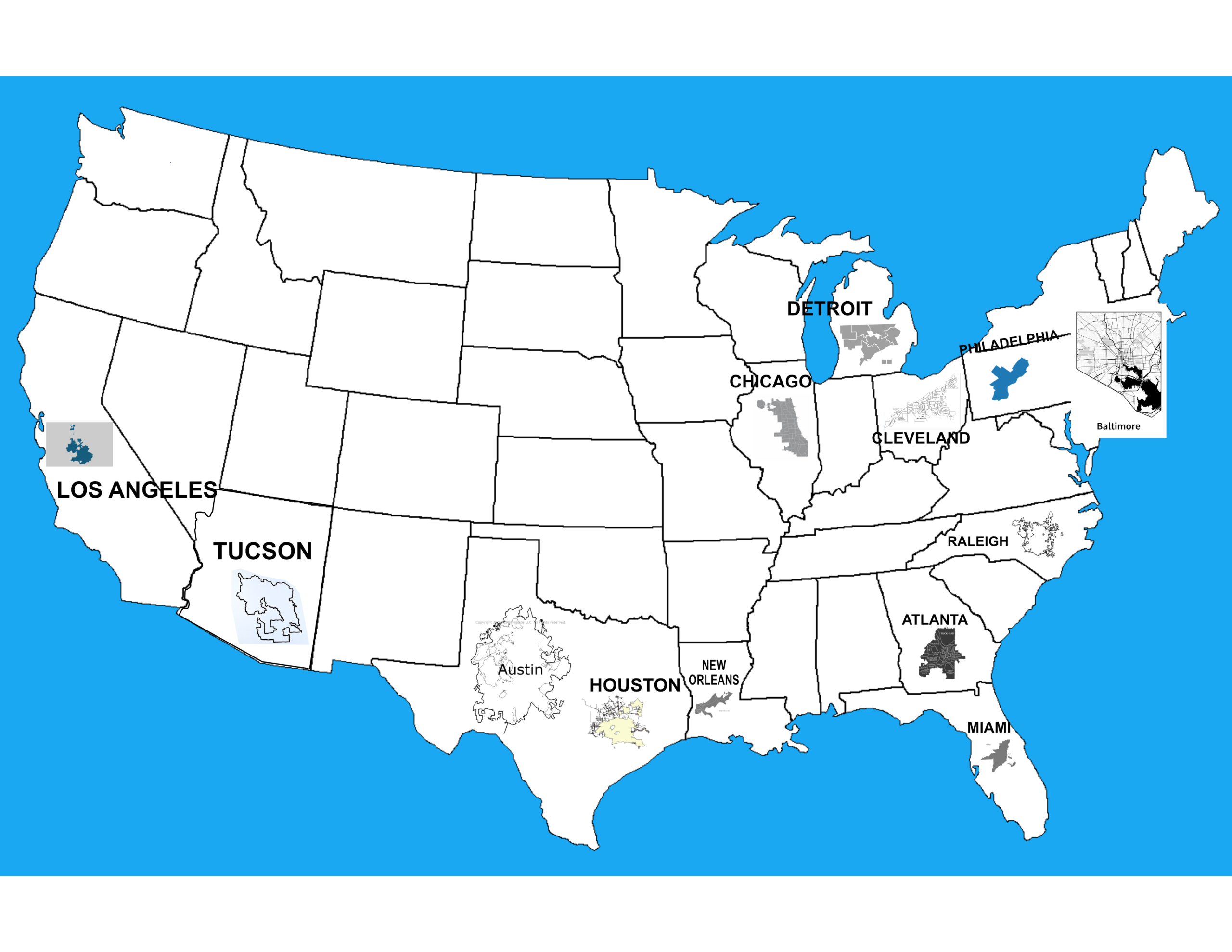
Arizona’s 6th and 7th Congressional Districts twist and wind across the desert like spilled ink. The shapes make little sense geographically, but politically, they do.
Parts of Tucson that share the same neighborhoods, schools, and roads are often split between different districts, diluting the community’s overall influence.
Arizona actually tried to fix this early:
In 2000, voters passed Proposition 106, creating the Arizona Independent Redistricting Commission (AIRC). The idea was to take power away from the legislature and put it into a bipartisan citizen board.
It helped but even independent commissions face pressure and lawsuits from both sides.
The States Most Affected
While every state deals with district balancing, a few are notorious for extreme shapes:
- North Carolina – famous for its “snake-like” districts winding hundreds of miles.
- Maryland – once called “the poster child for partisan redistricting.”
- Texas & Illinois – both heavily gerrymandered to secure long-term party dominance.
- Arizona – a battleground for reform, showing both the promise and limits of citizen oversight.
Gerrymandering doesn’t just redraw maps, it redraws democracy.
It decides which communities have a voice and which are silenced before a single ballot is cast. It shapes policy, power, and representation for an entire decade at a time.
Every oddly shaped district is a reminder:
When politicians choose their voters instead of voters choosing their politicians, democracy bends.
Final Thought
Gerrymandering isn’t new. It’s just evolved from ink to algorithms, from smoky backroom deals to sophisticated data models.
But awareness is growing. Every time citizens question those bizarre lines on a map, like Tucson’s, democracy strengthens just a little.
Because the first step to fixing the lines is seeing them.
The second is speaking up.
Your vote matters, but so does your voice between elections.
That means:
- Writing your state legislators and congressional representatives demanding fair, transparent redistricting.
- Attending public hearings when district maps are drawn; every comment is recorded, every objection counts.
- Sharing local examples of gerrymandered maps on social media to raise awareness in your own community.
- Supporting independent redistricting commissions or reform initiatives like those passed in California and Arizona, but make them more transparent.
Gerrymandering thrives on public apathy and complexity. It’s designed to make people stop paying attention, but the more people look, the harder it becomes to hide.
Democracy doesn’t redraw itself, we do, and it starts by demanding lines that represent people, not politicians.