7th Amendment
7th Amendment: Trial by Jury
“In Suits at common law, where the value in controversy shall exceed twenty dollars, the right of trial by jury shall be preserved, and no fact tried by a jury, shall be otherwise re-examined in any Court of the United States, than according to the rules of the common law.”
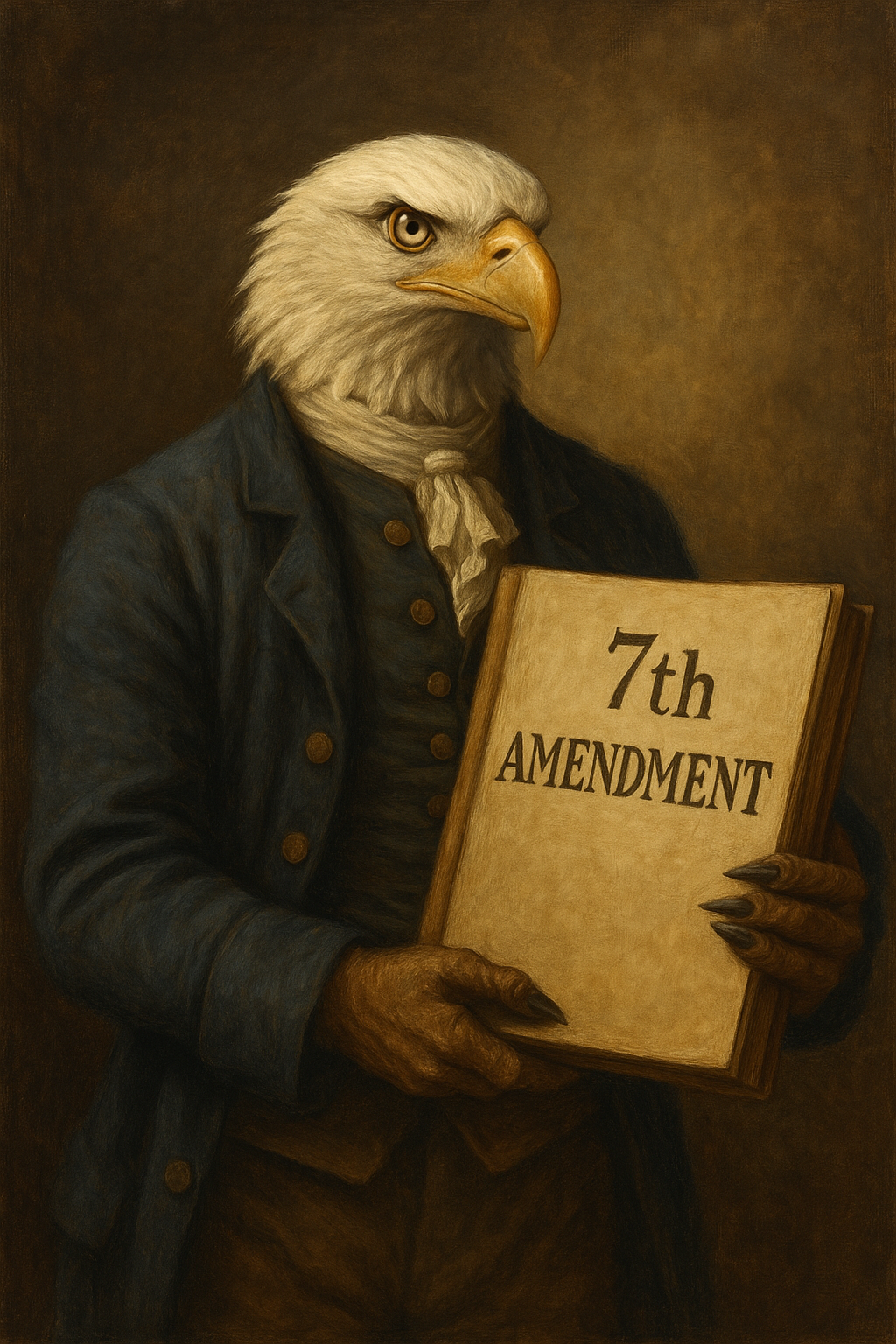
Historical Context
- Introduced: 1789 as part of the Bill of Rights.
- Ratified: December 15, 1791.
- Amended? No — unchanged since ratification.
- Key Interpretations Over Time:
- Originally meant to stop judges from overruling juries in civil cases (a problem in England under the Crown).
- Dimick v. Schiedt (1935): Supreme Court limited judges from increasing jury awards (but allowed reductions).
- Modern courts still debate whether the $20 threshold is meaningful today (it was worth much more in 1791).
The Seventh Amendment is about preserving citizen power in civil disputes, preventing elites or judges from dominating the outcome.
Simplified Breakdown
- Civil Jury Trial Guarantee
- In lawsuits involving more than $20 (essentially all modern cases), you have the right to a jury trial.
Translation: Ordinary citizens, not just judges, can decide civil disputes.
- Facts Cannot Be Re-Examined
- Once a jury decides the facts of a case, higher courts can’t casually overturn it.
Translation: Appeals can question legal errors, but not rewrite the jury’s verdict.
How It’s Treated Today
- Civil Trials: Still available, but most disputes are settled out of court or through arbitration. Jury trials are rarer than they once were.
- Arbitration & Contracts: Many companies (banks, tech firms, employers) force disputes into private arbitration, bypassing juries entirely. This has been criticized as weakening the Seventh Amendment.
- Appeals: Courts can overturn jury verdicts in limited circumstances (if instructions were wrong, or the award is “excessive”), but they generally defer to juries.
- The $20 Rule: Symbolic now — almost every modern case exceeds that threshold.
How It Should Be Applied
- Civil juries should remain a real option, not crowded out by forced arbitration.
- Citizens should be educated on their role as jurors in civil cases — it’s not just about criminal trials.
- The amendment’s spirit — keeping justice in the hands of citizens — should guide modern reforms, especially with corporations increasingly pushing disputes into private systems.
Core Idea
The Seventh Amendment is about keeping justice accessible and democratic in civil disputes. It prevents judges and elites from being the only voices in contract, property, or money-related cases.
Do you think the Seventh Amendment still matters today, or has forced arbitration by corporations effectively hollowed it out?