
Science and safety go hand in hand. Every safety rule, protective device, and OSHA regulation exists because it is grounded in scientific principles that help prevent injuries, equipment failures, and loss of life. This section explores both the science behind workplace hazards and the practical safety procedures used to control them. From pressure relief devices, confined space entry, lockout/tagout (LOTO), arc flash hazards, personal protective equipment (PPE), and hot work permits to hazard communication, fall protection, respiratory protection, chemical safety, and other OSHA requirements, these articles explain not only what to do, but why these protections are essential. By understanding the physics, chemistry, biology, and engineering behind workplace hazards, you’ll develop the knowledge and safety mindset needed to work confidently in industrial, commercial, and facility operations environments.
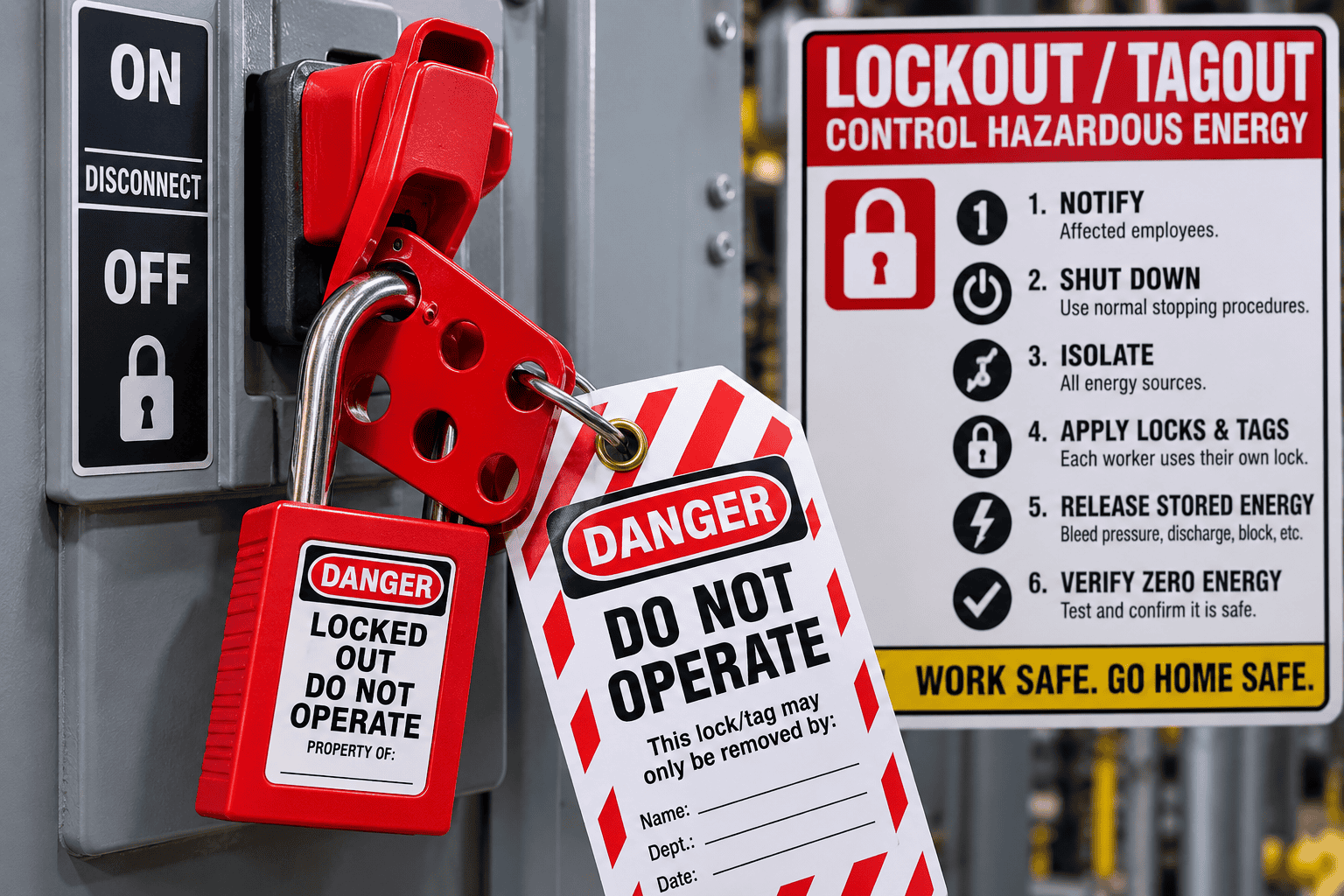
Lockout / Tagout
Lockout/Tagout (LOTO) is one of the most effective safety procedures for preventing serious workplace injuries caused by the unexpected release of hazardous energy. By properly isolating and securing electrical, mechanical, hydraulic, pneumatic, thermal, and other energy sources before maintenance begins, technicians can safely perform repairs without the risk of equipment starting unexpectedly. Understanding the principles of LOTO is essential for anyone working in industrial, commercial, or facility maintenance environments.