
In today’s workplace, technical knowledge alone isn’t enough. The ability to organize information, analyze data, automate repetitive tasks, communicate effectively, and make informed decisions has become just as valuable as any trade or professional skill. Whether you’re managing projects, maintaining facilities, running a business, or simply trying to become more productive, the right tools can dramatically improve the quality and efficiency of your work.
This section is dedicated to the software, programs, and digital technologies that support continuous improvement. From Microsoft Excel, Word, PowerPoint, Outlook, and Teams to AI assistants, cloud collaboration platforms, data visualization tools, and workflow automation, these articles explain how modern technology can simplify everyday tasks and help you accomplish more with less effort. Rather than replacing knowledge or experience, these tools are designed to enhance your abilities by reducing repetitive work, improving organization, and providing better access to information.
You’ll also explore practical ways to leverage technology for planning, documentation, reporting, presentations, data analysis, communication, and decision-making. Whether you’re creating spreadsheets that automate calculations, building professional reports, managing projects, using artificial intelligence to brainstorm ideas or summarize information, or streamlining daily workflows, these guides focus on real-world applications you can immediately put to use.
Technology continues to evolve rapidly, but the goal remains the same: work smarter, not harder. By learning how to effectively use today’s productivity software and digital tools, you can save time, minimize errors, improve collaboration, and focus more of your energy on solving problems instead of repetitive tasks. Whether you’re a student, skilled trades professional, office administrator, manager, or business owner, mastering these programs will help you become more productive, adaptable, and valuable in an increasingly digital workplace.
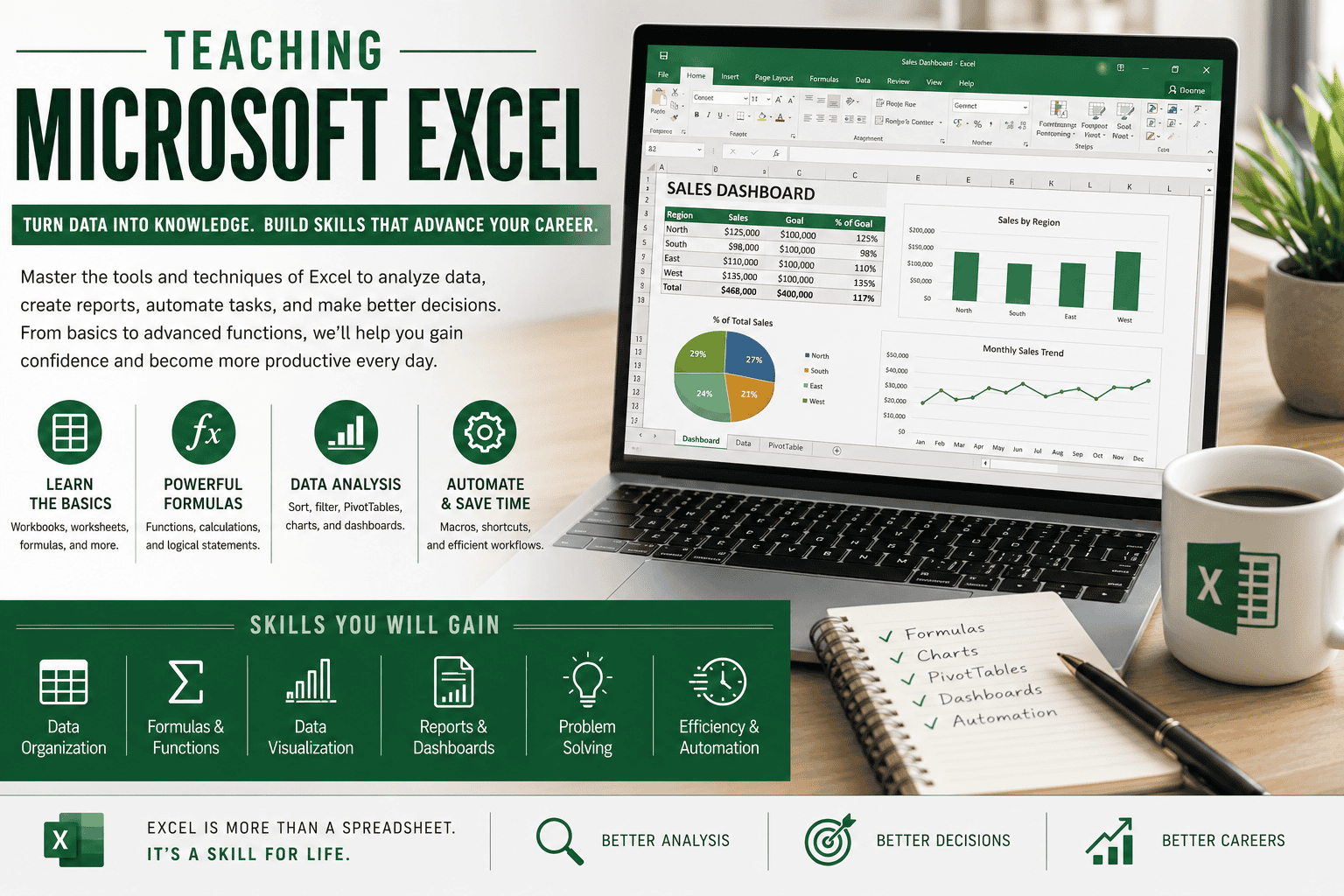
Excel Level I
Microsoft Excel is one of the most valuable productivity tools used in business, engineering, finance, and skilled trades. In this beginner-friendly guide, you’ll learn the fundamentals of navigating worksheets, organizing data, formatting cells, and using essential formulas such as SUM, AVERAGE, MIN, MAX, and basic arithmetic. Mastering these core skills provides the foundation for creating spreadsheets, tracking information, and building the confidence needed to tackle more advanced Excel features.
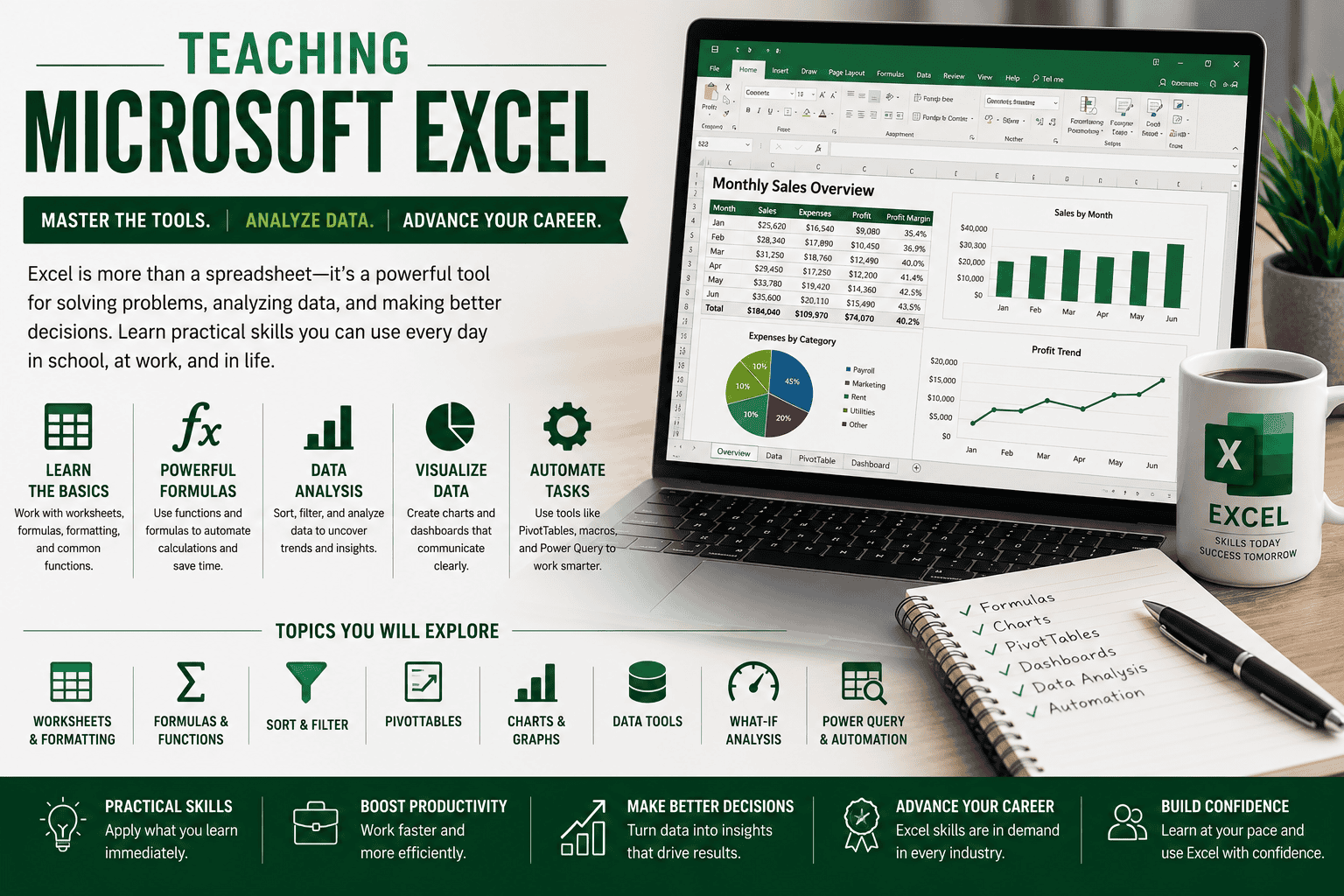
Excel Level II
Take your Excel skills to the next level by learning how to make spreadsheets smarter and more dynamic. In Excel Level 2, you’ll build on the fundamentals by using powerful conditional functions such as IF, IFS, AND, OR, SUMIF, COUNTIF, and AVERAGEIF to automate calculations and make better decisions based on your data. You’ll also learn how to transform rows of numbers into professional charts and graphs that clearly communicate trends, comparisons, and performance. These intermediate skills are essential for creating dashboards, reports, budgets, KPIs, and data-driven presentations used throughout business, engineering, finance, and operations.
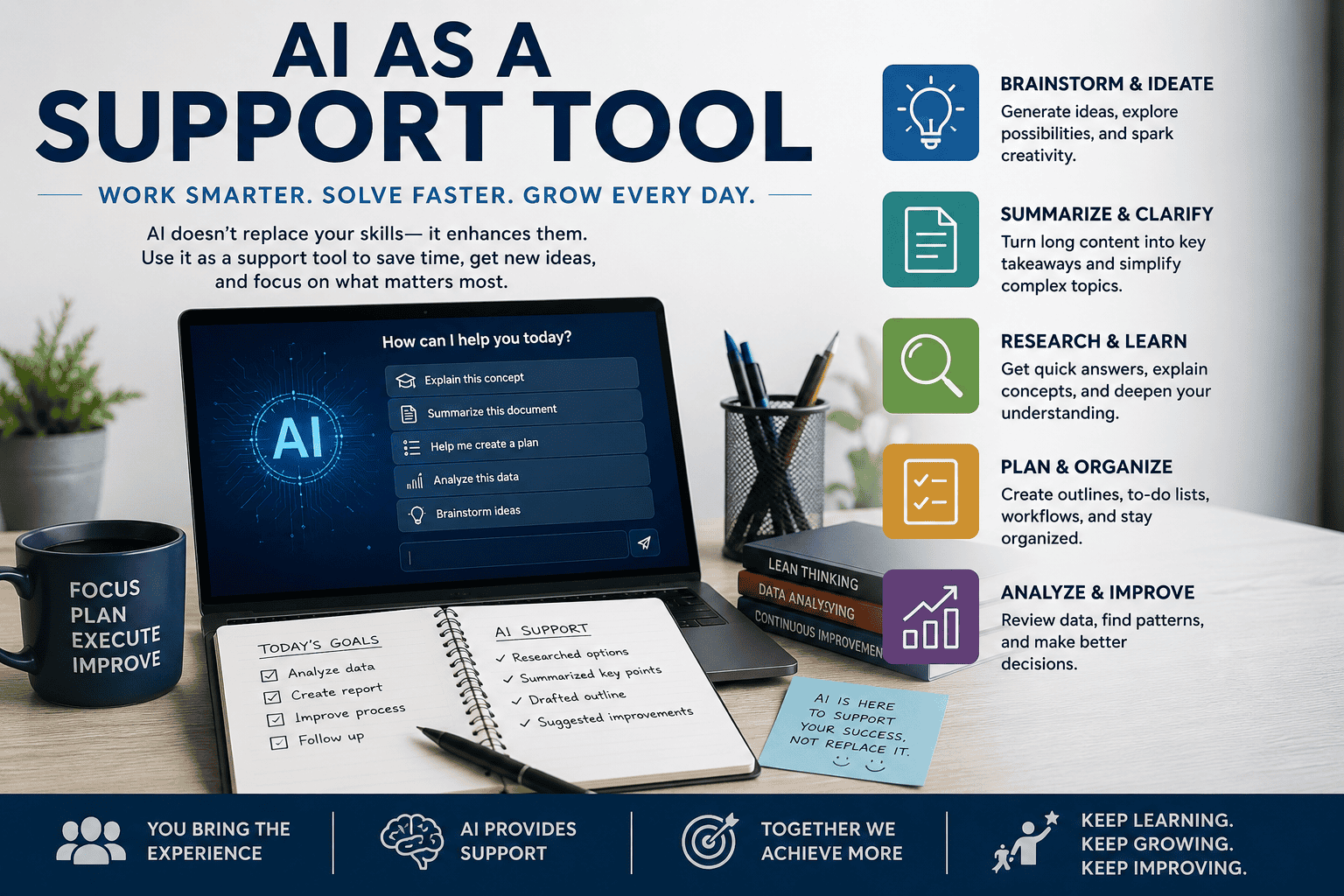
Artificial Intelligence Tools
Artificial intelligence is here — but it’s not the end of craftsmanship. It’s the next tool in the skilled worker’s belt. From mechanics to makers to modern creatives, it’s not replacing you, it’s simply helping you work smarter, faster, and more creatively than ever.