
Water is one of the most essential resources on Earth, yet few people realize the incredible journey it takes before reaching a faucet—or where it goes after it disappears down the drain. Every home, hospital, factory, and city depends on an interconnected network of water treatment, distribution, collection, and environmental systems working continuously behind the scenes to protect public health and sustain modern life.
The Water Systems Hub explores the complete lifecycle of water, from natural sources and drinking water treatment to wastewater collection, biological treatment processes, microbiology, and water reuse. You’ll learn the differences between potable and non-potable water, how municipalities produce safe drinking water, how wastewater is cleaned before returning to the environment, and the critical role microorganisms play in breaking down waste and maintaining ecological balance.
Beyond treatment plants, we’ll also dive into industrial and facility water systems, including cooling towers, boiler water chemistry, closed-loop heating and cooling systems, reclaimed water, stormwater management, lift stations, pumps, distribution networks, and the instrumentation used to monitor and control these complex processes.
Whether you’re a facility operator, maintenance technician, wastewater professional, student, or simply curious about the hidden infrastructure that keeps society running, this hub provides a practical foundation for understanding one of the world’s most important resources. Water is far more than something we drink—it’s a carefully managed system of engineering, chemistry, biology, and environmental science that makes modern civilization possible.

Tap Water Source
Every drop of water that flows from your faucet has traveled an incredible journey. Long before it reaches your home, it may have fallen as rain or snow, collected in rivers, lakes, reservoirs, or underground aquifers, and passed through extensive treatment processes designed to make it safe to drink.
In this article, we’ll follow the path of tap water from its natural source to your faucet, exploring where our drinking water comes from, how it’s treated, and the infrastructure that delivers clean, reliable water to millions of people every day.
Wastewater Treatment
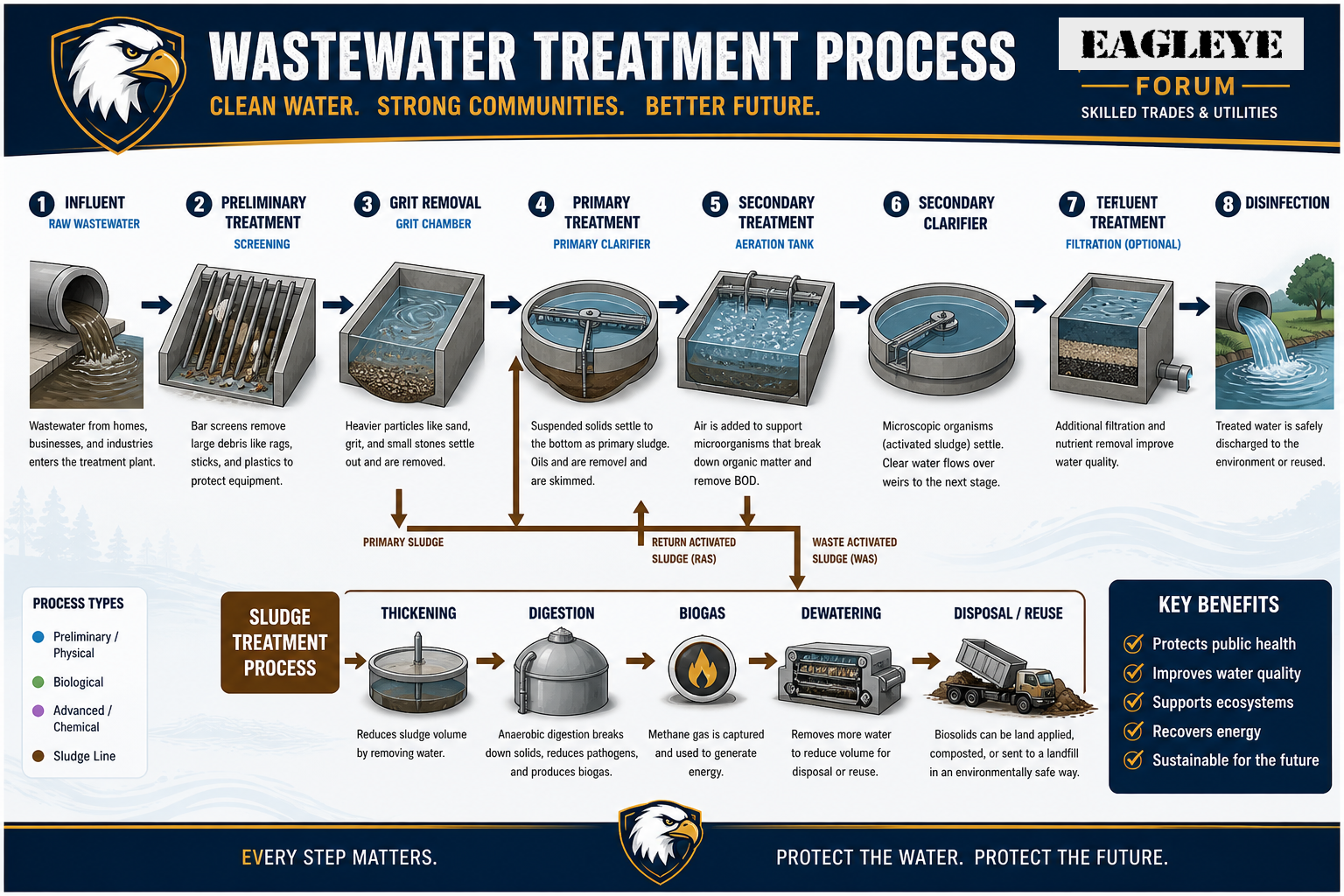
Every time water disappears down a drain, sink, or toilet, its journey is far from over. Before it can be safely returned to rivers, lakes, or reused, it must pass through a carefully designed wastewater treatment process that removes debris, pollutants, and harmful microorganisms.
In this article, we’ll explore how wastewater treatment works, the stages involved, and the biological, chemical, and mechanical systems that protect public health and the environment.
Microbiology The Invisible World Constantly Shaping Our Lives
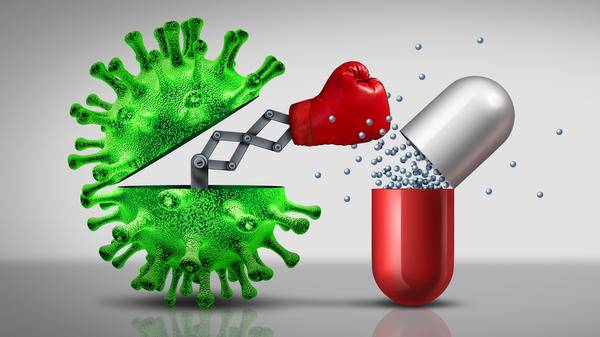
Microorganisms are the unseen workforce behind every healthy wastewater treatment plant. Billions of bacteria, protozoa, and other microscopic organisms break down organic waste, remove pollutants, and help produce clean water that can be safely returned to the environment.
In this article, we’ll explore the fascinating world of wastewater microbiology, the organisms that make treatment possible, and why maintaining a healthy microbial community is essential for plant performance.