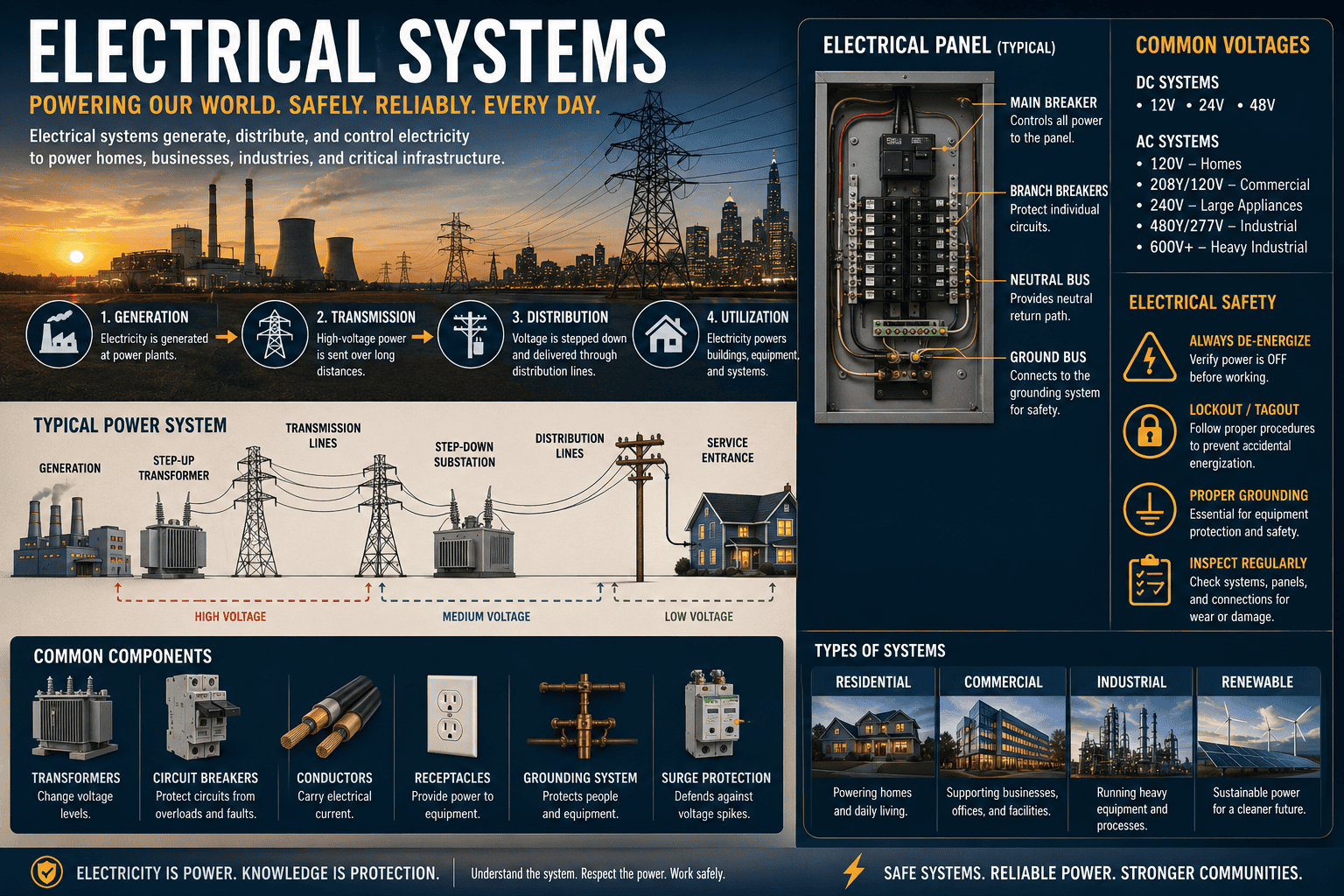
Electrical systems are the backbone of modern infrastructure, delivering the power that keeps homes, businesses, industries, and critical facilities operating every day. From power plants and substations to transformers, circuit breakers, motors, and control panels, electrical systems safely generate, transmit, distribute, and control electricity across countless applications.
This section explores the fundamentals of electrical systems, explaining how electricity flows from its source to the equipment that powers our world. You’ll learn about electrical components, power distribution, wiring methods, protection devices, motors, generators, transformers, grounding, controls, and the principles that ensure electrical systems operate safely and efficiently. Whether you’re beginning a career in the skilled trades, working in facility operations, or simply looking to better understand how electrical infrastructure functions, these articles provide the practical knowledge needed to build a strong foundation in electrical systems.
⚡ Electrical Systems and Skilled Trades
Proper wiring is the foundation of every safe and reliable electrical system. Whether in residential, commercial, or industrial settings, understanding wiring methods, conductors, cables, and installation practices is an essential skill for electricians and other skilled trades professionals. This article introduces the fundamentals of electrical wiring, explaining how power is safely delivered from the source to the devices and equipment we rely on every day.
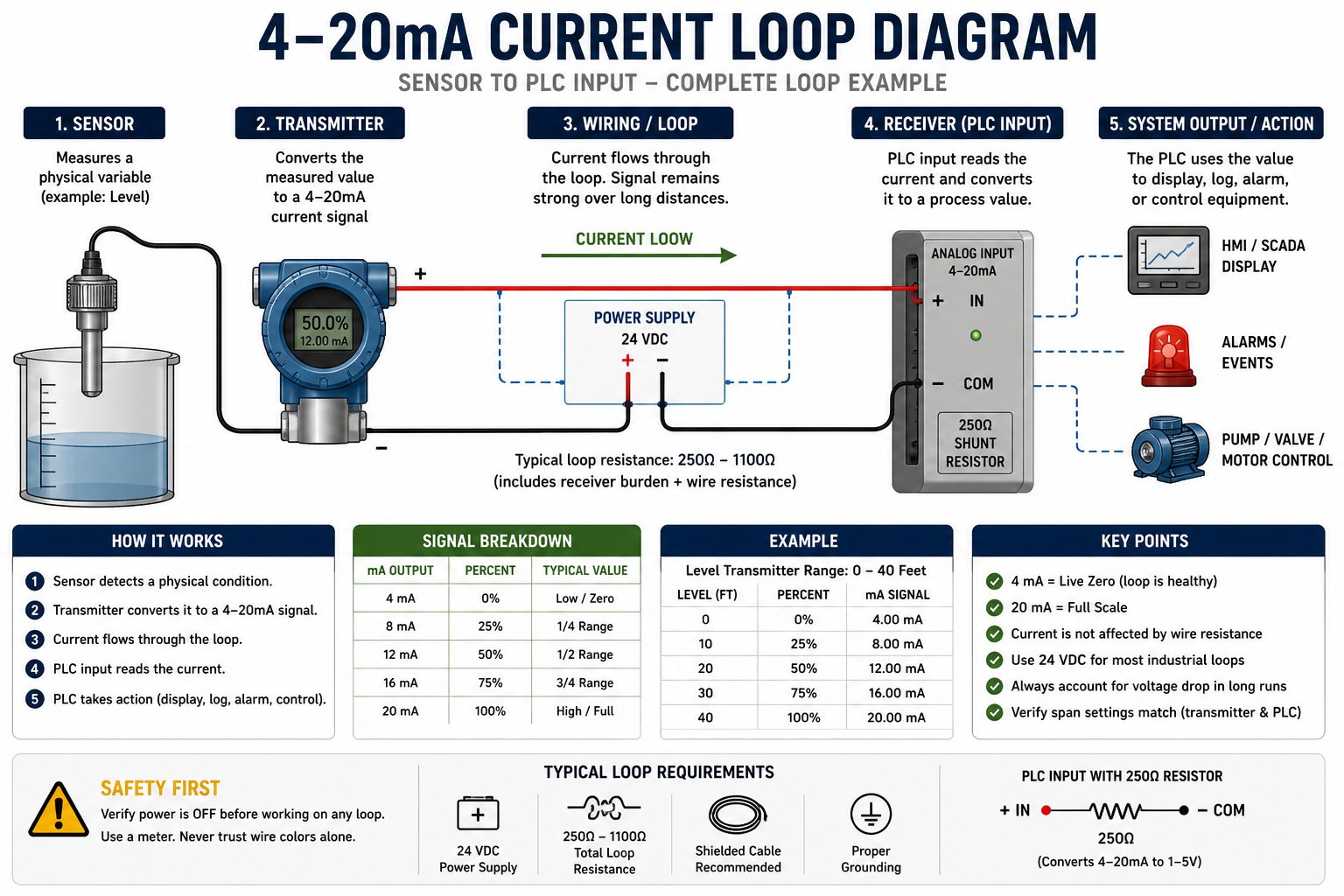
🖥️ Current Loop Systems- Understanding 4-20mA
Current loops are one of the most common methods of transmitting analog signals in industrial automation and process control. Widely used in HVAC, water treatment, manufacturing, and energy systems, current loops provide reliable communication between sensors, transmitters, controllers, and control systems. This article explains how current loops work, why the 4–20 mA standard became the industry norm, and how technicians use them to monitor and control critical processes.