
#37 Richard M. Nixon- The Watergate President

01/09/1913 – 04/22/1994
Party: Republican
Timeline; 1969-1974
#37 Richard M. Nixon- The Watergate President
Nixon served with the U.S. Navy Reserves (1942-1966) with just the first 5 years spent active duty, the other time was spent as a member of the house of representatives for California (1947-1950), California Senator (1950-1953), and Vice President (1953-1961).
1969;
- Nixon becomes the 37th President of the United States at the age of 56. Spiro Agnew is his V.P.
- Following an attack on a U.S. plane on April 15, Nixon orders that reconnaissance flights off of North Korea be resumed
- Former President Eisenhower is laid to rest in Abilene, KS
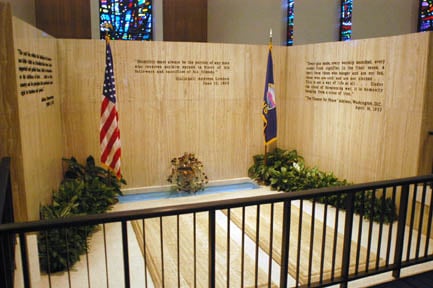
EISENHOWER TOMB AT HIS PRESIDENTIAL LIBRARY
- Nixon asks that Congress be granted authority to consolidate federal aid programs to states and cities
- Apollo 11 lifts off and becomes the first space flight to land on the moon
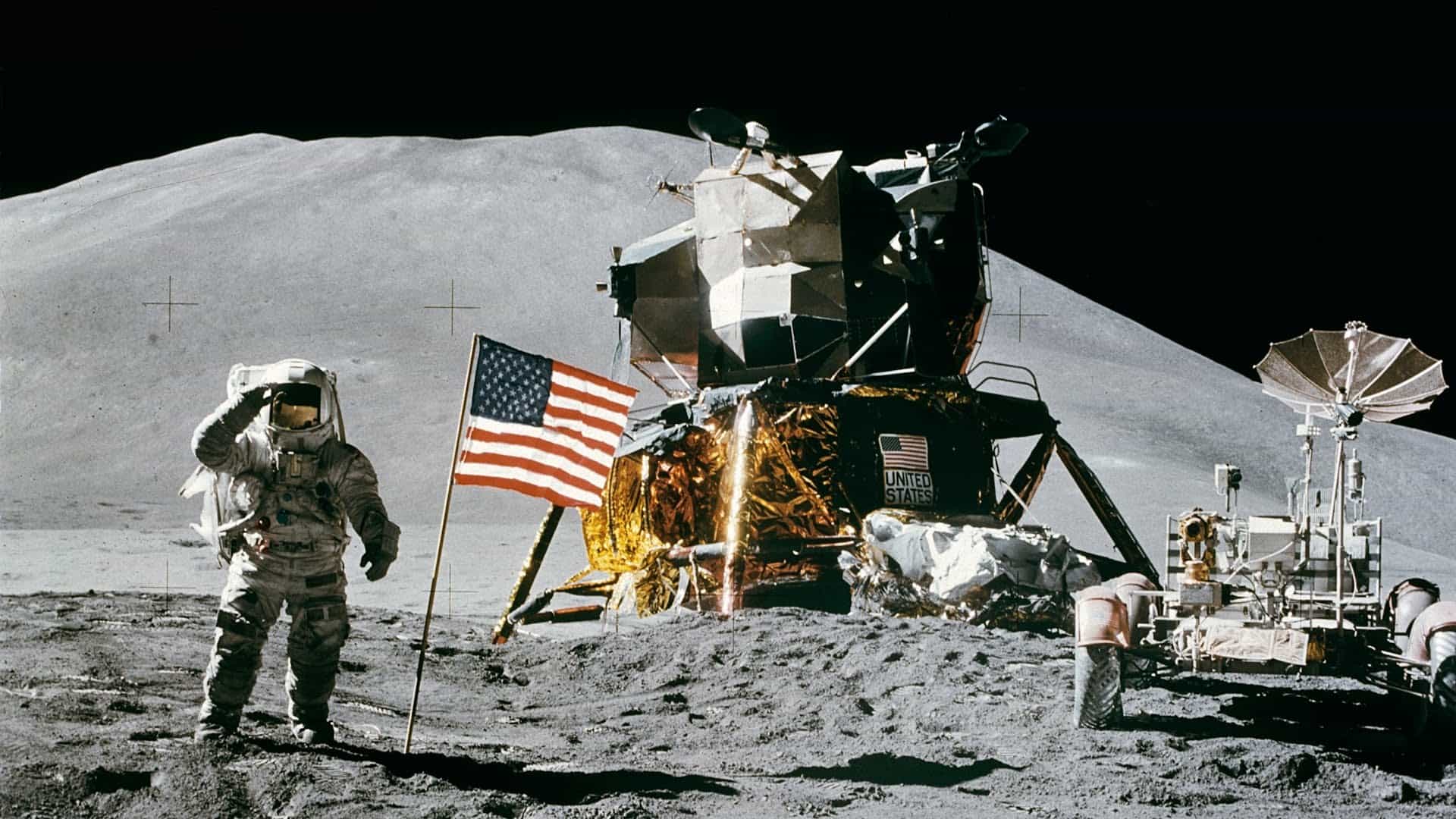
NEIL ARMSTRONG BECOMES FIRST MAN ON THE MOON
- Nixon asks that Congress make the Post Office department a public corporation
- Nixon announces a plan to withdraw 25,000 U.S. troops from South Vietnam within next couple of months and orders cuts in overseas government personnel by 10 percent.
- Nixon affirms his desire to withdraw U.S. troops from southeast Asia and declares that individual nations will bear a larger responsibility for their own security. Initially referred to as the “Guam Doctrine,” this statement later becomes known as the “Nixon Doctrine.”
- Nixon discloses his program for welfare reform, which includes the Family Assistance Plan
- Nixon declares that Latin America must be responsible for its own social and economic progress
- Nixon reveals that North Vietnam has rejected the administration’s secret peace offers. He proposes a plan for the gradual and secretive withdrawal of troops
- Nixon signs the Selective Service Reform bill, ensuring that draftees are selected by a lottery system
1970;
- Nixon signs executive order ending occupational and parental deferments for the draft.
- Nixon puts forth a plan to reorganize the federal agencies that handle environmental problem
- Nixon approves a plan for an Inter-agency Committee on Intelligence to conduct operations against domestic targets
- Nixon approves and signs the Postal Reorganization Act, which establishes an independent United States Postal Service
- Nixon meets with Israeli Premier Golda Meir to talk about problems in the Middle East.
- In a televised address, Nixon proposes a five-point peace plan for Indochina. The plan includes a “cease-fire in place” and the negotiated withdrawal of U.S. troops from Vietnam
- Nixon signs the Occupational Health and Safety Act of 1970, which gives the secretary of labor the responsibility of setting workplace safety standards for jobs in the United States.
- Nixon signs a clean air bill which mandates that car manufacturers reduce certain pollutants by 90 percent
1971;
- Nixon delays the construction of the Cross-Florida Barge Canal in order to stop environmental damage
- Taping systems are activated in the White House. The Oval Office is outfitted with a voice-activated system and the Cabinet Room with a manual system
- A voice-activated taping system in the Executive Office Building (EOB) becomes operational. Taping also begins on phone conversations held in the Oval Office, the EOB, and the Lincoln Sitting Room
- Nixon signs a Wage-Price Controls Bill, extending his authority to impose restraints on wages, prices, salaries, and rents for another year
- The New York Times begins to publish secret internal documents referred to as the “Pentagon Papers,” a development which leads the White House to become increasingly fearful of further disclosures. Within a week, a special unit named the “Plumbers” is created to stop the leaks.
- Nixon signs an Emergency Employment Act, earmarking $2.25 billion for the creation of public service jobs at state and local levels.
- Nixon declares a 90-day freeze on wages and prices, known as Phase One of his economic program.
- Nixon announces Phase Two of his economic plan
- Nixon signs an extension of the Economic Stabilization Act, allowing himself another year in which to right the economy.
1972;
- President and Mrs. Nixon travel to China. A joint communique, later known as the Shanghai Communique, is released by the United States and China. It calls for both countries agree to increase their contacts, and for the United States to withdraw gradually from Taiwan
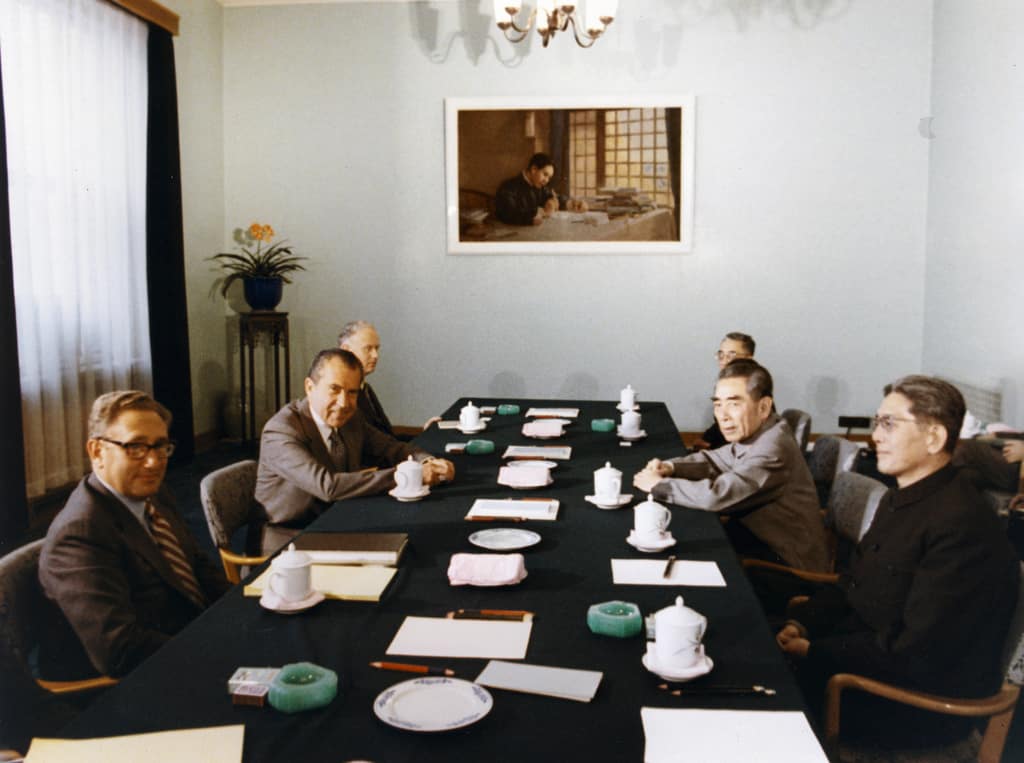
SHANGHAI COMMUNIQUE MEETING
- Nixon dismisses busing as a means of achieving racial integration and seeks legislation that would deny court-ordered busing.
- Nixon enacts legislation devaluing the dollar.
- Former President Truman is laid to rest in Independence Missouri
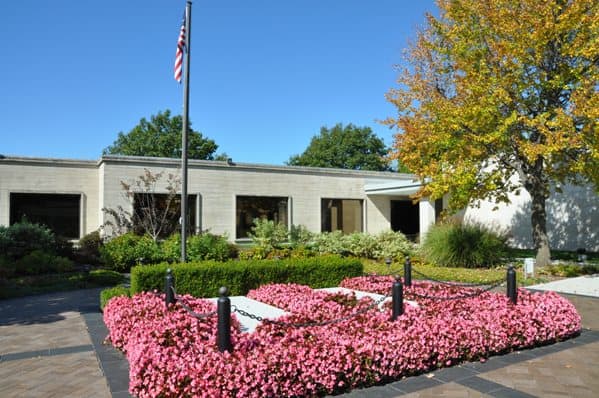
TRUMAN GRAVE
- On national television, Nixon states that he has ordered the mining of North Vietnamese ports and the bombing of military targets in the North Vietnam, known as Operation: Linebacker.

BOMBING OF THE HAI DU’O’NG BRIDGE
- A mixture of taping systems in Camp David become operational
- Nixon arrives in the Soviet Union for the Moscow summit meeting. He is the first sitting President to visit the U.S.S.R.
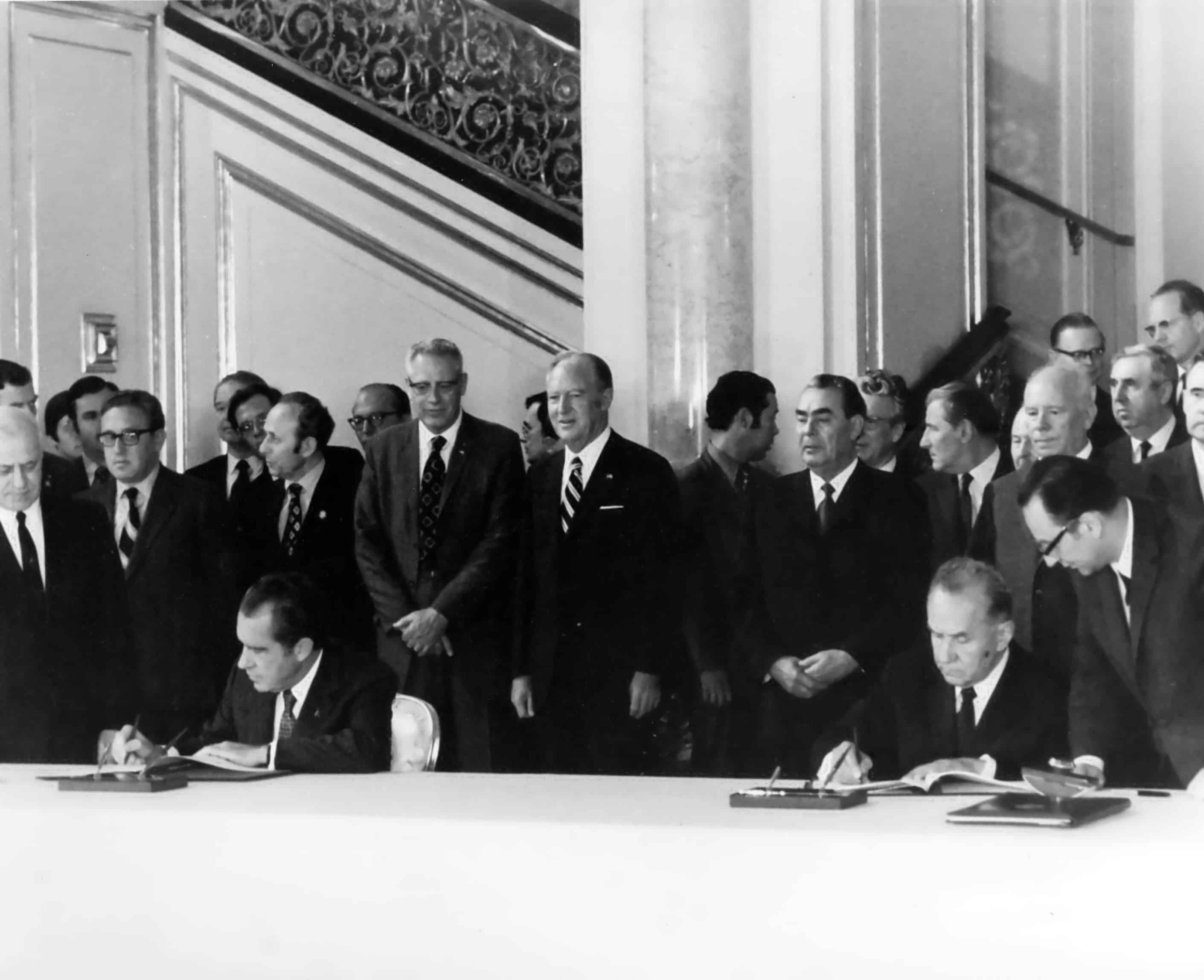
U.S. PRESIDENT RICHARD NIXON AND U.S.S.R. PREMIER ALEXEI KOSYGIN SIGNING AN AGREEMENT WHILE U.S.S.R PRESIDENT LEONID BREZHNEV AND OTHER DIPLOMATS WITNESS.
- Police stop 5 burglars inside Democratic Headquarters in Washington, D.C.’s Watergate Hotel. They confiscate cameras, wiretapping materials, and $2,300 in cash
- Nixon orders Chief of Staff H.R. Haldeman to tell the F.B.I. not to go any further with its Watergate investigation, justifying his actions on national security grounds.
- In a news conference, Nixon declares that no one on the White House staff, in the administration, or anyone “presently employed” was involved in the Watergate break-in
- Nixon endorses a bill which calls for revenue sharing with the states and grants over $30 billion to state and local governments over the course of five years.
- Nixon enhances the power of the Environmental Protection Agency to regulate the sale and use of pesticides.
- Nixon signs multiple bills, one of which provides more than $5 billion in benefits for the aged, blind, and disabled, while also increasing Social Security taxes.
- Nixon asks for the resignation of all agency directors, federal department heads, and presidential appointees.
- Operation Lumberjack II starts, which was also known as December Raids of Vietnam

1973;
- Phase Three of the economic plan is announced, in which wages and price controls will be ended in all but a few industries.
- Nixon wins his 2nd term, Agnew remains V.P.
- Paris Peace Accords are signed by all parties at war in Vietnam.
- Voice-activated taping systems at Camp David cease operations
- Nixon admits responsibility for the Watergate affair on television, but continues to assert no prior knowledge of it.
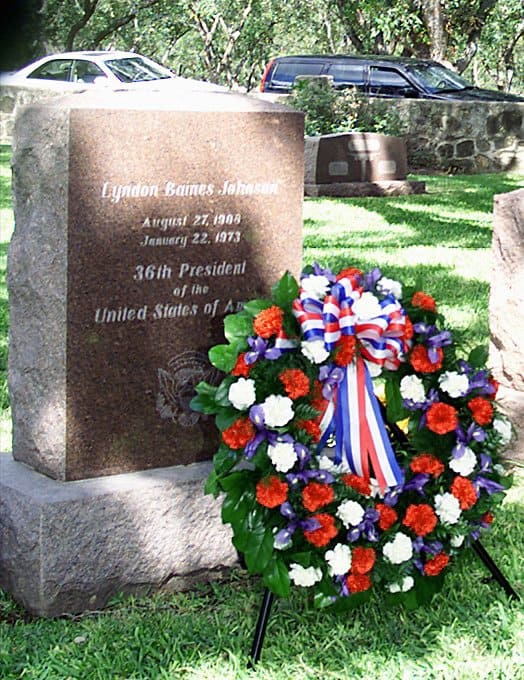
- Former President Johnson is laid to rest in Stonewall, TX
- Nixon declares a freeze on all prices for sixty days, with the exception of raw agricultural products and rents.
- The voice-activated taping system in the Oval Office ceases operation.
- Testifying before the Senate Watergate Committee, Federal Aviation administrator Alexander Butterfield confirms the existence of an Oval Office taping system
- Phase Four of the economic program is revealed, in which the freeze is lifted on all foods except beef and health-care products.
- Taping systems in the Cabinet Room, Oval Office, EOB, and Lincoln Sitting Room ceases operation
- Nixon refuses to turn over tapes to the Senate Watergate Committee, claiming executive privilege
- Vice President Agnew comes under scrutiny for charges stemming from campaign contributions he received while in office from persons who were later given government contracts. Agnew denies the charges in a press conference.
- Nixon denies involvement in the Watergate cover-up in a televised address.
- Vice President Spiro Agnew resigns and pleads “no contest” to charges stemming from a kickback scheme he ran while Governor of Maryland. Agnew is fined $10,000 and sentenced to three years probation. Gerald Ford is nominated as vice president.
- Nixon addresses the nation regarding the energy crisis.
- Nixon discloses his personal finances, which indicate he paid less than $1,000 in taxes in 1970 and 1971.
- Nixon increases Social Security benefits.
1974;
- The Senate Watergate Committee subpoenas more than 500 tapes, which Nixon refuses to turn over, stating that presidential communications must remain confidential.
- Nixon gives his State of the Union address, in which he refuses to resign and demands an end to the Watergate investigation.
- As a result of an IRS investigation into Nixon’s finances, the President is forced to pay $432,787 in back taxes and $33,000 interest.
- Nixon increases the minimum wage to $2 with the likelihood of future increases and broader coverage.
- Nixon addresses the nation before disclosing more than 1,200 pages of his conversations regarding Watergate.
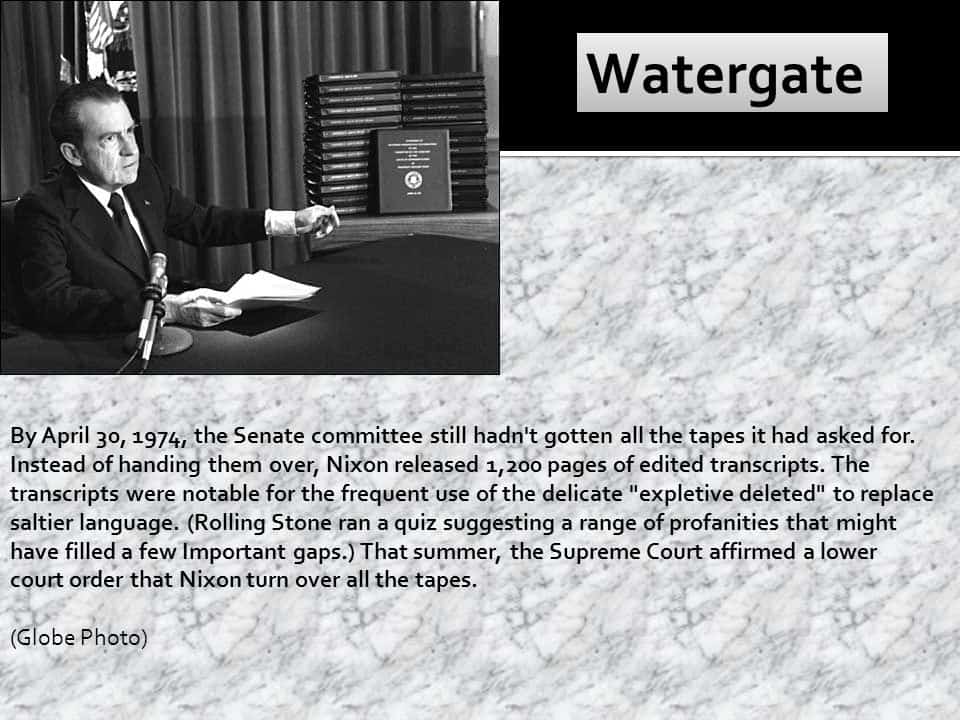
- Despite Vice President Ford’s advice to surrender the necessary evidence to the House Judiciary Committee, Nixon refuses to hand over Watergate-related tapes.
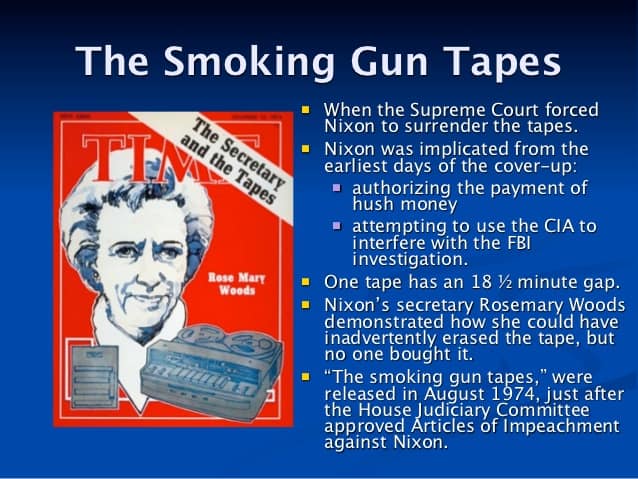
- In an 8-0 ruling, the Supreme Court orders that Nixon turn over sixty-four tapes to the Senate Watergate Committee, in United States v. Nixon. The tapes disclose Nixon’s knowledge and participation in the cover-up of the Watergate burglary.
- Three articles of impeachment are brought against Nixon by the House Judiciary Committee: obstruction of justice, abuse of power, and the unconstitutional defiance of its subpoenas.
- Three new transcripts are released, showing that Nixon ordered a cover-up less than a week after the break-in. Nixon issues a statement with the transcripts indicating that he withheld this evidence from his lawyers and from those who support him on the Judiciary Committee.
- Nixon informs his cabinet that he will not resign despite the fact that even his closest advisors are suggesting that he should.
- Nixon is told by a few of his supporters that he would not win an impeachment trial. Nixon tells Kissinger, Ford, and a few Congressional leaders that he plans to resign.
- Nixon resigns the presidency, effective at noon the next day, in a televised address. Before leaving for California, he sends his letter of resignation to Kissinger and offers Gerald Ford the new President spot since he had no VP successor, Ford accepts.
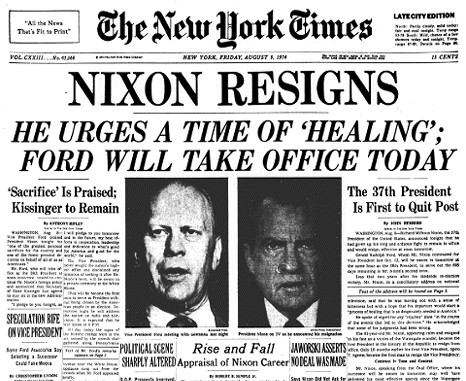
During Nixon’s first term, he improved relations with the Soviet Union and China and wound down the Vietnam War. But the Watergate scandal, forced Nixon to resign before Congress could impeach him, becoming the only President in U.S. history to resign. The first few years of retirement were rough, socially and financially, due to his involvement from Watergate, but he eventually got past it by doing sit-down interviews, speeches and writing his memoirs regarding it all.
Famous quotes;
“No event in American history is more misunderstood than the Vietnam War. It was misreported then, and it is misremembered now.”
“If an individual wants to be a leader and isn’t controversial, that means he never stood for anything.”
“The Cold War isn’t thawing; it is burning with a deadly heat. Communism isn’t sleeping; it is, as always, plotting, scheming, working, fighting.“


