#24 Grover Cleveland- First Two-Term Split
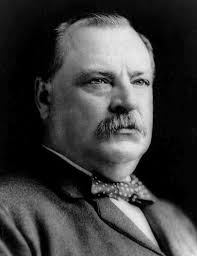
3/18/1837 – 6/24/1908
Party: Democratic
Timeline; 1893-1897
#24 Grover Cleveland- First Two-Term Split
Grover Cleveland spent the four years of the Harrison presidency in New York City, working for a prominent law firm. After the Harrison administration and his Republican party enacted the very high McKinley Tariff in 1890 and made the surplus in the treasury vanish in a spending spree, the path to a Democratic victory in 1892 seemed clear.
1893;
- Grover Cleveland becomes the 25th President of the United States at the age of 55 and becomes the only President ever to serve two non-consecutive terms. Adlai Stevenson was his Vice president.
- Former President Hayes is laid to rest in Fremont, OH
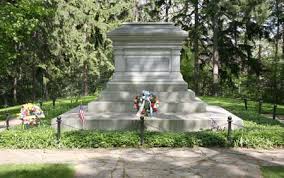
RUTHERFORD HAYES’S TOMB
- Cleveland withdraws the Hawaiian annexation treaty and advocates the restoration of the queen but the provisional government rejects the idea.
- Gold value drops, Cleveland vows to defend the gold standard
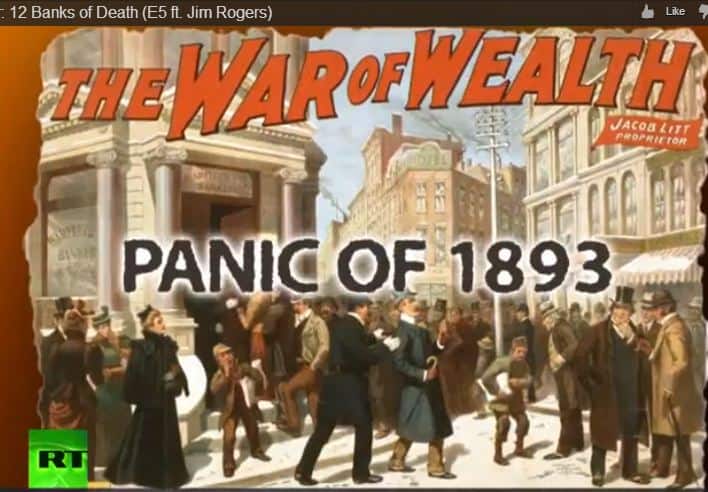
- Panic of 1893 starts after the National Cordage Company and the Philadelphia and Reading railroads go bankrupt, causing the New York stock market to take a sharp decline, dubbed the “Industrial Black Friday”
- A growth is detected on the roof of Cleveland’s mouth prompting a secret operation to remove the cancerous growth and a portion of his jaw
- Grover Cleveland calls for a special session with Congress to address the economic crisis through tariff reform and the repeal of silver purchase law.
- Congress begins debate on the silver issue and tariffs
- Congress repeals the Sherman Silver Purchase Act
1894;
- The House passes a tariff revisions bill
- The Army of the Commonwealth of Christ march to Washington to demand that the government take action to alleviate economic depression by providing the unemployed with worthwhile jobs. The event proves anti-climatic as the leader, Coxey and a few others were arrested for trespassing.
- Pullman railway car company employees go on strike due to the owner; George Pullman lowering wages in light of the 1893 depression, as well as requiring them to work longer days since he did not lower rates of living in his company town of Pullman, Illinois. Cleveland sent federal troops to stop the strike

PULLMAN STRIKE
- The Wilson-Gorman Tariff Bill becomes law without Grover Cleveland’s signature since he refused to veto or sign it since the law included an income tax of 2% on all personal income greater than $4K as well as all corporate income above operating expenses
- The U.S. intervenes in a boundary dispute between Venezuela and Britain, invoking the Monroe Doctrine to assert its rights. Britain agrees to arbitration rather than going to war with the United States
1895;
- Treasury bond sale to a syndicate headed by J.P. Morgan restores gold reserves and validates the credit of the government
- Revolution begins in Cuba over Spanish rule. Although American sympathy lies with the rebels, the U.S. adopts a policy of neutrality.
- Supreme Court nullifies the income tax in Pollock v. Farmers’ Loan and Trust Co. as well as justifies the arrest of the leader of the Pullman Strike, Eugene Debs
1896;
- Utah becomes the 45th state
- Treasury bond sale of $100 million is announced, restoring gold reserves to a safe level of $124 million. Bond sales from 1894 to 1896 create $262 million in federal debt
1897;
- United States and Britain sign a treaty of arbitration ending the Venezuelan dispute
- Grover Cleveland vetoes bill that would ban illiterate immigrants
Early in Grover Cleveland’s second term, the United States sank into the most severe economic recession the country had yet experienced.
Cleveland believed that the Sherman Silver Purchase Act of 1890 had eroded confidence in the stability of the currency and was at the root of the nation’s economic troubles.
He forced the repeal of the act but the depression only worsened, and Cleveland’s negative view of government began to diminish his popularity. Apart from assuring gold-backed currency, he insisted the government could do nothing to alleviate the suffering of the many thousands of people who had lost jobs, homes, and farms.
His popularity sank even lower when the treasury gold quantity diminished leading him to negotiate with John Pierpont Morgan to sell government bonds abroad for more gold.
The deal succeeded in replenishing the government’s gold supply, but the alliance between the president and one of the era’s leading “robber barons” intensified the feeling that Cleveland had lost touch with ordinary Americans.
He also lost a lot of fans from the labor field when he sided with the interests of big business over ordinary Americans in the Pullman Strike.
Cleveland retired to Princeton, New Jersey, where he became active in the affairs of Princeton University as a lecturer in public affairs and as a trustee from 1901–1908, when he died.
Famous quotes;
“Communism is a hateful thing, and a menace to peace and organized government.”
“The United States is not a nation to which peace is a necessity.”
“The ship of democracy, which has weathered all storms, may sink through the mutiny of those on board.”