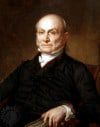
#23 Benjamin Harrison- Industrial Age President

8/20/1833 – 3/13/1901
Party: Republican
Timeline; 1889-1893
#23 Benjamin Harrison- Industrial Age President
Benjamin Harrison was the grandson of the 9th President, William Henry Harrison and he was known as a man of moral courage. Early on he studied law and followed his political ambitions. When the Civil war broke out he joined the Union Army as an officer, serving from 1862-1865, eventually reaching the rank of brevet brigadier general. After the war he resumed his law practice and political ambitions, failing to win the Governship of Indiana in 1876 but winning a seat in the U.S. Senate in 1881 and holding it until 1887.
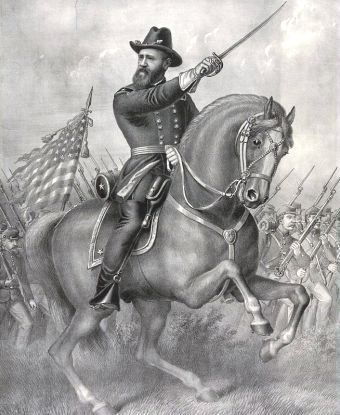
BENJAMIN HARRISON, 1865
1889;
- Benjamin Harrison becomes the 23rd President at the age of 55, Levi P. Morton was his Vice President
- Berlin Conference on Samoan Affairs begins, trying to establish Independence of Samoa and protection rights.
- Harrison tours New England and works on Navy expansion
- Pan-American Conference begins, trying to improve relations with Latin America countries in economic and political relations.
- North and South Dakota join the Union as the 39th and 40th states
- Montana becomes the 41st state
- Washington becomes the 42nd state
- Harrison sends first message to Congress recommending civil rights and civil service reform, naval legislation, improved conditions for railroad workers and pensions for veterans.
1890;
- Dependent Pension Bill is passed
- Sherman Anti-Trust Act is enacted
- Idaho becomes the 43rd state
- Wyoming becomes the 44th state
- Harrison signs into law the Sherman Silver Purchase Act
- Congress passes Anti-lottery Bill
- Congress passes the McKinley Tariff
1891;
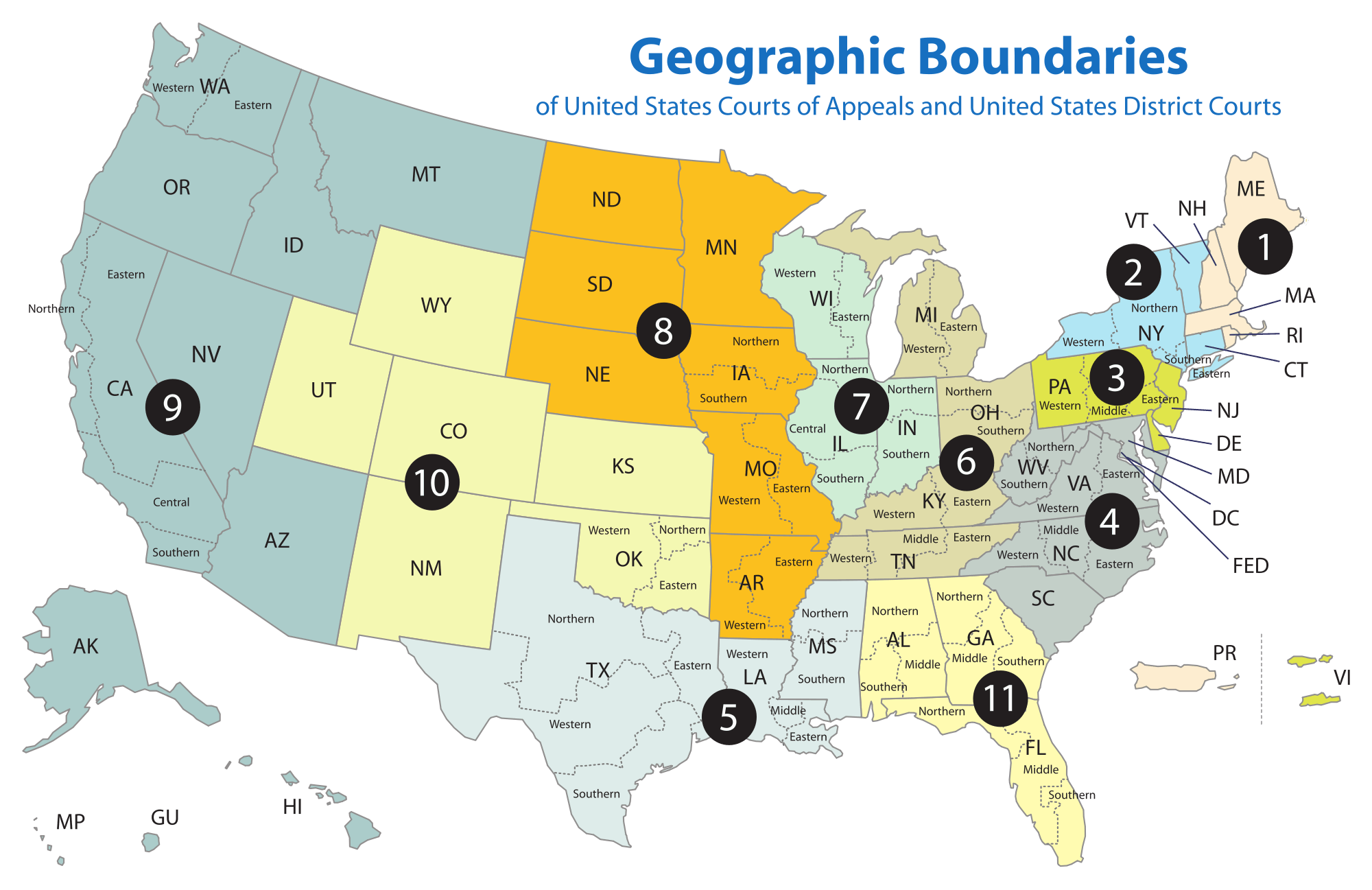
- Benjamin Harrison signs measure creating nine Circuit Courts of Appeals to relieve the demands of the Supreme Court
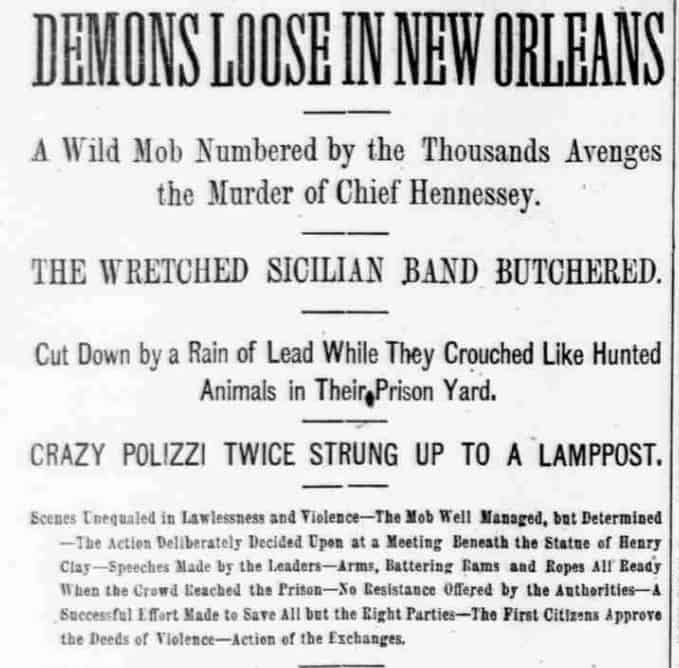
- New Orleans mob lynches 11 Italian immigrants that were part of a group that allegedly murdered police chief David C. Hennessey as well as bribing and threatening jurors during trial. The lynching prompts Italy to sever diplomatic ties and threaten war with the U.S.
- U,S. seizes a Chilean rebel ship; Itata, at the Balmaceda government of Chile’s request, as it is delivering arms to Chilean rebels. Rebels win the Chilean civil war leading to tense relations between the U.S. and Chile from the Itata Incident
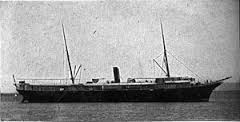
CHILEAN REBEL SHIP; ITATA
- Tensions with Chile rise after American sailors and Chilean Nationals brawl in Valparaiso, Chile, resulting in deaths of two Americans and many arrests.
- Benjamin Harrison sends message to Congress denouncing the Valparaiso attack, known as the Baltimore Incident, as savage, brutal and unprovoked and nominates Stephen B. Elkins the new Secretary of War
1892;
- Harrison states all members of his cabinet are in favor of war with Chile and U.S. sends an ultimatum to Chile regarding this.
- Harrison sends message to Congress asking that lawmakers take appropriate action regarding Chile.
- Chile backs down in the conflict and pays as indemnity of $75K
- Steelworkers in Homestead, Pennsylvania are locked out over contract disputes and start fighting with men from the Pinkerton Detective Agency that were brought in to bust the strike up. 7 Pinkertons and 9 workers died. A week later 8,000 militiamen accompany and protect Pinkerton men.

- Harrison sends federal troops in to Coeur d’Alene, Idaho to restore order and stop silver miners on a violent strike that had already resulted in 30 deaths.
- Harrison privately supports mediation in the Homestead strike, sending Whitelaw Reid to Homestead as an emissary to Henry Clay Frick who is left in charge by Carnegie. It did no good though and the strike went on for months, breaking the union and dealing a major blow to organized labor.
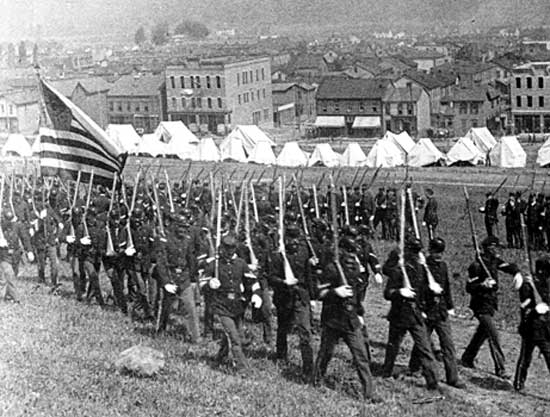
HOMESTEAD STRIKE
- The Kingdom of Hawaii is overthrown and Queen Liliuokalani is removed from office with a provisional government established under Sanford B. Dole. Harrison deploys 150 marines to Hawaii to protect the new government.
After losing re-election to Cleveland, Harrison retired to his law practice in Indiana, emerging briefly to serve as leading counsel for Venezuela in the arbitration of the boundary dispute with great Britain (1898-1899) as well as serve as a public speaker for institutes such as Stanford University, where his lectures became published on 1901 as Views of an Ex-President. He died that very year from pneumonia. He was the last Civil War general to serve as President.
Harrison was caught between reformers who were fighting the spoils system and those who wanted to continue it, and was defeated after one term.
Harrison’s grandfather was President William Henry Harrison.
Famous quotes;
“I pity the man who wants a coat so cheap that the man or woman who produces the cloth will starve in the process.”
“We Americans have no commission from God to police the world.”
“The bud of victory is always in the truth.”