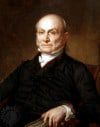
#22 Grover Cleveland- The Comeback President

3/18/1837 – 6/24/1908
Party: Democratic
Timeline; 1885-1889
#22 Grover Cleveland- The Comeback President
Cleveland distinguished himself as one of the few truly honest and principled politicians of the gilded age. His father passed in 1853 forcing him to abandon school to help take care of his mother and sisters. Clerking in a law firm helped him get admitted to the bar in 1859 and follow politics. During the Civil War, he was drafted but opted to hire a substitute so that he could care for his mother. In his time, he held titles of Sheriff of Erie County in New York (1871-1873), mayor of Buffalo (1882), and governor of New York (1883-1885)
1885;
- Cleveland becomes the 22nd President of the United States at the age of 47. Thomas Hendricks was his Vice President.
- VP Hendricks dies later that year, leaving a vacancy at V.P.
1886;
- Cleveland signs the Presidential Succession Act specifying the chain of command should President and Vice President both be absent.
- Former President Arthur is laid to rest in Menands, NY
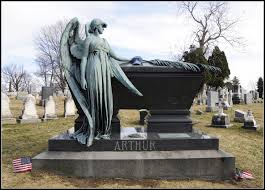
CHESTER ARTHUR’S GRAVE
- Cleveland sends message to Congress asserting that labor is a vital element of national prosperity and should be a concern of the federal government. He recommends a committee to resolve disputes between labor and capital
- Cleveland vetoes bill granting military pensions to Civil War Union vets who had appealed to Congress after their claims were rejected by the Pensions Bureau. A lot of the claims were found to be bogus.
- Cleveland recommends to Congress that the nation accepts France’s gift of the Statue of Liberty. The statue was to be placed on Liberty Island, adjacent to Ellis Island which served as a welcome center for immigrants in New York City.
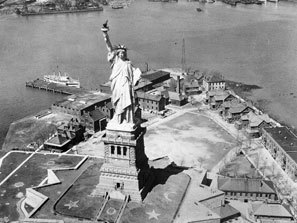
LIBERTY ISLAND, NEW YORK

ELLIS ISLAND, NEW YORK
- The American Federation of Labor (AFL) is formed
1887;
- The Interstate Commerce Commission (ICC) is created to ensure fairness in the management of interstate railroads after complaints of railroad rates and policies
- Cleveland signs the Dawes General Allotment Act which shortened or expanded Indian Reservations and weakened some Native American culture while trying to get them to renounce their tribes and become citizens.
- Monument to James Garfield is created
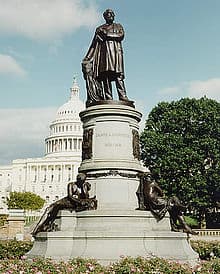
JAMES GARFIELD MONUMENT
- Cleveland vetoes Dependent Pension Bill arguing that the bill will only encourage fraudulent assertions. The bill would have given military pension to anyone serving a minimum of 90 days in any war.
- Cleveland vetoes Texas Seed Bill, believing it overstepped the powers of government. The bill was designed to provide relief to drought-stricken farmers
- Tenure of Office Act is repealed
- Cleveland sends message to Congress against protective tariffs creating an excessive surplus. Some that were adopted as a temporary measures during the Civil War were still in place.
1888;
- Civil Service Commission announces amended rules, prompting Cleveland to respond with detailed objections, being a proponent of civil service reform
- Department of Labor is established
- Washington Monument opens
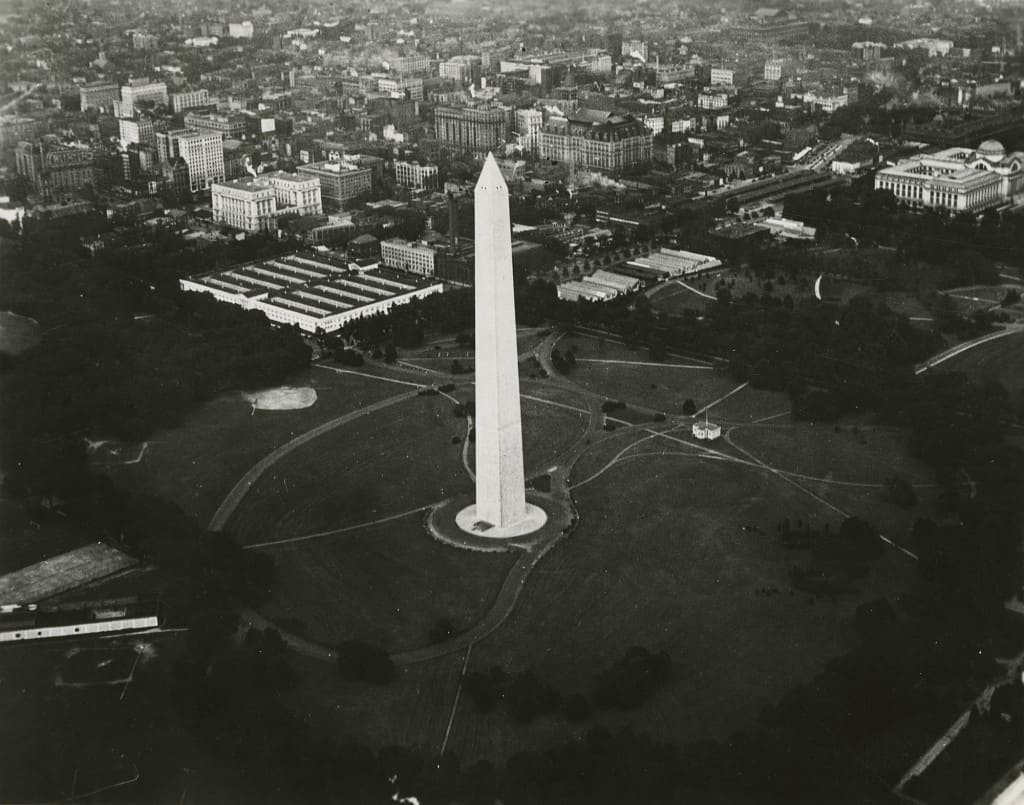
WASHINGTON MONUMENT
- Cleveland renews and signs the Chinese Exclusion Act prohibiting Chinese immigrants who return to China, from coming back to U.S.
1889;
- Cleveland signs bill creating the Department of Agriculture
- Cleveland signs bill that turns the territories of North Dakota, South Dakota, Montana and Washington into states
Cleveland lost his re-election bid. Even though he won a lot more popular votes than Harrison, his stance on opposing the high tariff cost him electoral votes which swayed the decision. His wife told the White House staff before leaving that she and Grover would be seeing them in 4 years.
Famous quotes;
“Though the people support the government; the government should not support the people.”
“I have tried so hard to do right.”
“A government for the people must depend for its success on the intelligence, the morality, the justice, and the interest of the people themselves.”