
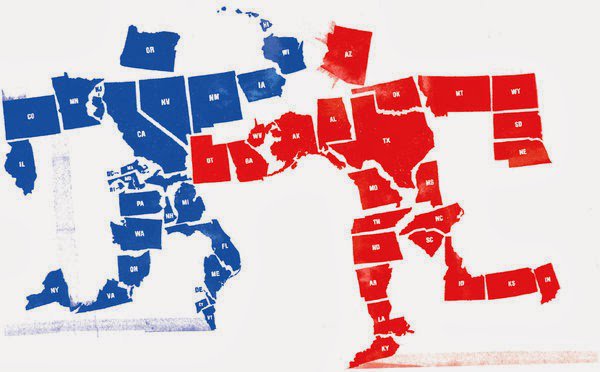
Origins of Politics: Power, Parties, and the People
Politics isn’t just something that happens in government buildings or during elections it’s a fundamental part of everyday life. From our workplaces to our homes, politics is present in every decision, debate, and hierarchy we navigate.
What Is Politics?
It refers to the activities related to governance, authority, and decision-making in society. Whether in a country, a company, a union, or even within a household, politics involves the relationships and power dynamics between people.
It’s often enforced by an authority such as:
- A school board or company leadership
- State and national legislators
- Union representatives or committees
- Military forces
- Even the head of a household
We live and breathe politics, whether we like it or not.
Formal vs. Informal Politics
There are two main types:
Formal Politics
These are the official systems and institutions; governments, laws, elections, wars, public policy, and diplomacy. Even though it feels distant, it affects everything from your taxes to your rights.
Informal Politics
This happens every day in our homes, offices, and communities. It’s when we use influence, persuasion, or negotiation to advance our goals or form alliances. It’s subtle, but powerful.
Both forms are about power; who has it, who wants it, and how it’s used.
The Roots of the Word “Politics”
The word politics comes from the Greek politiká, meaning “affairs of the cities.” The concept was popularized by Aristotle, who wrote the influential book Politics, a cornerstone in the study of civic life and governance.
The History of Politics Is the History of Power
Throughout history, political structures evolved alongside warfare. States were often formed, and maintained, through military strength. In that sense, most political communities owe their very existence to successful warfare.
Political history is deeply tied to economics, the rise of institutions, and the power struggles that define civilizations.
Politics Beyond Governments
While the state remains the dominant political structure, there are powerful non-governmental and international forces at play:
- Non-Governmental Organizations (NGOs)
- International institutions like the United Nations
These organizations influence global politics, mediate conflicts, and attempt to keep peace and order in a chaotic world.
Political Parties and Corruption
With organized politics come political parties, and with them, often, corruption. Most countries have multi-party systems, and corruption exists in varying degrees within them all.
Common Forms of Political Corruption:
- Extortion
- Cronyism
- Nepotism
- Patronage
- Embezzlement
Power tends to invite corruption. That’s the unfortunate truth.
Political Ideologies: Left vs. Right, Authoritarian vs. Libertarian
Two major ideological frameworks dominate the political landscape:
Left–Right Spectrum
- Left-wing: Advocates for reform, social equality, and redistribution of resources.
- Right-wing: Favors tradition, hierarchy, and individual responsibility.
Authoritarian–Libertarian Spectrum
- Authoritarian: Prioritizes group control and centralized authority.
- Libertarian: Supports individual freedom and limited government.
At their extremes:
- Authoritarianism = Total state control
- Libertarianism = Resistance to state control, sometimes bordering on anarchism
The U.S. Political Party Landscape
Current Major Parties:
- Democrat
- Republican
- Independent
- Libertarian
- Green
Historical Parties:
- Federalist
- Anti-Federalist
- Democratic-Republican
- Whig
These past groups helped shape what we know as modern American politics.
Why Do We Choose a Political Party?
Why do we align with one side or another?
Is it based on deep beliefs, or simply how we were raised? No one is born a Democrat or Republican. Party affiliation is acquired, often unconsciously, as we grow and develop our worldview.
“To me, picking a party feels like choosing which head of the hydra will devour you.”
Many Americans feel both parties are more similar than different, especially in their power structures and behavior.
Basic Ideological Divide:
- Democrats: Support large federal government, focus on collective well-being
- Republicans: Favor limited federal power, focus on individual rights
But both parties often flip-flop on key issues when it’s politically convenient.
The Superdelegate Controversy
One of the most criticized aspects of U.S. politics is the superdelegate system, especially within the Democratic Party.
How It Works:
- Superdelegates are unpledged and can vote for any candidate at the convention.
- In Arizona, for example, 10 superdelegates represent over a million registered Democrats. That’s roughly 1 superdelegate for every 12,000 voters.
- Their votes can override public opinion in close races.
Republicans:
- Also have superdelegates, but they are limited to three per state and must vote with the primary results.
Update: Democrats now allow superdelegates to vote only in the event of a runoff, but critics argue the system still undermines fair representation.
A Call for Change
If people voted based on the individual candidate and not party affiliation, the entire system could shift. Imagine the disruption if millions abandoned party loyalty and forced parties to evolve, or dissolve.
Political parties have become comfort zones. But change only comes when we think critically, vote consciously, and stop treating politics like a team sport.
Final Thought
Politics shapes the world around us—from the laws we follow to the conversations we have at dinner. Understanding its origins, systems, and flaws empowers us to become better participants in society.
Stop choosing sides. Start choosing principles.
Looking to read more about the historical development of political science, check out this article from Britannica.
Interested in the Presidential History of the U.S. Presidents and the trials each went through, shaping this country?