What is Wastewater Treatment?
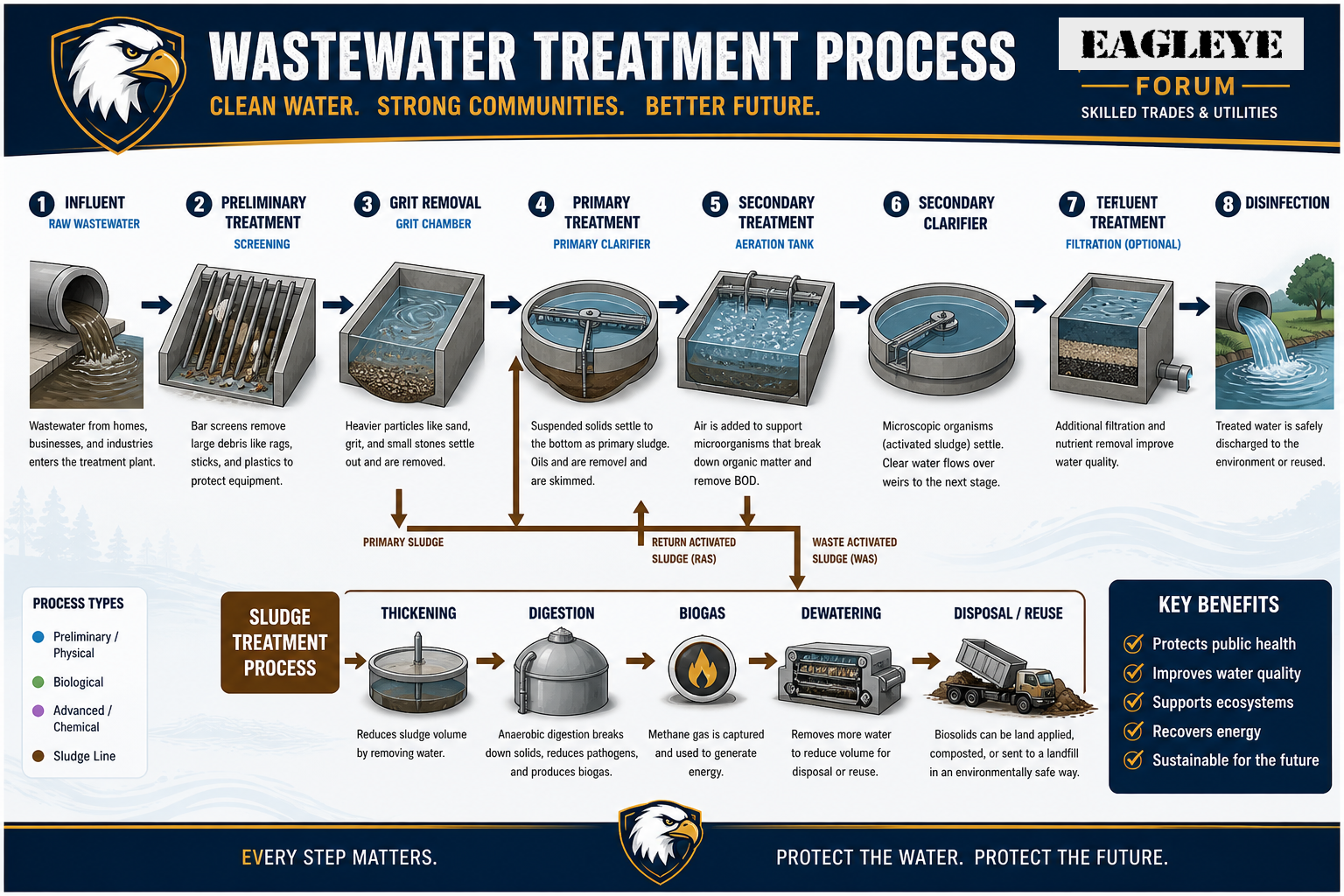
Wastewater treatment is the process of removing physical, chemical, and biological contaminants from water before it is discharged back into the environment.
It protects:
- Public health
- Ecosystems
- Drinking water sources
1. Preliminary Treatment (Headworks)
Purpose:
Remove large debris and heavy particles to protect equipment.
Key Processes:
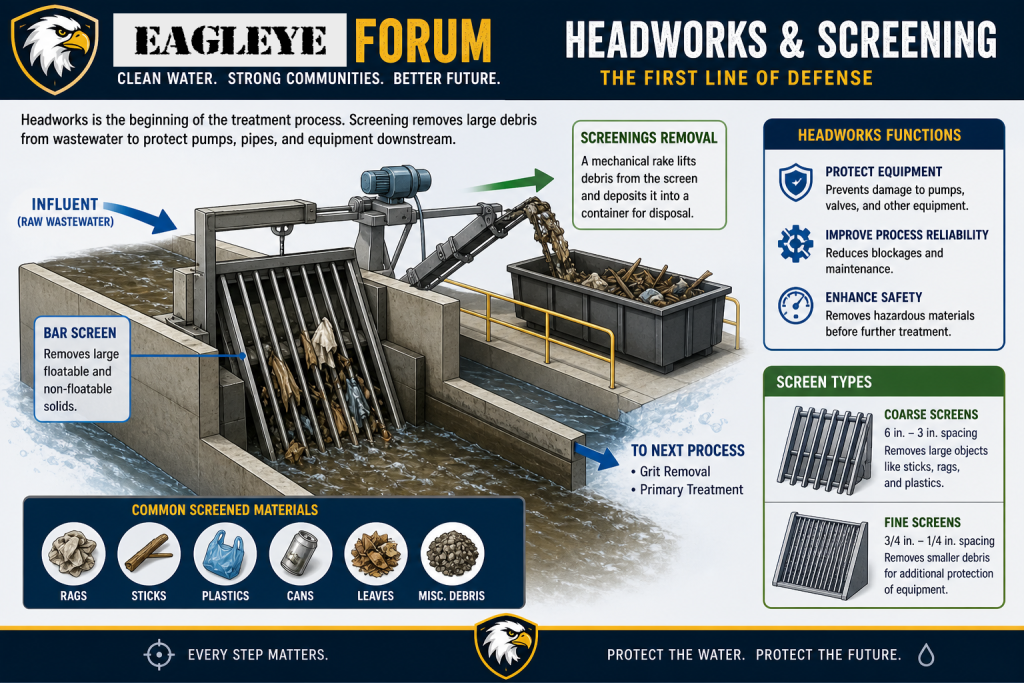
Screening
Removes sticks, rags, plastics and large solids
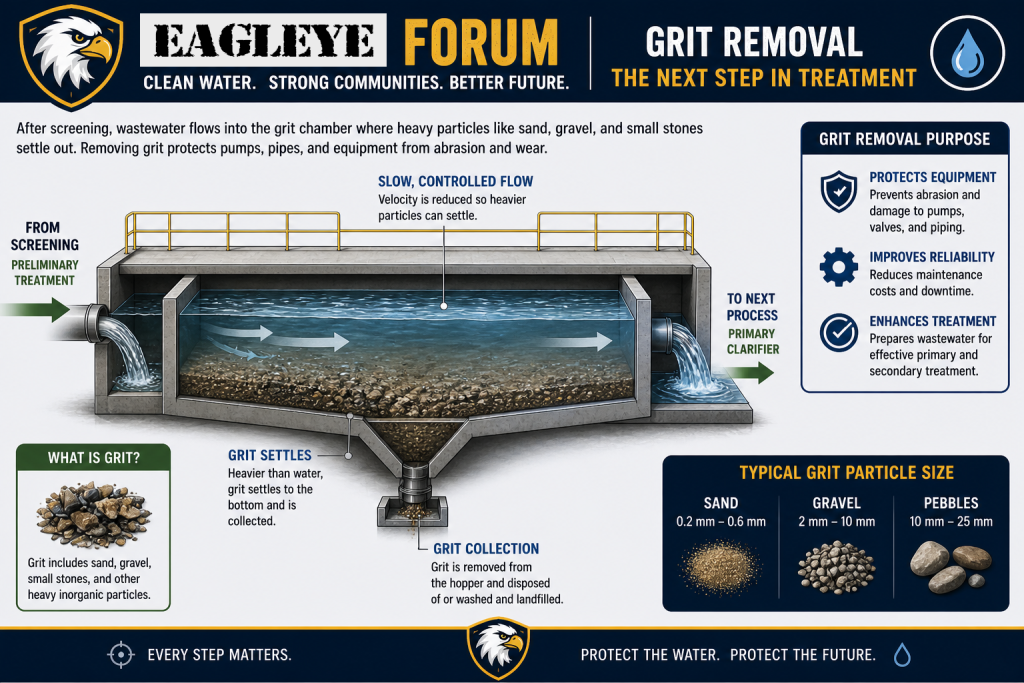
Grit Chamber
Removes sand, gravel and other heavy particles.
2. Primary Treatment
Purpose:
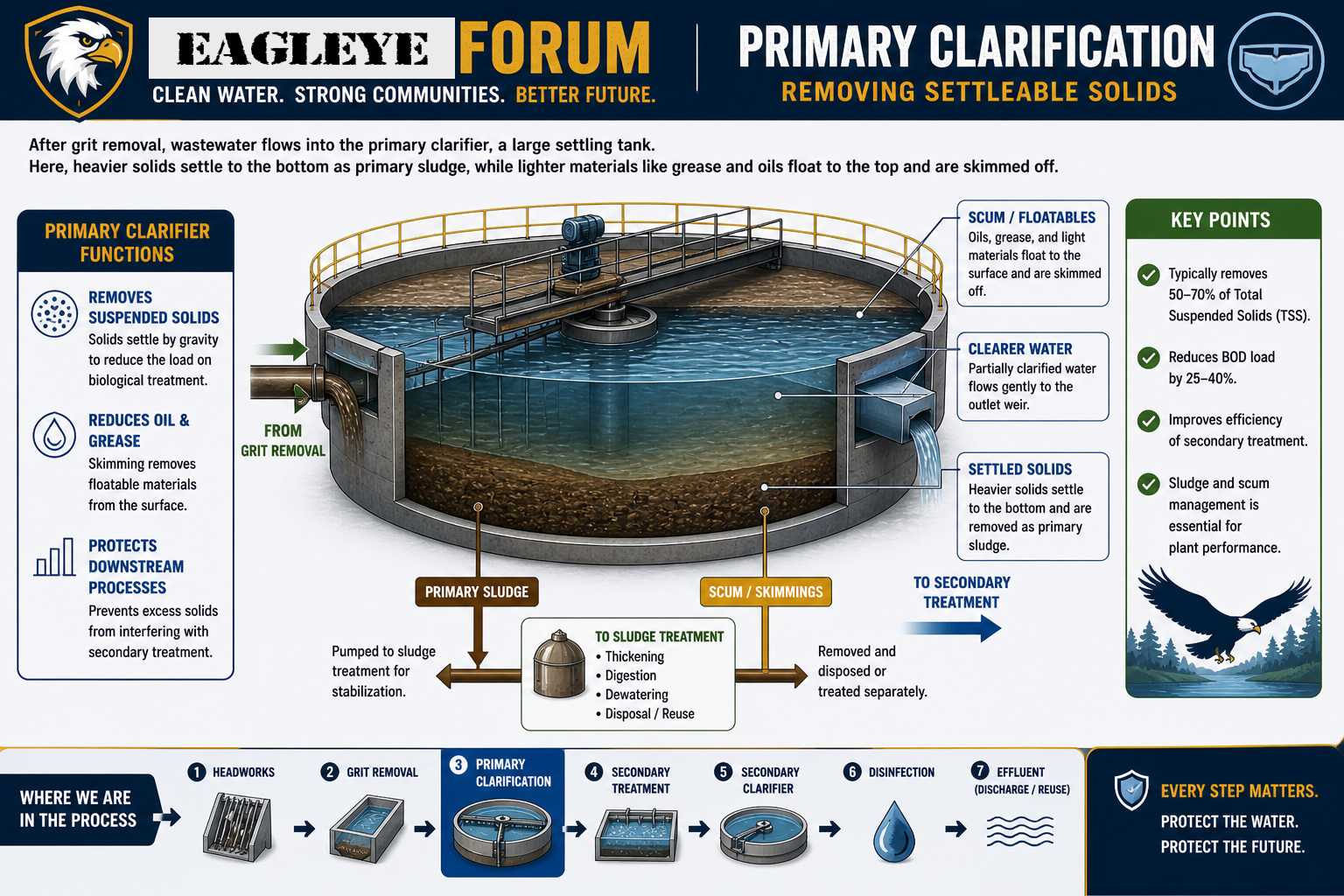
Remove settleable solids
Process:
- Wastewater enters a clarifier (settling tank)
- Solids settle → form sludge
- Oils/grease float → skimmed
- Removes suspended solids
- Does NOT remove dissolved contaminants
3. Secondary Treatment (Biological)
Purpose:
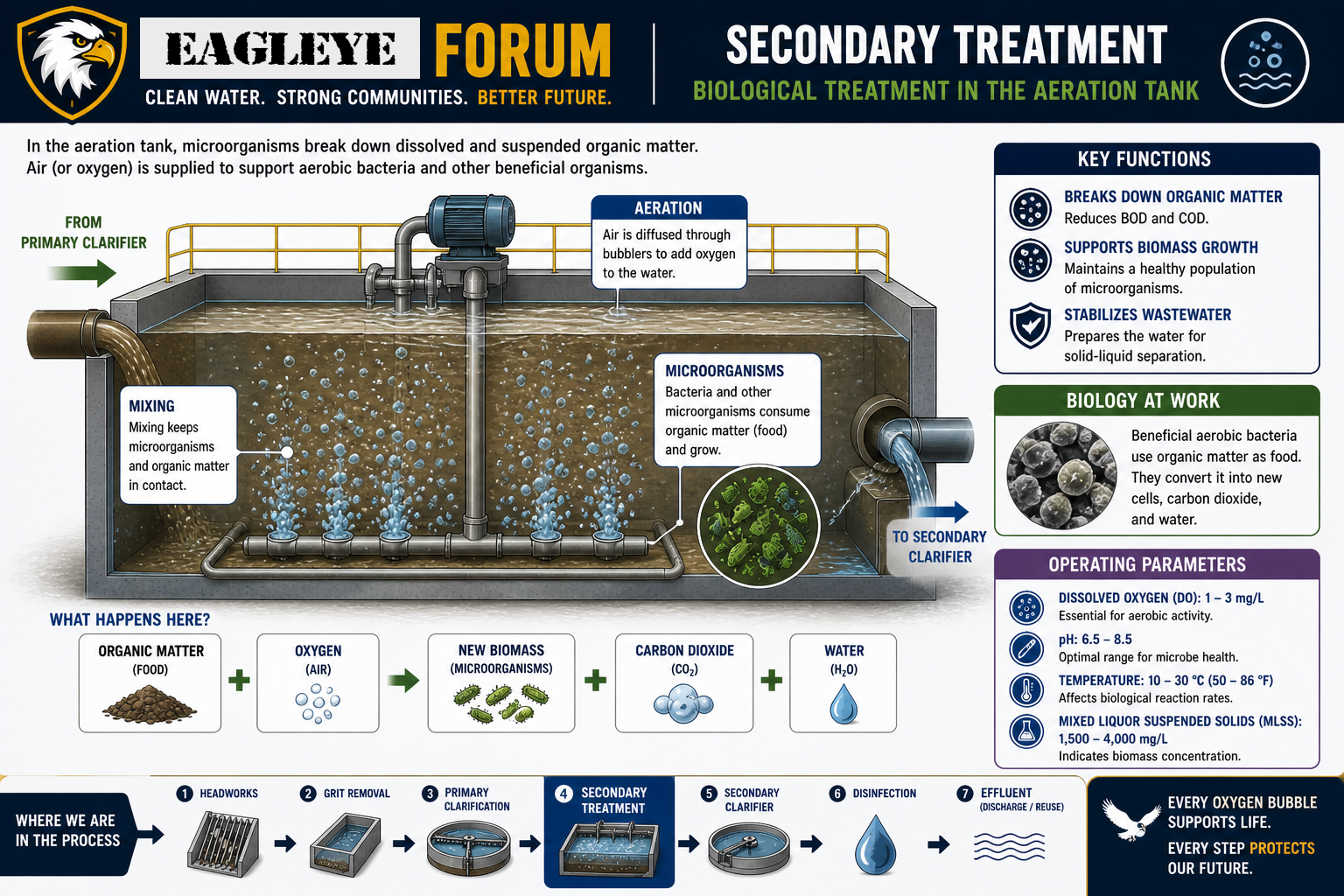
Break down organic matter (BOD) using microorganisms
Systems:
- Activated Sludge (suspended growth)
- Trickling Filters (fixed film)
Key Components:
- Aeration tank → oxygen added
- Microbes consume organic waste
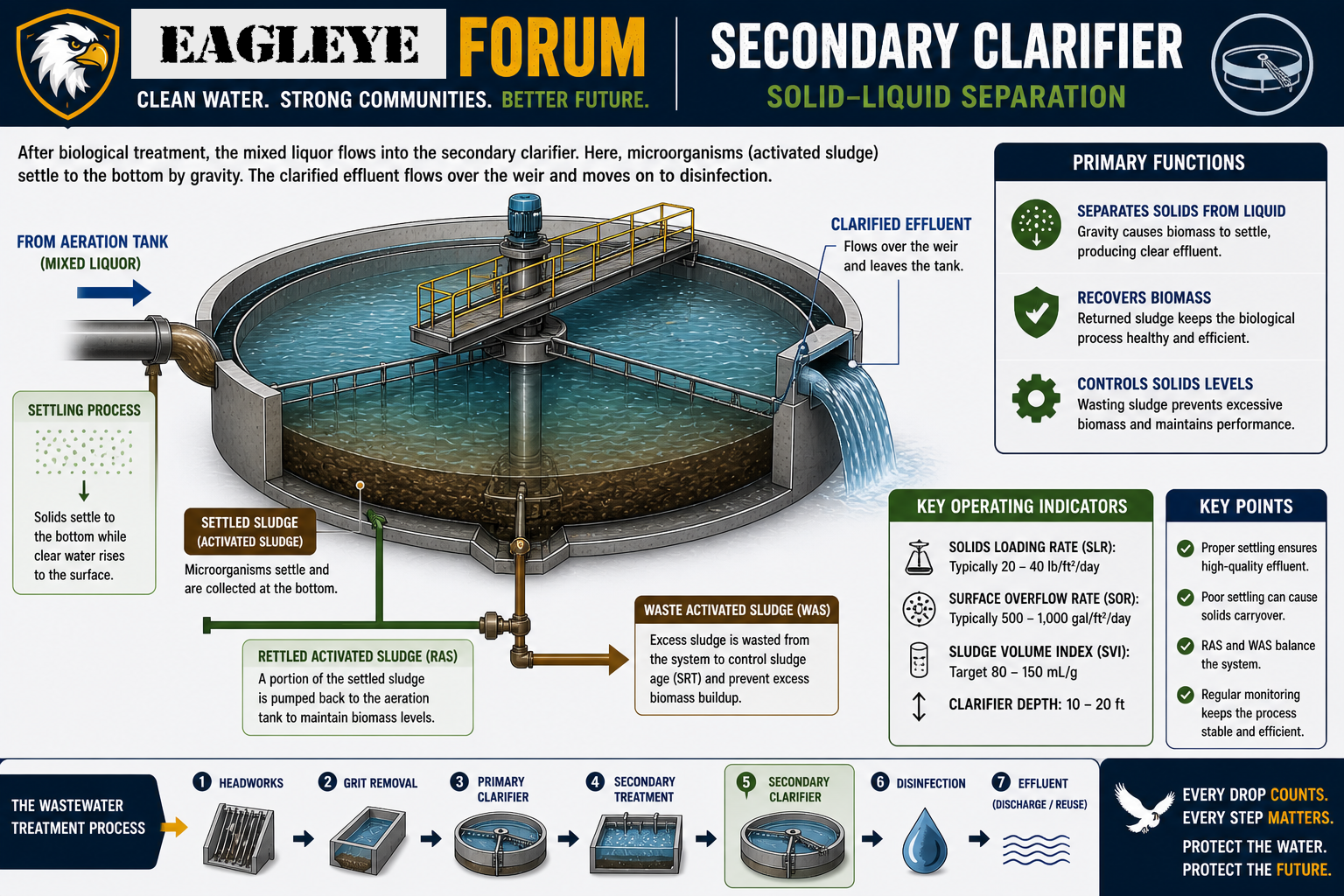
- Secondary clarifier separates biomass
- Activated sludge = microbial biomass
- DO typically: 1–3 mg/L
- MLSS = biomass concentration
Critical Biological Control Parameters
DO (Dissolved Oxygen)
- Needed for aerobic bacteria
- Too low → filamentous growth
- Too high → energy waste
F/M Ratio
Food vs microorganisms balance
- High F/M → young sludge
- Low F/M → old sludge
SRT (Sludge Retention Time)
- Controls biomass age
- Low SRT → nitrification failure
Return & Waste Sludge
- RAS (Return Activated Sludge) → keeps microbes in system
- WAS (Waste Activated Sludge) → removes excess biomass
Balance = stable process
Nutrient Removal
Nitrogen Removal:
- Nitrification (aerobic)
- Denitrification (anoxic)
Phosphorus Removal:
- EBPR (biological)
- Requires anaerobic conditions for release
4. Tertiary / Advanced Treatment
Purpose:
Polish effluent for high-quality discharge or reuse
Includes:
- Filtration
- Nutrient removal
- Membranes (MBR)
MBR advantage:
- Small footprint
- High-quality effluent
5. Disinfection
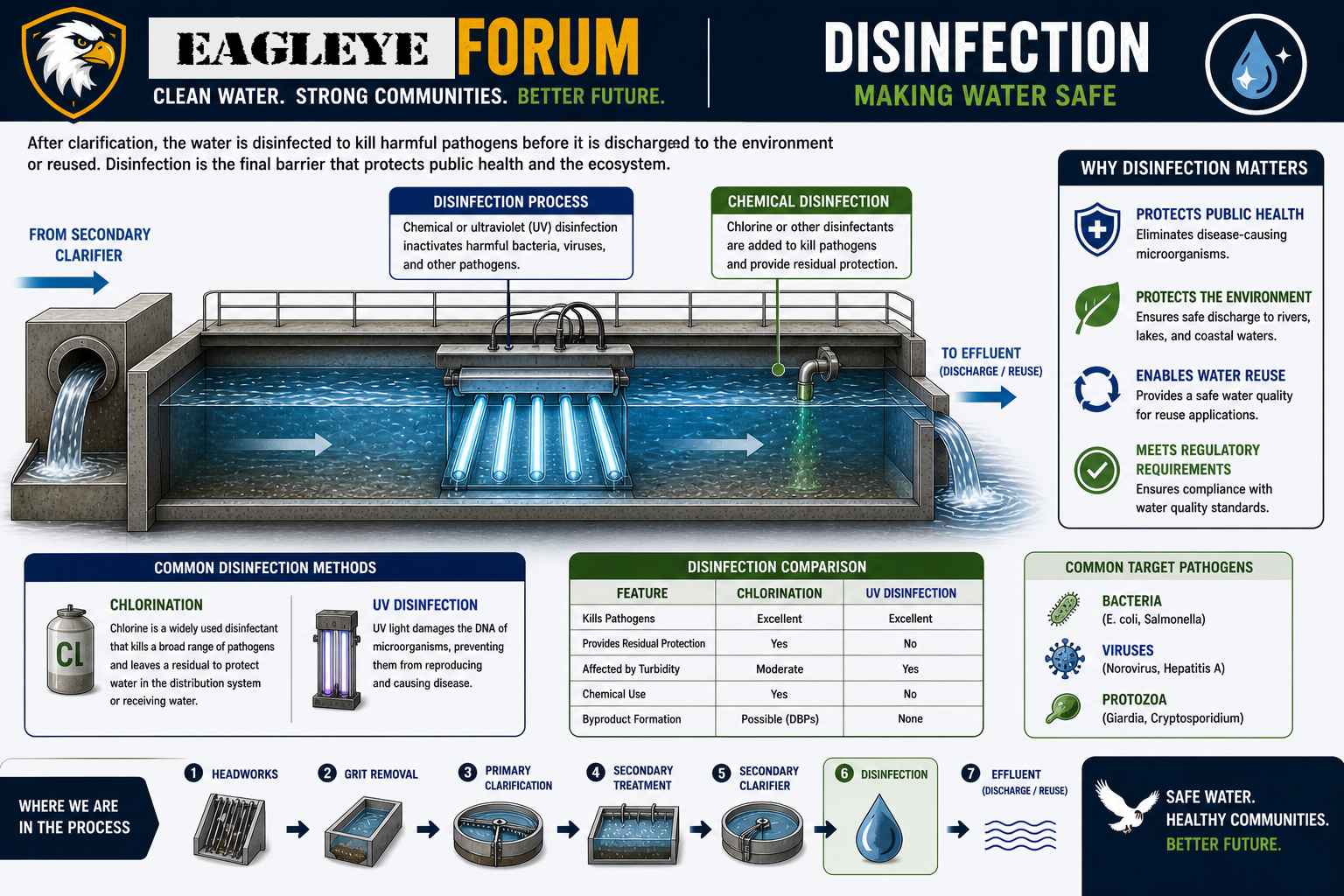
Kills pathogens using:
- Chlorine
- UV
- Ozone
Sludge Treatment
What is sludge?
Semi-solid waste from treatment
Treatment:
- Digestion (anaerobic/aerobic)
- Produces methane gas
Goal:
- Reduce pathogens
- Stabilize material
- Reduce odor
Common Operational Problems
Sludge Bulking
- Cause: filamentous bacteria
- Fix: increase DO, adjust F/M
Rising Sludge
- Cause: denitrification in clarifier
- Fix: control nitrate levels
Foaming
- Cause: Nocardia / filaments
Toxic Shock
- Cause: chemicals killing biomass
Key Lab & Process Indicators
| Parameter | Purpose |
|---|---|
| BOD | Organic strength |
| COD | Total oxidizable matter |
| TSS | Suspended solids |
| MLSS | Biomass concentration |
| SVI | Settling quality |
| pH | Process stability |
| Alkalinity | Supports nitrification |
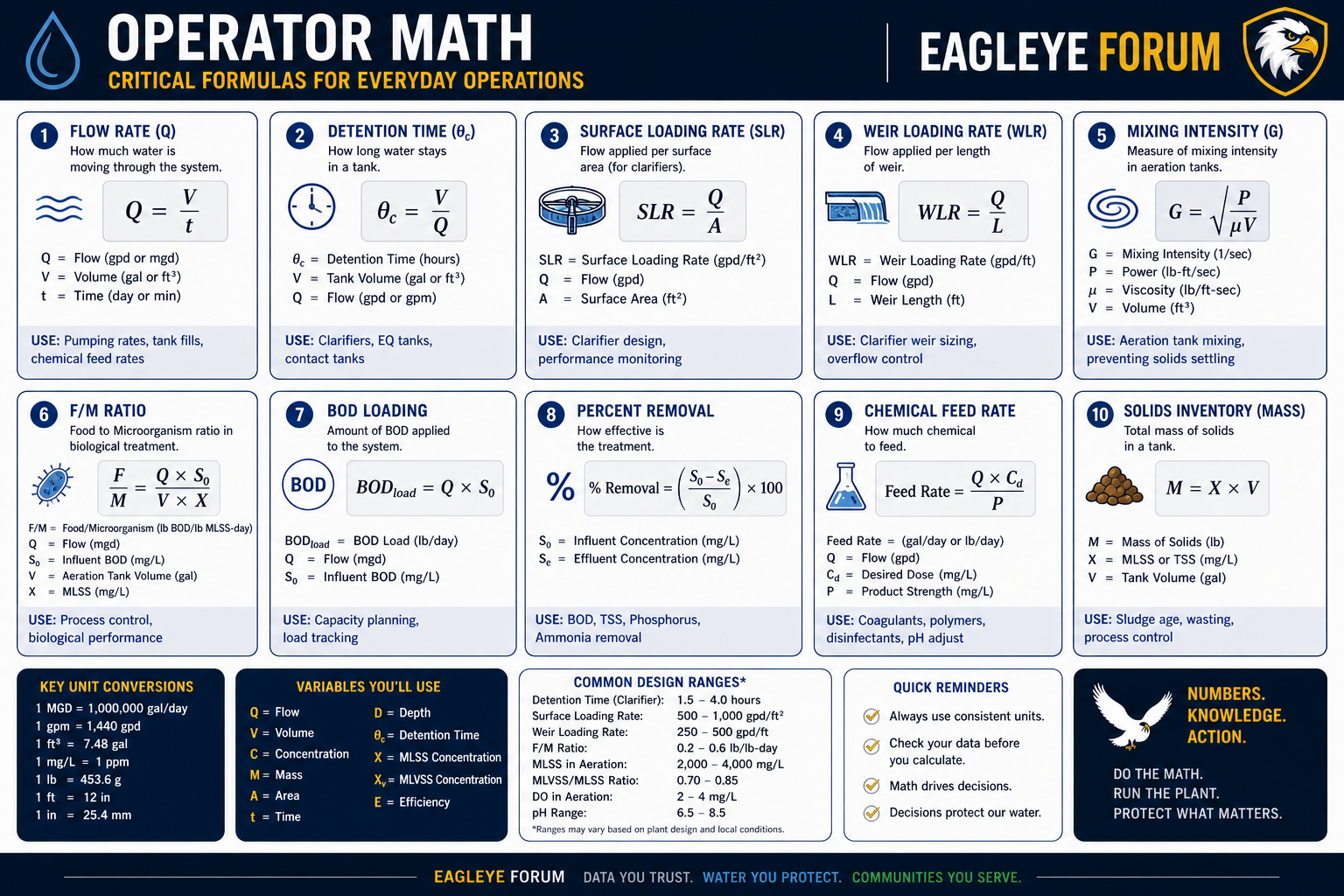
Operator Math
- Removal efficiency
- F/M ratio
- SRT
- MLSS vs MLVSS