
Basic Automotive Maintenance Guide
Basic automotive maintenance is essential to keep your vehicle running safely, efficiently, and reliably. While many people rely on mechanics or dealerships—where labor can exceed $100 per hour—there are plenty of routine tasks you can handle yourself with minimal tools and a bit of knowledge.
Learning to maintain your own vehicle not only saves money but builds confidence and understanding of how your machine operates.

Getting Started
Before diving in, invest in a repair manual specific to your vehicle, such as a Haynes Repair Manual.
These manuals go far beyond the standard owner’s manual, offering:
- Step-by-step repair instructions
- Diagrams and system breakdowns
- Troubleshooting guidance
You can find them at auto parts stores or online for around $20–$40.
Garage Safety: DOs and DON’Ts
✅ DO:
- Wear safety glasses when working under your vehicle or using tools
- Clean spills immediately (use cat litter or sand for oil; brake cleaner for small spots)
- Keep all removed nuts, bolts, and parts organized
- Let the engine cool before working
- Store chemicals safely (especially antifreeze—dangerous to pets)
❌ DON’T:
- Never rely only on a jack—always use jack stands
- Don’t pull wrenches toward you—push with your palm to avoid injury
- Avoid worn or slipping tools
- Never open a hot radiator
- Keep loose clothing and hair away from moving parts
- Don’t place tools on the battery (risk of short circuit)
- Avoid leaving tools in direct sunlight
Routine Maintenance Schedule
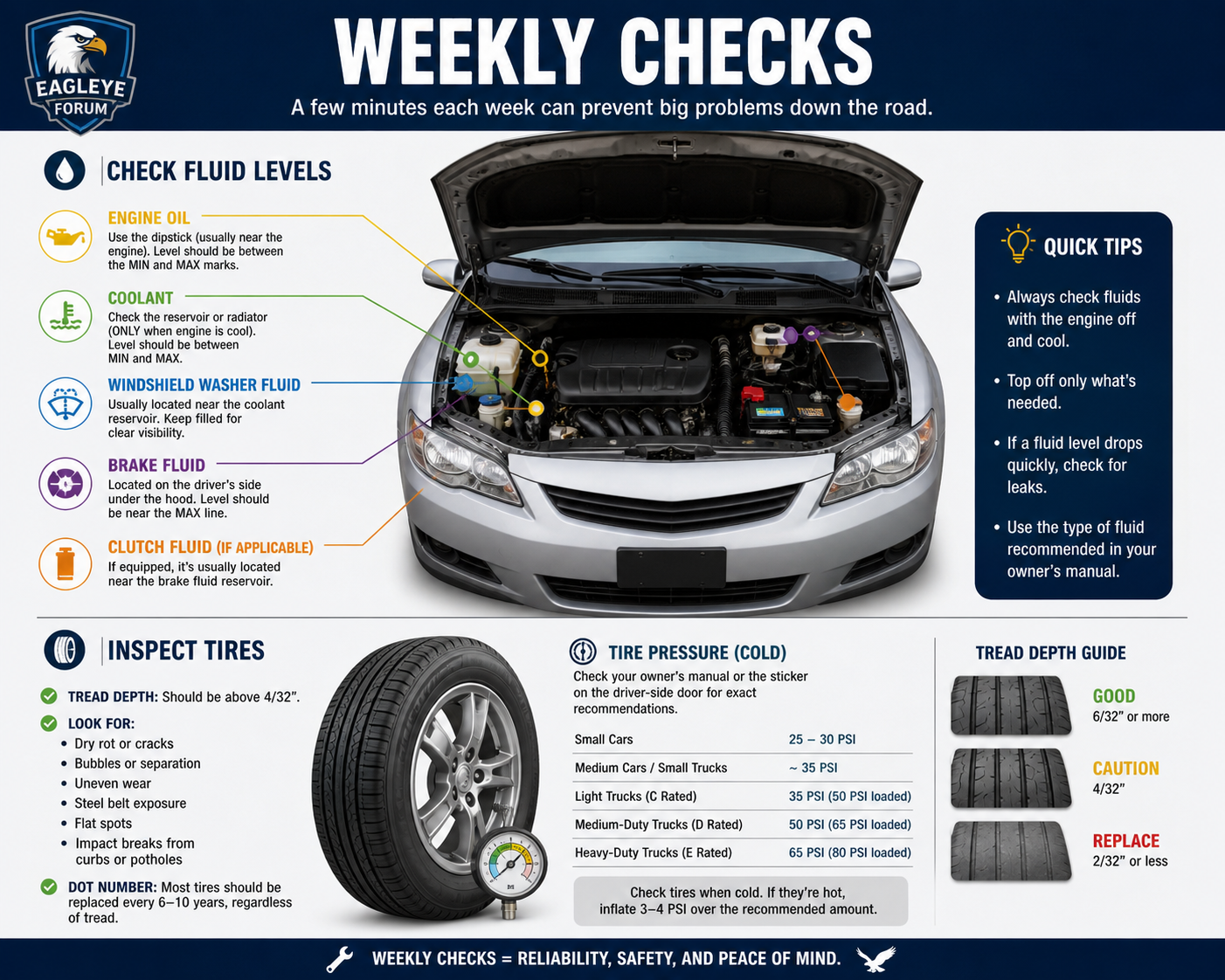
Weekly Checks
Fluids:
- Engine Oil (dipstick near engine)
- Coolant (reservoir—only check when cool)
- Windshield Washer Fluid
- Brake Fluid
- Clutch Fluid (if applicable)
Tires:
- Tread depth: Minimum 4/32”
- Check for:
- Cracks or dry rot
- Bulges or separation
- Uneven wear
- Steel belt exposure
Tire Pressure (check when cold):
- Small cars: 25–30 PSI
- Medium vehicles: ~35 PSI
- Light trucks (C-rated): 35 PSI (50 PSI loaded)
- D-rated: 50 PSI (65 PSI loaded)
- E-rated: 65 PSI (80 PSI loaded)
Tip: If checking hot tires, inflate +3–4 PSI above recommended.
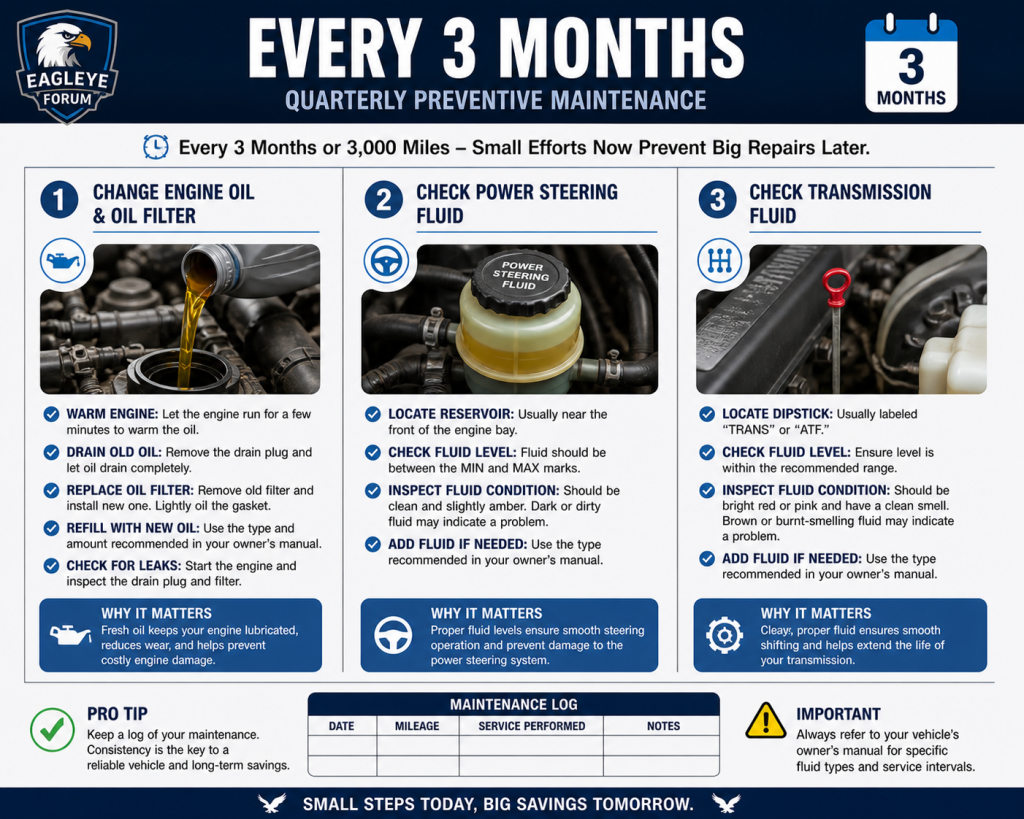
Every 3 Months / 3,000 Miles
- Change engine oil and filter
- Check power steering fluid
- Check transmission fluid
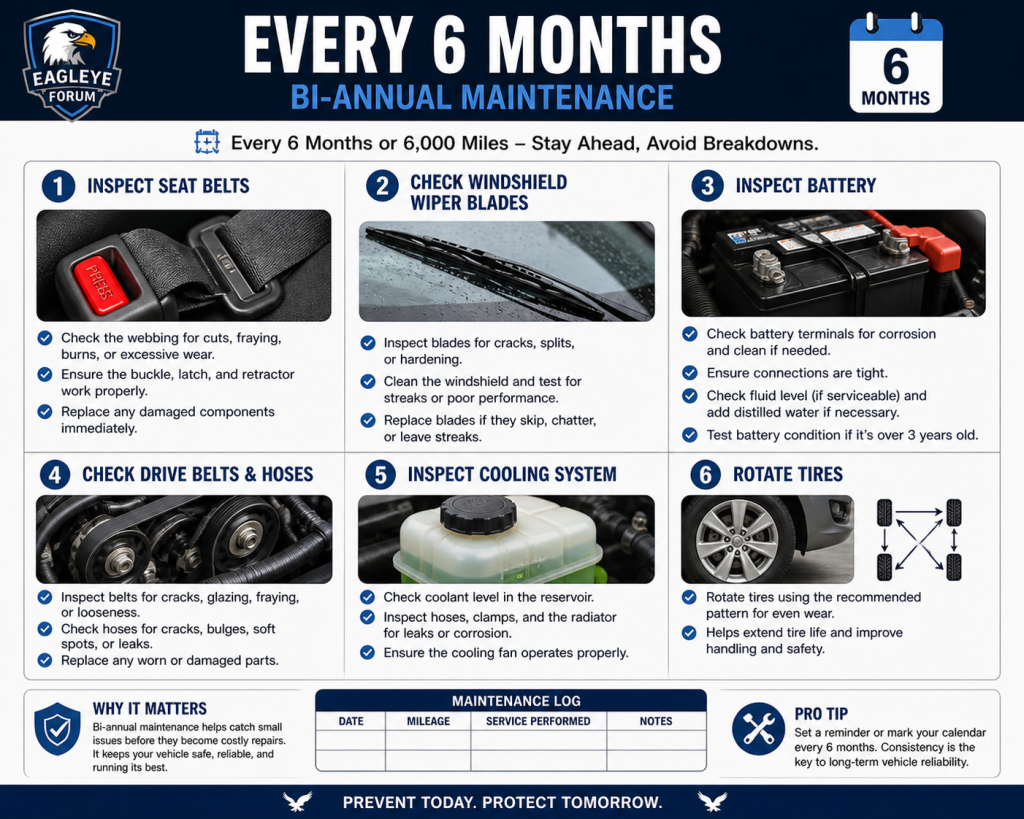
Every 6 Months / 6,000 Miles
- Inspect seat belts for wear
- Replace worn wiper blades
- Check battery (add distilled water if needed)
- Inspect belts and hoses
- Inspect cooling system
- Rotate tires
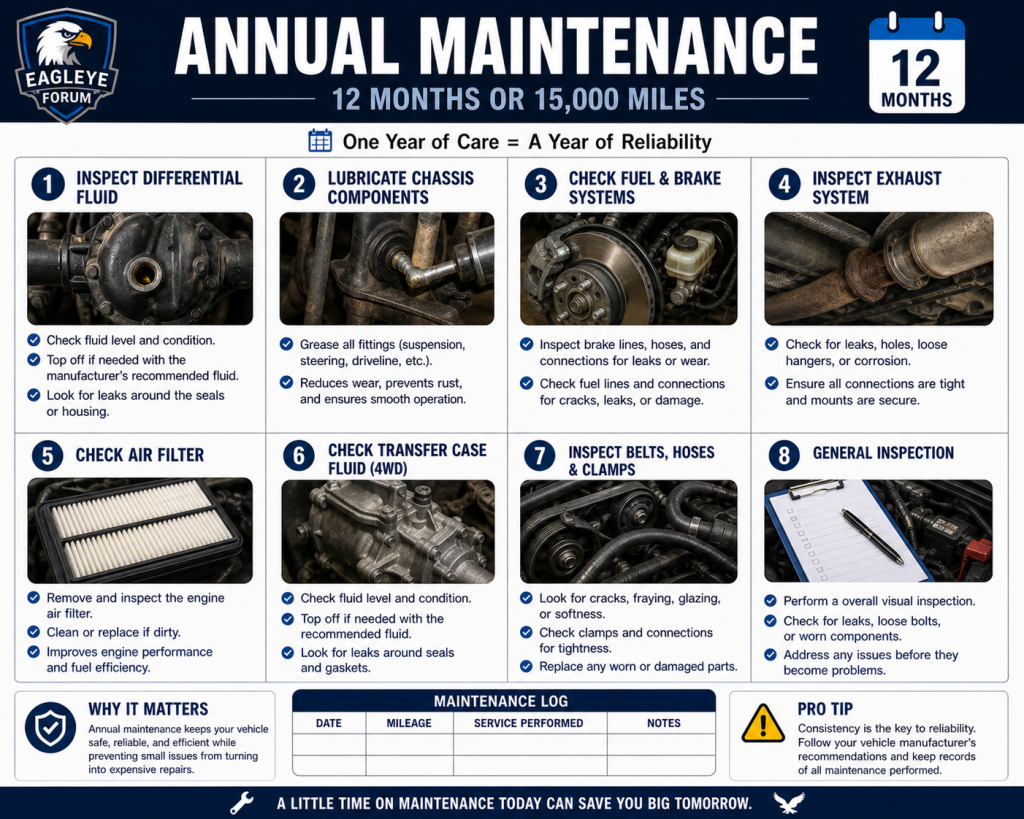
Annual Maintenance (12 Months / 15,000 Miles)
- Inspect differential fluid
- Lubricate chassis components
- Inspect fuel and brake systems
- Check exhaust system
- Inspect air filter (replace if dirty)
- For 4WD: Check transfer case fluid
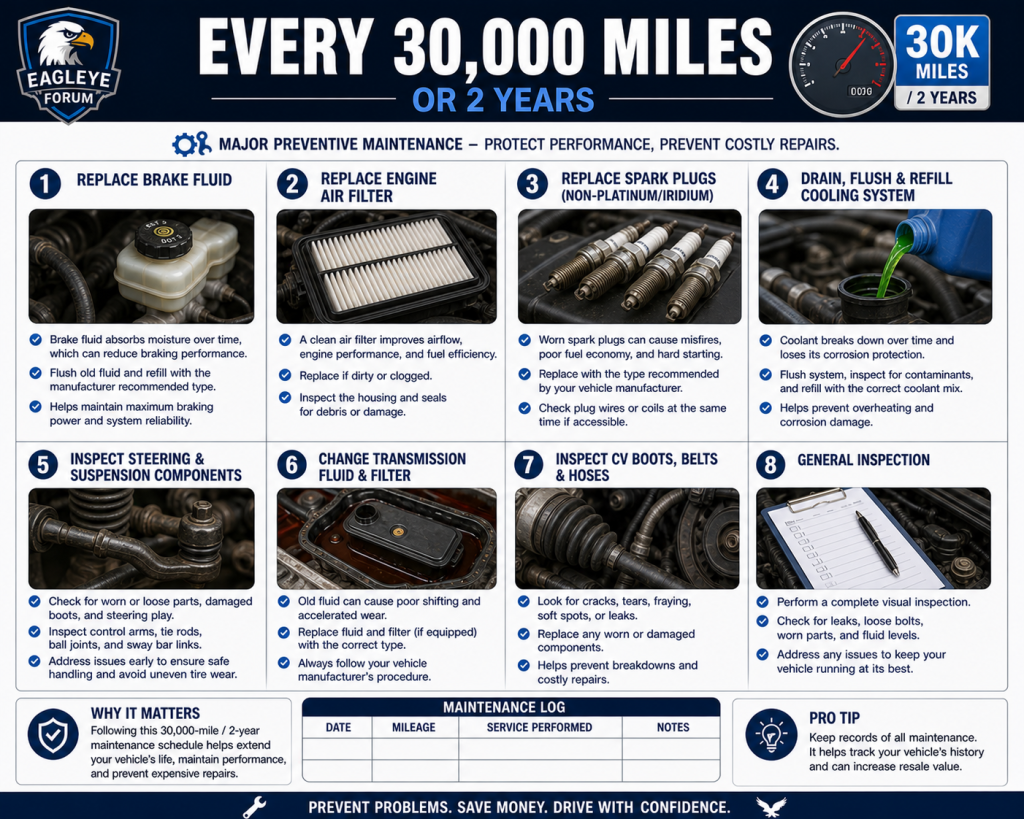
Every 30,000 Miles / 2 Years
- Replace brake fluid
- Replace engine air filter
- Replace spark plugs (standard types)
- Flush and refill cooling system
- Inspect suspension and steering components
- Change transmission fluid and filter
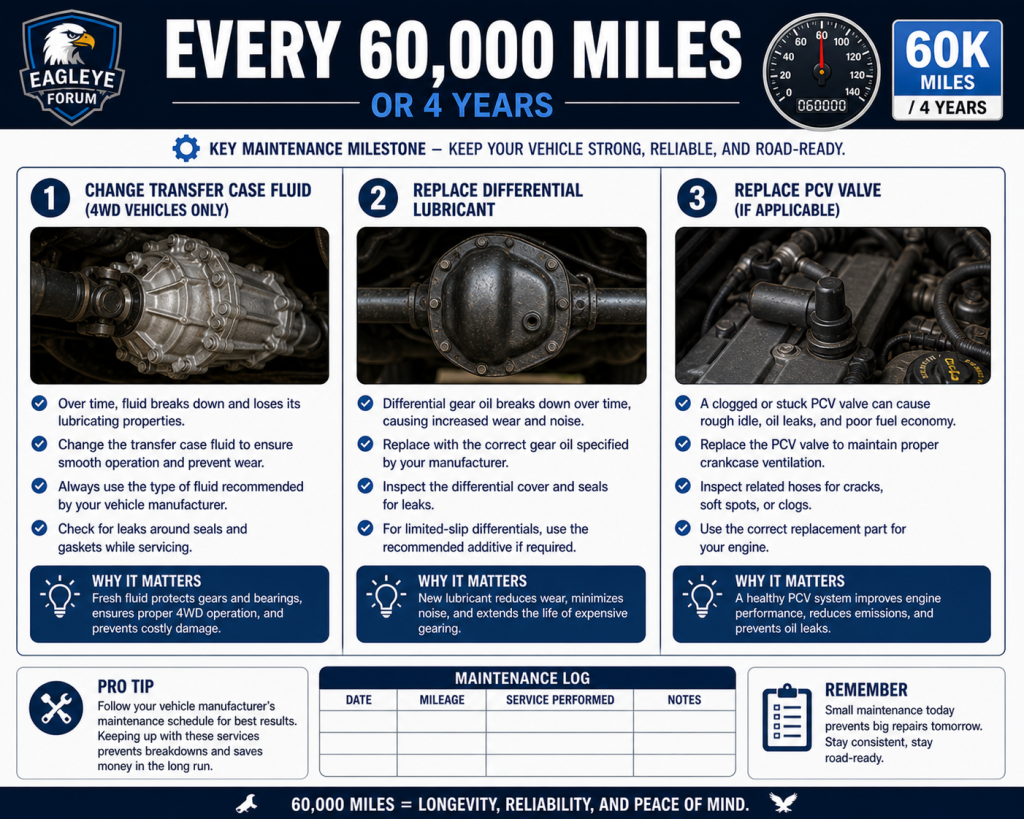
Every 60,000 Miles / 4 Years
- Replace transfer case fluid (4WD)
- Replace differential fluid
- Replace PCV valve (if equipped)
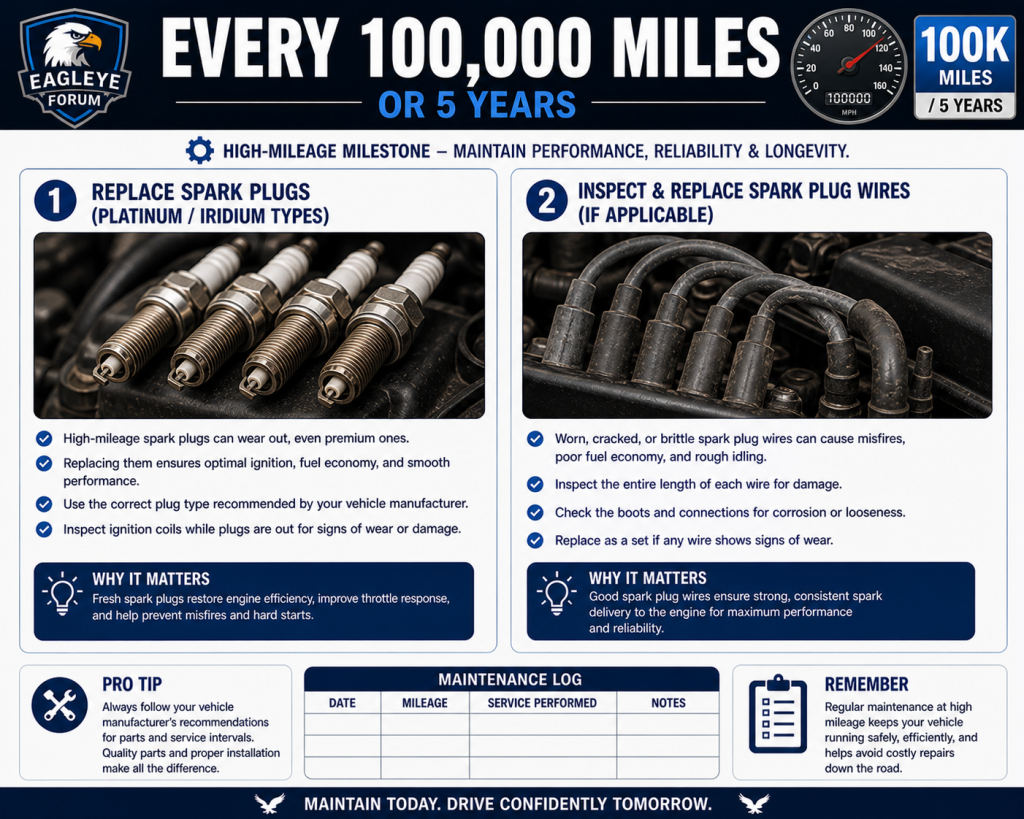
Every 100,000 Miles / 5 Years
- Replace spark plugs (platinum/iridium)
- Inspect/replace spark plug wires
Why This Matters
Staying on top of routine maintenance:
- Extends vehicle lifespan
- Prevents costly breakdowns
- Improves safety and fuel efficiency
- Builds practical, real-world skills
Tools & Supplies
Most of these tasks require only basic tools:
- Socket set
- Wrenches
- Oil filter wrench
- Jack and jack stands
- Tire pressure gauge
You can find everything you need at local auto parts stores—or order ahead online to stay prepared.
Automotive maintenance is one of the best entry points into skilled trades thinking. It teaches:
- Systems understanding
- Preventive maintenance habits
- Mechanical troubleshooting
The same mindset applies to HVAC, electrical, and industrial systems.