What is Wastewater Treatment?
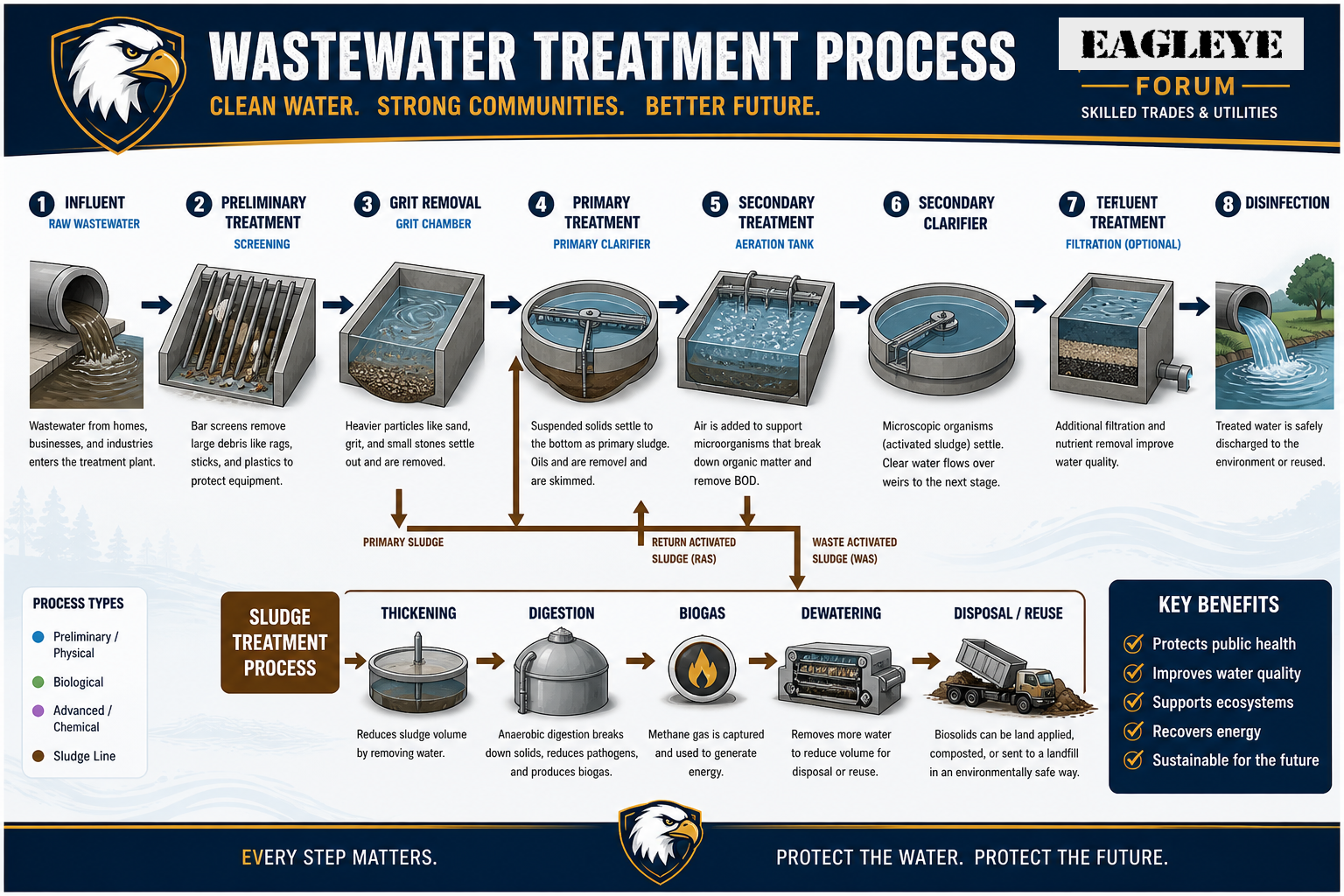
Wastewater treatment is the process of removing physical, chemical, and biological contaminants from water before it is discharged back into the environment.
Before diving in, how about a short practice test:

It protects:
- Public health
- Ecosystems
- Drinking water sources
1. Preliminary Treatment (Headworks)
Purpose:
Remove large debris and heavy particles to protect equipment.
Key Processes:
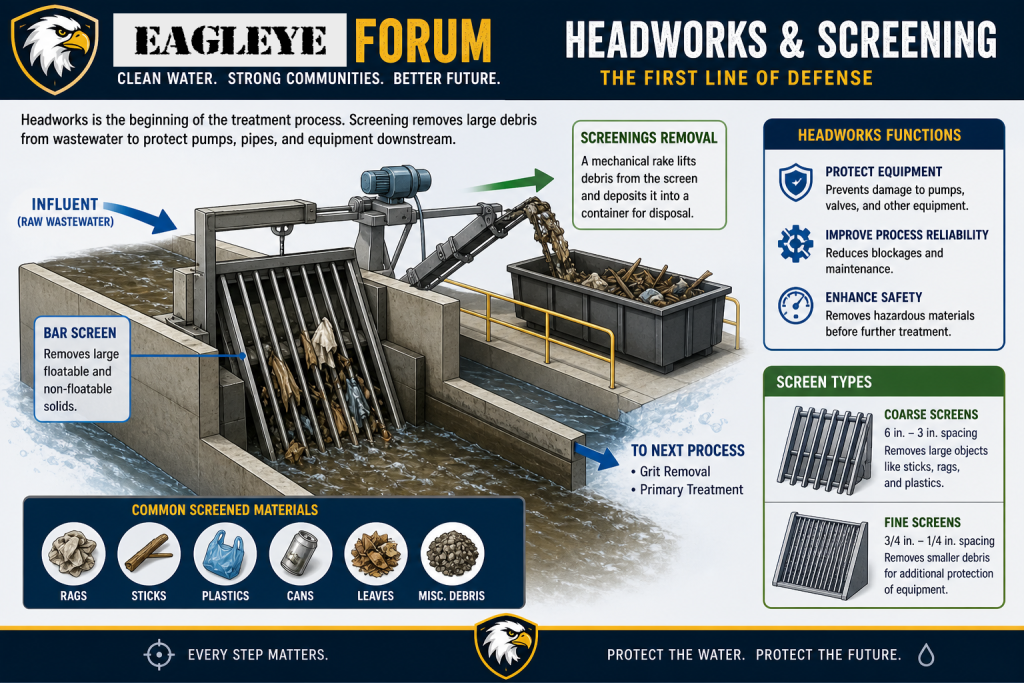
Screening
Removes sticks, rags, plastics and large solids
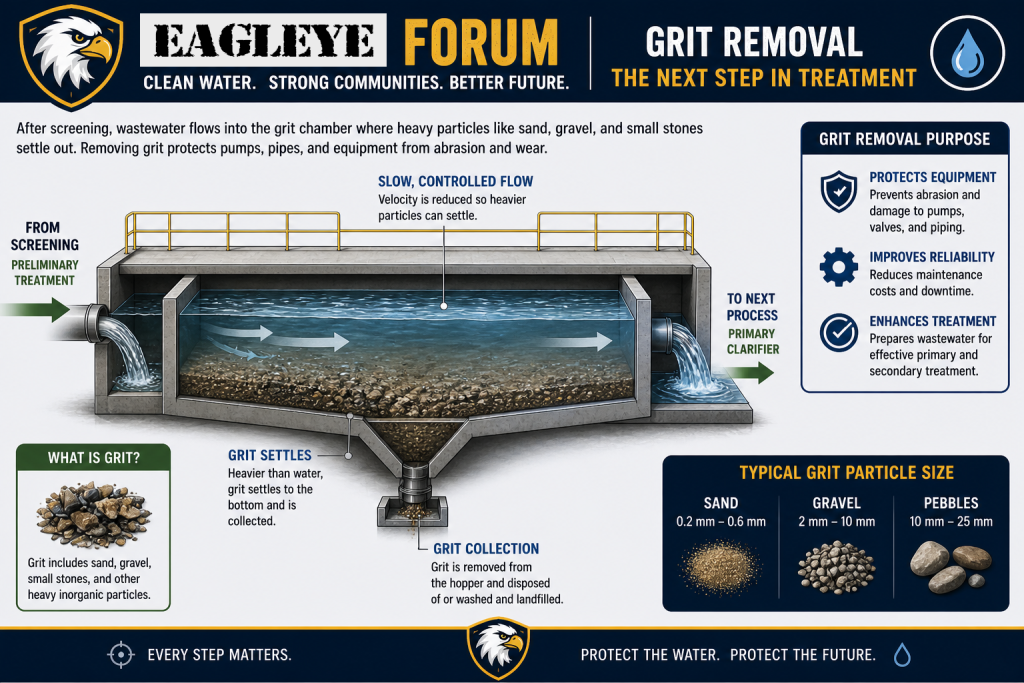
Grit Chamber
Removes sand, gravel and other heavy particles.
2. Primary Treatment
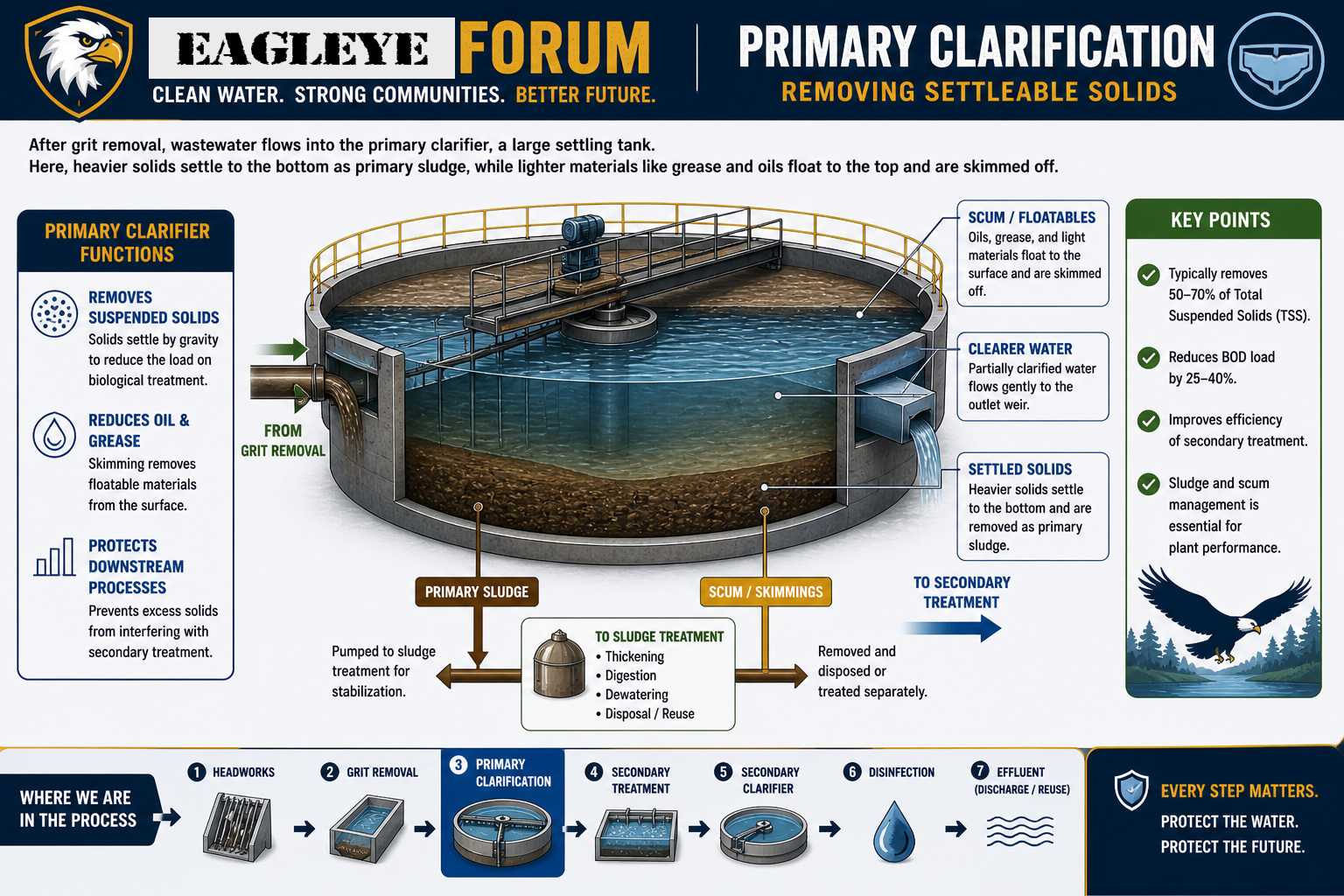
Purpose:
Remove settleable solids
Process:
- Wastewater enters a clarifier (settling tank)
- Solids settle → form sludge
- Oils/grease float → skimmed
- Removes suspended solids
- Does NOT remove dissolved contaminants
3. Secondary Treatment (Biological)
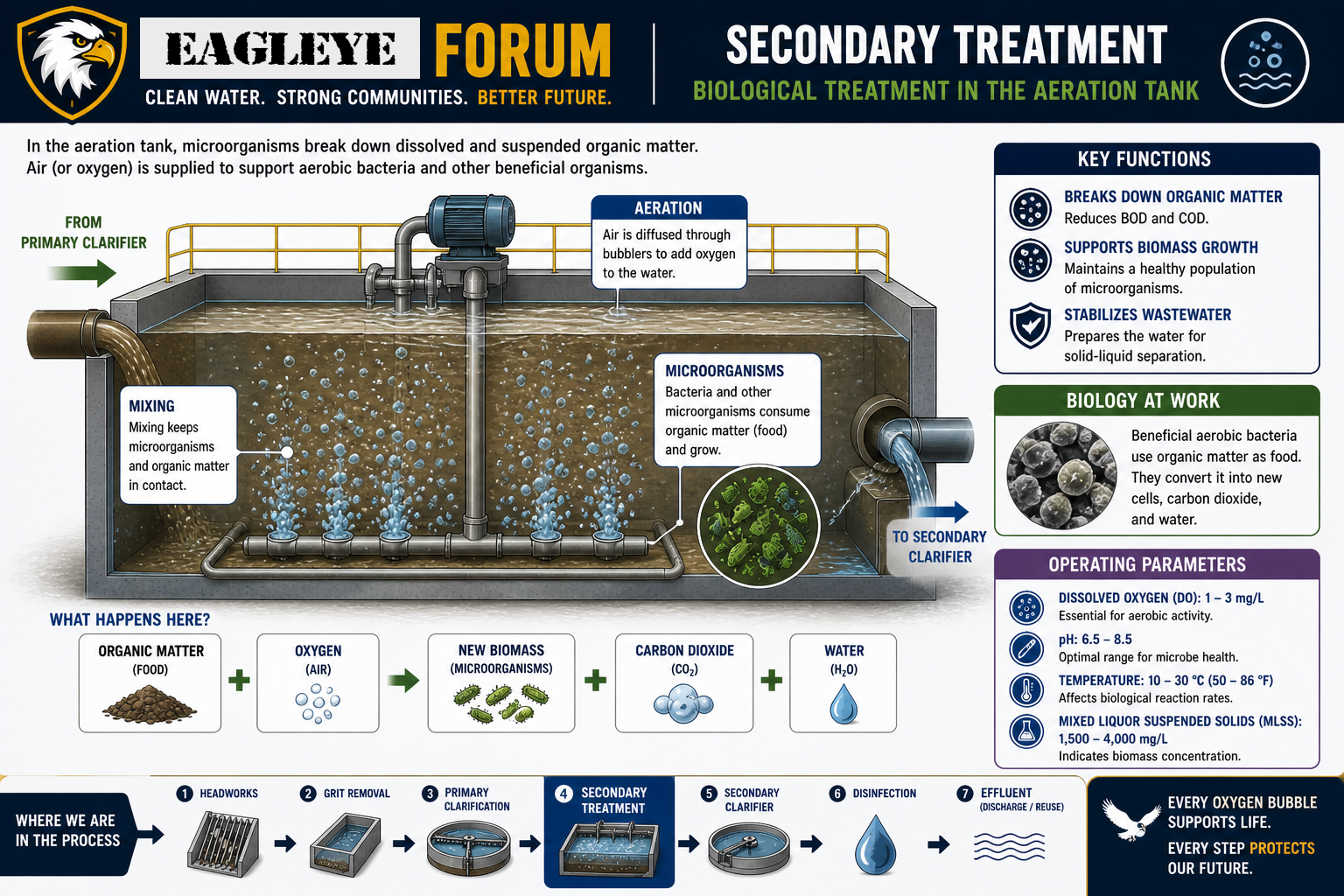
Purpose:
Break down organic matter (BOD) using microorganisms
Systems:
- Activated Sludge (suspended growth)
- Trickling Filters (fixed film)
Key Components:
- Aeration tank → oxygen added
- Microbes consume organic waste
- Secondary clarifier separates biomass
- Activated sludge = microbial biomass
- DO typically: 1–3 mg/L
- MLSS = biomass concentration
Critical Biological Control Parameters
DO (Dissolved Oxygen)
- Needed for aerobic bacteria
- Too low → filamentous growth
- Too high → energy waste
F/M Ratio
Food vs microorganisms balance
- High F/M → young sludge
- Low F/M → old sludge
SRT (Sludge Retention Time)
- Controls biomass age
- Low SRT → nitrification failure
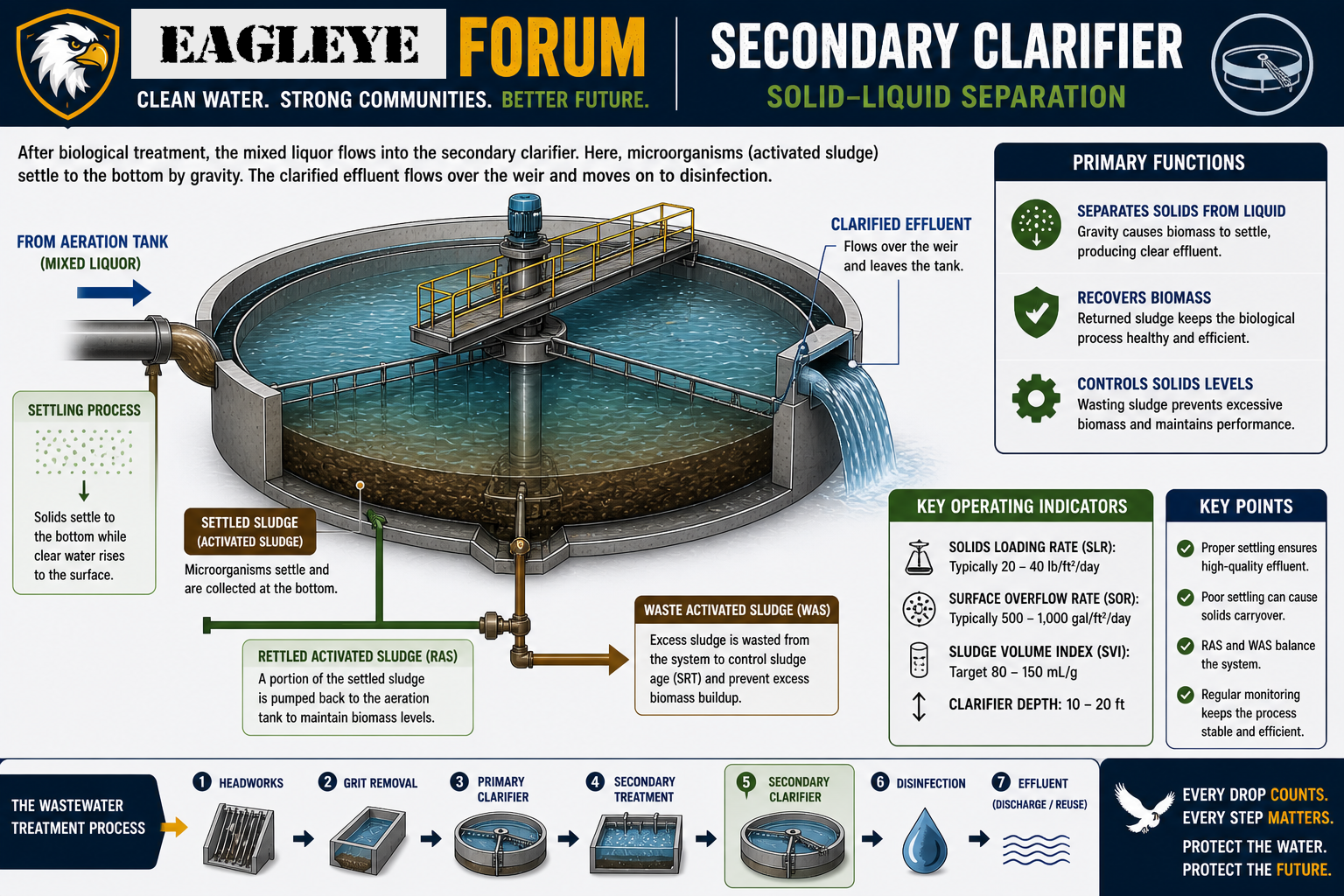
Return & Waste Sludge
- RAS (Return Activated Sludge) → keeps microbes in system
- WAS (Waste Activated Sludge) → removes excess biomass
Balance = stable process
Nutrient Removal
Nitrogen Removal:
- Nitrification (aerobic)
- Denitrification (anoxic)
Phosphorus Removal:
- EBPR (biological)
- Requires anaerobic conditions for release
4. Tertiary / Advanced Treatment
Purpose:
Polish effluent for high-quality discharge or reuse
Includes:
- Filtration
- Nutrient removal
- Membranes (MBR)
MBR advantage:
- Small footprint
- High-quality effluent
5. Disinfection
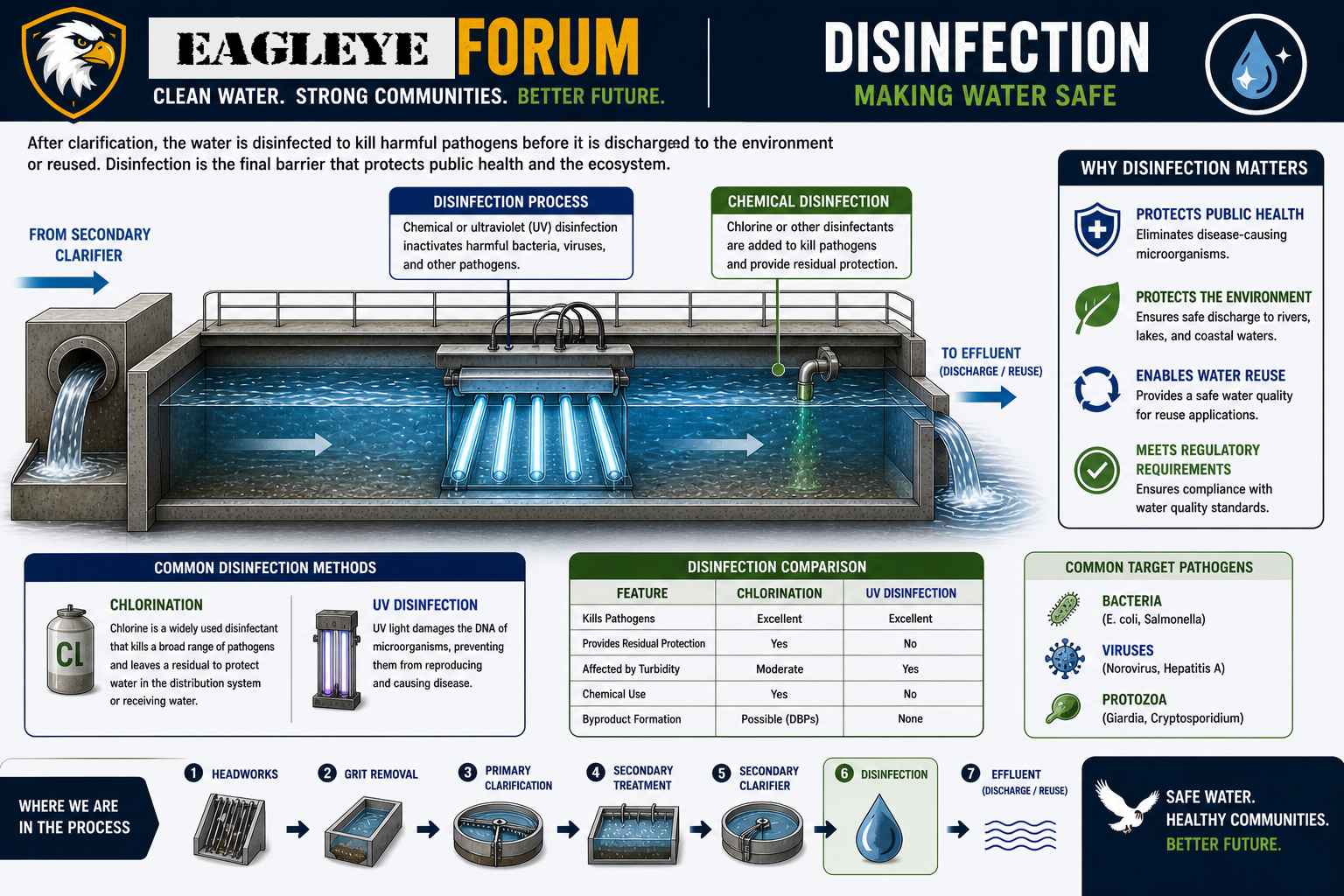
Kills pathogens using:
- Chlorine
- UV
- Ozone
Sludge Treatment
What is sludge?
Semi-solid waste from treatment
Treatment:
- Digestion (anaerobic/aerobic)
- Produces methane gas
Goal:
- Reduce pathogens
- Stabilize material
- Reduce odor
Common Operational Problems
Sludge Bulking
- Cause: filamentous bacteria
- Fix: increase DO, adjust F/M
Rising Sludge
- Cause: denitrification in clarifier
- Fix: control nitrate levels
Foaming
- Cause: Nocardia / filaments
Toxic Shock
- Cause: chemicals killing biomass
Key Lab & Process Indicators
| Parameter | Purpose |
|---|---|
| BOD | Organic strength |
| COD | Total oxidizable matter |
| TSS | Suspended solids |
| MLSS | Biomass concentration |
| SVI | Settling quality |
| pH | Process stability |
| Alkalinity | Supports nitrification |
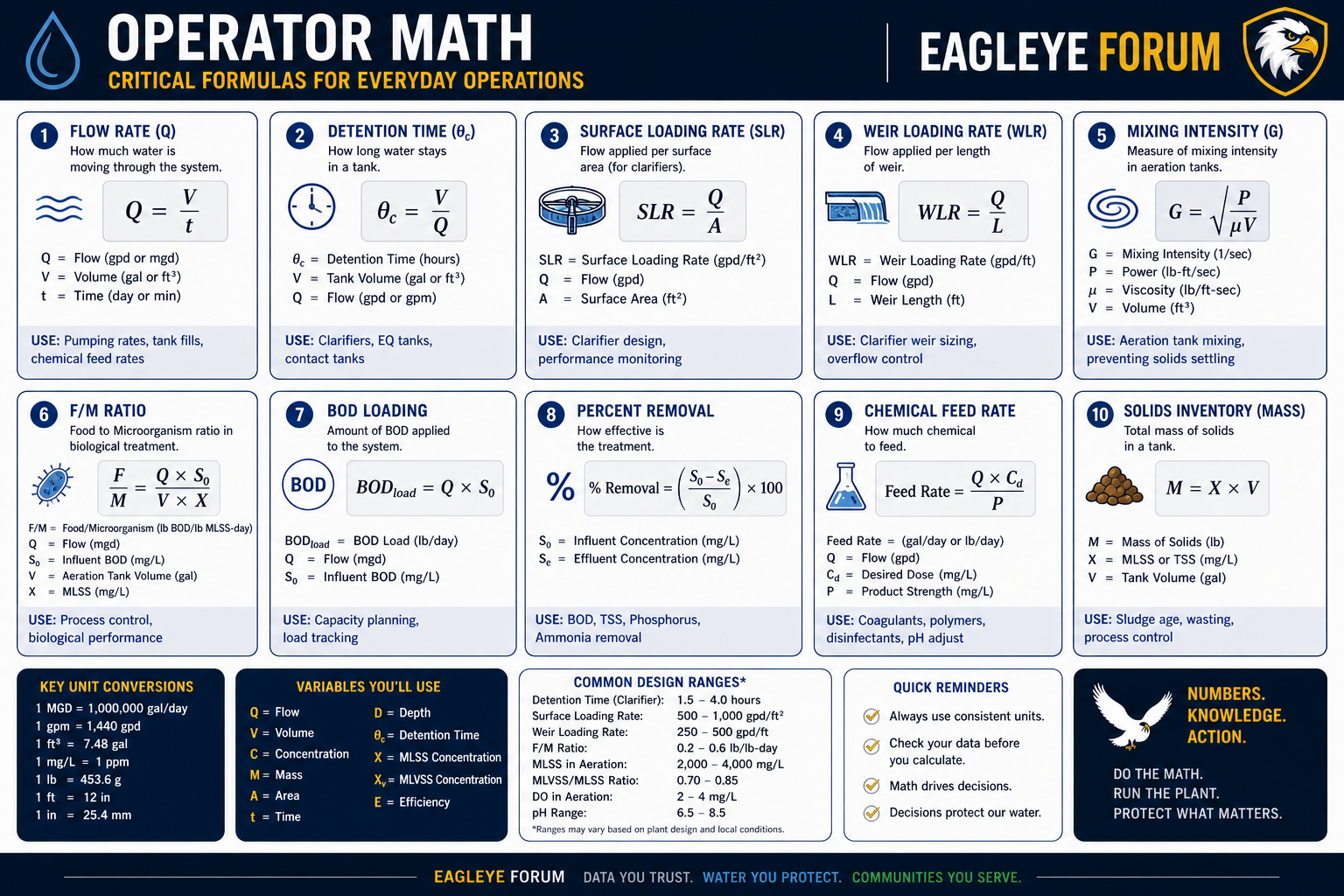
Operator Math
- Removal efficiency
- F/M ratio
- SRT
- MLSS vs MLVSS